



heatstroke symptoms in pets Key Takeaways
Heatstroke in pets is a life-threatening emergency that requires immediate recognition and action.
- Early heatstroke symptoms in pets include excessive panting, drooling, and restlessness, which can escalate quickly to collapse or seizures.
- Immediate first aid involves moving the pet to a cool area, applying cool (not cold) water, and offering small amounts of water to drink.
- Veterinary care is essential even if your pet seems to recover, as internal damage may not be visible.
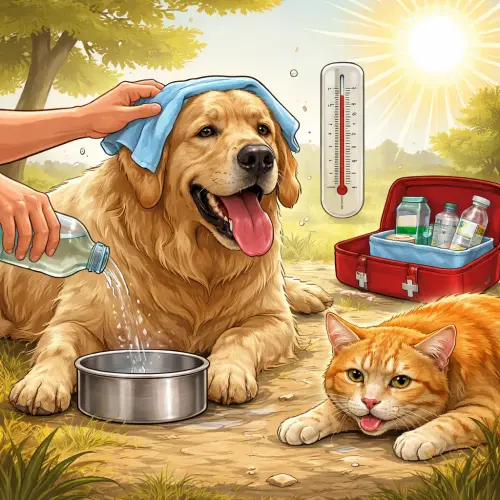
Recognizing Heatstroke Symptoms in Pets: What Every Owner Should Know
Heatstroke occurs when a pet’s body temperature rises above 103°F (39.4°C) and can no longer cool itself naturally. Unlike humans, dogs and cats have limited sweat glands and rely on panting and paw pad moisture to release heat. High humidity, lack of shade, confinement in a hot car, or overexertion on warm days can overwhelm this system. Recognizing the heatstroke symptoms in pets early is the first step to saving their life. For a related guide, see 12 Summer Health Risks for Pets Every Owner Must Avoid.
How Heatstroke Affects a Pet’s Body
When core temperature climbs too high, organs begin to fail. The brain, kidneys, liver, and heart are especially vulnerable. Blood vessels dilate to release heat, which can cause blood pressure to drop. Clotting abnormalities, swelling of the brain, and multi-organ failure can follow within minutes. This is why speed matters: every second counts once symptoms appear.
10 Critical Heatstroke Symptoms in Pets — and What to Do for Each
Each symptom on this list represents a stage of heat stress. If you notice even one, take it seriously. For each symptom, we provide a clear description and an action step you can take immediately.
1. Excessive Panting or Heavy Breathing
Panting is normal after exercise or on a warm day, but when it becomes loud, rapid, or seems labored, it signals heat stress. Look for a wide-open mouth with the tongue hanging far out and gums that appear bright red or pale.
What to do: Stop all activity immediately. Move your pet to the shade or an air-conditioned space. Offer cool, fresh water but do not force them to drink. Place a fan nearby to increase air circulation.
2. Excessive Drooling or Thick Saliva
Thick, ropey saliva that strings from the mouth is a common early sign. It happens because the body is trying to keep the mouth moist while panting heavily, but blood flow to the salivary glands is already compromised.
What to do: Provide water and encourage slow lapping. Wet a cloth with cool water and gently wipe the gums and tongue to help lower mouth temperature. Monitor for any change in gum color.
3. Bright Red or Pale Gums and Tongue
Gum color is a fast indicator of circulation status. Bright red gums suggest blood vessels are dilated to release heat. Pale or bluish gums indicate shock and poor oxygen delivery — a more serious stage.
What to do: Gently lift your pet’s lip and check gum color. If gums are pale or blue, this is an emergency. Begin cooling measures while heading to the nearest veterinary clinic.
4. Rapid Heart Rate or Weak Pulse
A racing heart tries to pump more blood to the skin surface for cooling. As heatstroke worsens, the pulse becomes weak or irregular because the heart is struggling.
What to do: Feel for a pulse on the inner thigh or just below the wrist on a hind leg. If it feels faint or erratic, transport your pet to a vet immediately. Do not delay cooling efforts during transport.
5. Stumbling, Weakness, or Difficulty Walking
Wobbly legs, stumbling, or a tucked posture means the brain and muscles are being affected by high heat. Coordinated movement becomes hard as the nervous system starts to fail.
What to do: Keep your pet lying down in a cool area. Do not let them try to walk or jump. Carry them if needed. Apply cool water to the paw pads, ear flaps, and groin area to bring down core temperature.
6. Vomiting or Diarrhea
Heat stress triggers the digestive system to shut down, causing nausea, vomiting, or diarrhea. This can be mistaken for a stomach bug on a hot day, but it is often a direct result of hyperthermia.
What to do: Offer tiny sips of water — no more than a teaspoon every few minutes. Do not give food. If vomiting continues, the pet cannot keep fluids down and needs IV fluids from a veterinarian.
7. Restlessness, Anxiety, or Whining
A pet that cannot settle, paces, whines, or seems agitated may be overheating. They are trying to communicate discomfort and may seek cool surfaces like tile floors or dig at the carpet.
What to do: Direct your pet to a cooler area and use calm, reassuring tones. Apply a cool, damp towel to their chest and back. Do not use ice-cold water or ice packs, as they can cause shivering and trap heat inside the body.
8. Disorientation or Confusion
If your pet seems dazed, does not respond to their name, or stares blankly at walls, the brain is overheating. This is a sign of heatstroke progressing toward collapse.
What to do: This is a critical stage. Keep the pet calm and quiet. Begin cooling with cool (not cold) water on the body and provide ventilation. Transport to an emergency veterinarian immediately. For a related guide, see 12 Proven Ways to Keep Pets Cool in Summer (Expert Safety.
9. Collapse or Loss of Consciousness
Collapse means the body can no longer compensate for the heat. The pet may suddenly lie down and be unable to get up, or may faint. This is a life-threatening emergency.
What to do: Check for breathing and a pulse. If the pet is unconscious but breathing, place them on their side with the head extended. Start cooling measures during transport to the vet. Do not give water orally if unconscious.
10. Seizures
Seizures result from swelling of the brain due to extreme heat. The pet may shake uncontrollably, paddle their legs, lose bladder control, or foam at the mouth.
What to do: Clear a safe space around the pet — remove furniture or objects that could cause injury. Do not put anything in their mouth. Time the seizure if possible. Apply cool water to the body and rush to an emergency clinic.
Emergency First Aid for Heatstroke in Pets
When you suspect heatstroke symptoms in pets, act fast but stay calm. Here is a step-by-step first aid protocol to follow while en route to the veterinarian or waiting for help.
- Move to a cool area: Shade, air conditioning, or a basement area. Avoid direct sun exposure.
- Apply cool water: Use a hose, wet towel, or spray bottle with cool (not ice-cold) water. Focus on the head, neck, paw pads, and groin.
- Increase airflow: Use a fan or open windows while the car is moving toward the clinic.
- Offer small amounts of water: Let the pet lap at their own pace. Do not pour water into the mouth.
- Monitor temperature: If you have a rectal thermometer, check temperature. Stop cooling efforts when it reaches 103°F to avoid overcooling.
- Transport safely: Place a wet towel under the pet and keep the car cool. Avoid ice baths or very cold water, which can cause shivering and raise core temperature.
Even if your pet appears to recover after cooling, internal damage may be ongoing. Always seek veterinary attention after any episode of heat stress.
How to Prevent Heatstroke in Pets
Prevention is always better than treatment. Follow these practical tips to keep your pet safe during warm weather.
- Avoid hot cars: Never leave a pet in a parked car, even for a few minutes. The temperature inside a car can climb over 120°F in less than ten minutes.
- Provide constant shade and water: When outdoors, ensure fresh water is always available and that your pet can find shade at any time of day.
- Limit exercise: Walk early morning or late evening when temperatures drop. On hot days, skip intense play or jogging.
- Watch for brachycephalic breeds: Dogs with flat faces (bulldogs, pugs, boxers) and cats (Persians, Himalayans) overheat much faster. Be extra vigilant with these pets.
- Never tie a pet outside: Tethering prevents a pet from seeking shade or water, and can lead to heatstroke even on moderately warm days.
Useful Resources
The American Veterinary Medical Association offers a detailed fact sheet on heatstroke prevention and first aid. Read more at AVMA Heat Safety for Pets.
The Pet Poison Helpline provides guidance on emergency heatstroke care and owner resources. Visit Pet Poison Helpline — Heat Stroke in Dogs and Cats.
Disclaimer: This article is for informational purposes only and does not replace professional veterinary advice. If you suspect your pet is suffering from heatstroke, contact your veterinarian or an emergency animal hospital immediately.
Frequently Asked Questions About heatstroke symptoms in pets
What is heatstroke in pets?
Heatstroke is a severe, life-threatening condition in which a pet’s body temperature rises above 103°F due to environmental heat exposure or overexertion, overwhelming the body’s ability to cool itself.
How quickly can heatstroke kill a pet?
Heatstroke can cause irreversible organ damage within minutes. Without prompt intervention, death can occur within 30 minutes to an hour, depending on temperature and humidity levels.
What are the most common breeds at risk for heatstroke?
Brachycephalic (flat-faced) breeds like bulldogs, pugs, boxers, and Persian cats are at highest risk. Also at risk are thick-coated breeds, toys, giant breeds, and pets with pre-existing health conditions.
Can cats get heatstroke as easily as dogs?
Yes, cats can suffer from heatstroke, though it is less common because they tend to seek shade and are less likely to overexert. Cats show similar symptoms like panting, drooling, and lethargy.
What is the first thing I should do if I suspect heatstroke?
Move your pet to a cool, shaded or air-conditioned area immediately. Then begin applying cool (not ice-cold) water to the body and offer small amounts of water. Contact a veterinarian right away.
Should I put my pet in an ice bath?
No. Ice-cold water can cause shivering, which actually raises core body temperature and constricts blood vessels, making cooling less effective. Use cool tap water or water between 60°F and 75°F.
How do I check my pet’s temperature?
Use a rectal thermometer lubricated with petroleum jelly. Normal temperature for dogs and cats is 100.5°F to 102.5°F. Any reading above 103°F warrants concern, and above 106°F is critical.
Can heatstroke cause long-term damage?
Yes. Even after recovery, pets can suffer from kidney damage, liver damage, neurological deficits, and sensitivity to heat in the future. Follow-up veterinary monitoring is essential.
What does heatstroke look like in a cat?
Cats may pant heavily with an open mouth, drool excessively, have red or pale gums, show weakness, stagger, or collapse. Cats also often seek cool surfaces like a tiled bathroom floor.
How much water should I give to an overheated pet?
Offer small amounts of cool, fresh water — a few tablespoons at a time — and let your pet drink at their own pace. Do not force water into the mouth, as it can cause aspiration.
Can heatstroke happen at night?
Yes, if nighttime temperatures remain high (above 75°F) and there is high humidity, pets can still overheat indoors without circulation or cooling. Always provide fresh air and water at night.
What should I do if my pet won’t drink water?
If the pet is alert but uninterested in water, try offering ice cubes to lick or wipe a wet cloth over the gums. If the pet is lethargic or unable to swallow, seek immediate veterinary care for IV fluids.
Is it safe to use alcohol or rubbing alcohol on a pet’s paws?
No. Rubbing alcohol can be toxic if absorbed through the skin or licked. Stick to cool water applied to the paw pads, ear flaps, and groin area.
Can I use a fan to cool my pet?
Yes. Direct a fan toward your pet to increase evaporative cooling. However, a fan alone is not enough — combine it with cool water application for the best results.
How long does it take for a pet to recover from heatstroke?
Recovery can take from a few days to several weeks, depending on severity. Pets with organ damage may require hospitalization, medication, and long-term follow-up care.
Should I induce vomiting if I suspect heatstroke?
No. Do not induce vomiting. Heatstroke is not a poisoning event, and vomiting can worsen dehydration or cause aspiration. Focus on cooling and veterinary transport.
Can I give my pet aspirin for heatstroke?
No. Aspirin can worsen internal bleeding and kidney damage in heatstroke patients. Never give any medication for heatstroke unless directly instructed by a veterinarian.
What temperature is too hot to walk a dog?
Generally, if the outside temperature is above 85°F, the ground can be too hot for paws and the air can cause overheating. Walk only during the coolest parts of the day — early morning or late evening.
Are older pets more at risk for heatstroke?
Yes. Senior pets often have underlying heart, kidney, or respiratory conditions that make it harder for them to regulate body temperature. They also may be less active and unable to move to a cooler spot easily.
What should I tell the veterinarian when I arrive?
Tell them you suspect heatstroke and list the symptoms you observed, the approximate duration of heat exposure, and any cooling measures you performed. This helps them prioritize treatment quickly.