


Healthy Foods That Are Safe for Dogs and Cats Key Takeaways
Sharing your plate with your furry friend can be tricky, but this guide highlights 15 healthy foods that are safe for dogs and cats , backed by veterinary insights.
- Always introduce new healthy foods that are safe for dogs and cats gradually, watching for any allergic reactions or digestive upset.
- Portion control matters: treats should never exceed 10% of your pet’s daily caloric intake.
- When in doubt, consult your veterinarian before adding new foods to your pet’s bowl.
What Makes a Food Safe and Nutritious for Both Dogs and Cats?
Dogs and cats have different nutritional needs, but there is surprising overlap in the whole foods they can safely enjoy. Healthy foods that are safe for dogs and cats are typically low in added sugars, free of toxic seasonings (like garlic and onion), and easy to digest. Many of these foods offer essential vitamins, fiber, and hydration. For a related guide, see 12 Balanced Diet Tips for Pets: Essential Guide for Healthy.
Before you start mixing new ingredients into meals, remember that cats are obligate carnivores and require taurine from animal sources, while dogs are omnivores and can handle a wider variety of plant matter. Still, the following list includes vet-approved choices that benefit both species when served plain and in moderation.
The 15 Vet-Approved Healthy Foods That Are Safe for Dogs and Cats
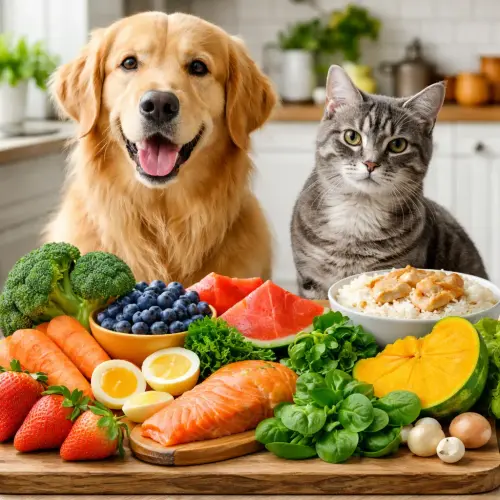
Here is the complete list of 15 safe human foods for pets, organized into categories for easy reference. Each entry includes preparation tips, health perks, and important cautions.
1. Boneless, Skinless Chicken (Cooked Plain)
Lean, unseasoned chicken is a staple in many pet diets. It provides high-quality protein, B vitamins, and glucosamine for joint health. Boil or bake without oil, salt, or spices. Remove all bones before serving, as cooked bones splinter and can cause internal injury. For cats, shred the meat into small pieces; dogs can enjoy larger chunks.
2. Carrots (Raw or Steamed)
Crunchy carrots are low in calories and rich in beta-carotene, which supports vision and immune function. For dogs, whole raw carrots act as a natural toothbrush. For cats, steam the carrots until soft and mash them into a puree. Always wash and peel to remove any pesticide residue.
3. Blueberries (Fresh or Frozen)
Blueberries are antioxidant powerhouses that fight cellular damage and promote brain health in aging pets. Their small size makes them a perfect training treat for dogs. Cats often enjoy them as occasional snacks. Serve whole for medium/large dogs, or halve for cats and small dogs. Avoid canned blueberries packed in syrup.
4. Canned Pumpkin (100% Pure, No Spices)
Plain pumpkin purée is a fiber-rich helper for both diarrhea and constipation. It also provides vitamin A and potassium. Offer one teaspoon for cats, one to two tablespoons for dogs. Always check the label to ensure it contains no added sugar, cinnamon, or nutmeg.
5. Salmon (Cooked, Boneless)
Salmon is loaded with omega-3 fatty acids that reduce inflammation and support a shiny coat. Grill, bake, or poach the fish without seasoning. Flake it into small portions. Never feed raw salmon due to the risk of parasites. This is a fantastic safe human food for pets, especially for pets with dry skin or seasonal allergies.
6. Green Beans (Plain, Steamed or Raw)
Green beans offer vitamins C and K, plus fiber and low calories. They are excellent for weight management. Steam them until tender for easy digestion. Avoid canned versions that contain added salt. Chop into bite-sized pieces for cats and small dogs.
7. Watermelon (Seedless, Rind Removed)
Watermelon is over 90% water, making it a hydrating summer treat. It contains vitamins A and C. Remove all seeds and the hard green rind, then cut the flesh into small cubes. Offer only a few bites at a time. Too much can cause loose stools.
8. Plain Greek Yogurt (Unsweetened, No Artificial Sweeteners)
Live cultures in Greek yogurt support gut health. It is also a good source of calcium and protein. Choose full-fat for cats and low-fat for dogs prone to pancreatitis. Avoid any yogurt containing xylitol, which is highly toxic to dogs. A tablespoon is sufficient for most pets.
9. Sweet Potatoes (Cooked, Unseasoned)
Sweet potatoes are packed with dietary fiber, vitamin B6, and vitamin C. Bake or boil them, then mash or cube. Avoid raw sweet potatoes because they can be difficult to digest. This is one of the most popular dog-friendly fruits and vegetables (technically a root vegetable) that also appeals to many cats.
10. Eggs (Cooked Hard, Scrambled, or Poached)
Eggs provide complete protein, riboflavin, and selenium. Cook them without butter or oil; hard-boiled works best. One egg per day is plenty for a large dog; cats should get no more than a quarter of an egg. Never feed raw egg whites, as they contain avidin, which can block biotin absorption.
11. Apples (Sliced, Core and Seeds Removed)
Apples deliver vitamins A and C, plus fiber for digestion. Remove the core and all seeds, which contain small amounts of cyanide. Slice into wedges or dice for cats. The crunch also helps clean dogs’ teeth. Offer only a couple of slices per day.
12. Plain Cooked Oatmeal (Made with Water, No Milk or Sugar)
Oatmeal is a gentle, low-glycemic carb that soothes upset stomachs. It is also a good source of soluble fiber. Cook it with water only, then let it cool. One to two tablespoons for cats, a quarter cup for dogs. This is especially helpful for senior pets with sensitive digestion.
13. Zucchini (Raw or Steamed)
Zucchini is low in calories and high in manganese, vitamin C, and antioxidants. Slice it into rounds or steam it soft. Avoid any seasoning, especially garlic or onion powders commonly used in Italian dishes. Both dogs and cats can eat zucchini without issue.
14. Turkey (Lean, Cooked, Skinless)
Lean ground or breast turkey is a fantastic lean protein source. It contains tryptophan, which can have a calming effect. Cook thoroughly and drain excess fat. Never feed deli-sliced turkey because it contains high sodium and preservatives. Turkey is a favorite among cat-safe foods list entries due to its palatability.
15. Coconut Oil (Unrefined, Virgin)
Coconut oil contains medium-chain triglycerides that may boost energy and improve coat condition. Start with a tiny amount (1/8 teaspoon for cats, 1 teaspoon for dogs) mixed into food. Some pets adore the taste; others dislike it. Do not give coconut oil to pets with pancreatitis or those prone to weight gain.
How to Introduce New Healthy Foods Safely
Transitioning to a new diet or adding treats requires patience. Start with a small amount of one new food at a time. Wait 48 hours to monitor for any signs of allergy (itching, swelling, vomiting, or diarrhea). If all goes well, you can rotate these healthy foods that are safe for dogs and cats into your pet’s weekly routine. For a related guide, see 10 Healthy Foods You Can Feed Your Pet: Expert-Backed Safe.
Portion Guidelines for Dogs and Cats
Treats, even healthy ones, should not disrupt a balanced diet. Use the 10% rule: no more than 10% of daily calories should come from treats. For an average 10-lb cat, that is around 20–25 calories per day. A 50-lb dog can handle about 150–175 treat calories daily. Adjust based on your pet’s activity level and body condition.
| Food Item | Dog Serving Size (approx.) | Cat Serving Size (approx.) |
|---|---|---|
| Cooked chicken | 2–3 oz | 1–2 teaspoons |
| Blueberries | 5–10 berries | 2–3 berries |
| Canned pumpkin | 1–2 tbsp | 1 tsp |
| Plain yogurt | 1–2 tbsp | 1 tbsp |
Common Mistakes When Sharing People Food with Pets
Many well-intentioned pet owners make errors that can lead to digestive upset or worse. One of the most frequent mistakes is offering foods with hidden seasonings, like garlic bread or onions in broth. Another is ignoring portion size—even safe foods can cause pancreatitis if overfed.
Also, avoid giving bones (especially cooked ones), chocolate, grapes, raisins, macadamia nuts, and anything sweetened with xylitol. These toxic items should never appear on any cat-safe foods list or dog-approved snack tray.
Useful Resources
For further reading on healthy foods that are safe for dogs and cats, explore these trusted references:
- ASPCA: People Foods to Avoid Feeding Your Pets
- VCA Hospitals: General Feeding Guidelines for Dogs and Cats
Final reminder: Always talk to your veterinarian before making significant changes to your pet’s diet. Every animal is unique, and what works for one may not suit another. The healthy foods that are safe for dogs and cats listed here are intended as supplement treats, not complete meal replacements. Keep your furry companions healthy, happy, and thriving with informed choices.
Frequently Asked Questions About Healthy Foods That Are Safe for Dogs and Cats
Can dogs and cats eat the same foods every day?
While many whole foods overlap, variety is still beneficial to avoid nutrient gaps. Rotate proteins and vegetables to provide a wider range of vitamins and minerals.
Is it safe to feed my cat raw vegetables?
Cats lack the enzymes to digest raw plant cell walls efficiently. Lightly steaming vegetables makes them easier to digest and safer for your cat.
What is the best way to cook chicken for pets?
Boiling or baking boneless, skinless chicken breasts without oil, salt, or seasonings is the safest method. Let it cool completely before serving.
Can I give my dog peanut butter?
Yes, as long as it is xylitol-free, unsalted, and unsweetened. Many commercial peanut butters contain xylitol, which is lethal to dogs.
Are there any fruits dogs should never eat?
Grapes, raisins, and citrus peels are toxic. Avocado contains persin, which may cause vomiting or diarrhea in some pets.
How much pumpkin can I feed my cat for constipation?
One to two teaspoons of pure pumpkin per day is generally safe. If constipation persists, consult your vet for a proper diagnosis.
Can cats eat blueberries?
Yes, blueberries are safe for cats in small quantities. They provide antioxidants but are not a necessary part of a feline diet.
Is yogurt safe for lactose-intolerant dogs?
Greek yogurt has lower lactose than regular milk, but some dogs still react. Start with a tiny amount. If you see gas or diarrhea, discontinue.
Can I feed my dog raw sweet potato?
No. Raw sweet potatoes are tough and can cause digestive blockages. Always cook them until tender.
How often can I give my cat salmon?
Once or twice per week is plenty. Too much fatty fish can lead to vitamin E deficiency or pancreatitis.
What vegetables are toxic to cats?
Onions, garlic, chives, leeks, and shallots are toxic to cats and dogs. Also avoid unripe tomatoes and raw potatoes.
Can dogs eat eggs every day?
One small egg per day is fine for a medium-sized dog, but watch the extra calories. Consult your vet if your dog has kidney issues or pancreatitis.
Are watermelon seeds dangerous for pets?
Watermelon seeds can cause intestinal blockages in small pets. Remove all seeds and the hard rind before serving.
Can cats eat oatmeal?
Yes, plain cooked oatmeal in moderation is safe. Cats are obligate carnivores, so oatmeal should be an occasional treat, not a staple.
What is the healthiest oil to add to pet food?
Fish oil (rich in EPA and DHA) and virgin coconut oil are both beneficial. Always introduce new oils slowly and monitor for digestive upset.
Is it safe to give dogs and cats the same treats?
Yes, many plain whole foods are safe for both. Just adjust portion sizes and remove anything that cats cannot digest easily, like large chunks of fibrous vegetables.
Can I use these foods as training treats?
Absolutely. Small cubes of chicken, blueberries, or soft carrots work well. Keep pieces tiny—about the size of a pea—for quick rewarding.
Do I need to wash fruits and vegetables before feeding them to my pet?
Yes. Always wash produce thoroughly to remove pesticides and bacteria. Organic is preferable, but any produce you eat should be washed for your pet too.
How long does it take to see digestive improvement from adding pumpkin?
Most pets show firmer stools within 24–48 hours. If your pet has chronic loose stools, consult a vet to rule out underlying issues.
Should I worry about food allergies with these safe foods?
Food allergies are possible with any protein or carbohydrate. Common triggers in dogs include chicken and wheat. If you suspect an allergy, an elimination diet under veterinary supervision is the best approach.