


Human Foods That Are Safe in Small Amounts for Pets Key Takeaways
Many common kitchen staples can be shared with your dog or cat as occasional treats, but portion size and preparation matter.
- Human Foods That Are Safe in Small Amounts for Pets include lean proteins, certain fruits, and select vegetables — always served plain.
- Even safe foods carry risks like choking, allergies, or calorie overload; moderation is key.
- Always consult your veterinarian before introducing a new treat, especially for pets with existing health conditions.
Why Understanding Human Foods That Are Safe in Small Amounts for Pets Matters
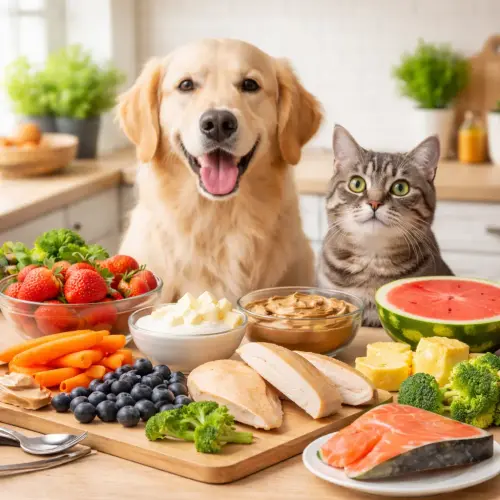
As a pet parent, you want to share your meals with your furry best friend. But not all human foods are safe. Knowing which ones are okay — and in what quantities — helps you bond without compromising your pet’s health. This list covers 11 vet-approved options that are generally safe when offered as occasional treats, not meal replacements.
Remember: treats should make up no more than 10% of your pet’s daily calorie intake. The other 90% should come from a balanced, species-appropriate commercial diet. For a related guide, see 10 Vet-Approved Diet Tips: Essential Guide for Healthy Pets.
11 Human Foods That Are Safe in Small Amounts for Pets
1. Plain, Cooked Chicken
Skinless, boneless chicken breast that is boiled or baked without salt, oil, or seasoning is a lean protein source. It’s gentle on the stomach and can be used as a training reward or a topper for picky eaters. Always remove any bones and cut into small, bite-sized pieces.
2. Carrots
Crunchy raw carrots are low in calories and high in fiber and beta-carotene. They can help clean your pet’s teeth and satisfy the urge to chew. For small breeds or kittens, blanch or steam the carrots to soften them slightly to avoid choking.
3. Blueberries
These tiny berries are loaded with antioxidants, vitamin C, and fiber. Serve them frozen on a hot day or fresh as a low-sugar treat. Limit to a few berries per day for cats and small dogs; larger dogs can have up to a handful.
4. Plain, Cooked White Rice
Plain white rice is easy to digest and can help soothe an upset stomach. It’s often recommended by vets for pets recovering from diarrhea or vomiting. Serve it cooled and unseasoned — no butter, salt, or broth.
5. Apples (without seeds or core)
Apples provide vitamin A, vitamin C, and fiber. Remove the seeds and core before slicing into wedges. The seeds contain trace amounts of cyanide and are toxic in large quantities. A few small wedges make a crunchy, sweet snack.
6. Pumpkin (plain, canned)
100% pure pumpkin puree (not pumpkin pie filling) is rich in fiber and helps regulate digestion — it can relieve both constipation and mild diarrhea. Start with one teaspoon for cats and small dogs, up to two tablespoons for larger breeds.
7. Green Beans (plain, steamed or raw)
Green beans are low in calories and high in vitamins K, C, and manganese. They can be served raw (cut into short pieces) or steamed. Avoid canned beans with added salt or seasoning.
8. Cooked Eggs (plain)
Scrambled or hard-boiled eggs without oil, butter, or seasoning are an excellent source of protein and fatty acids. They can improve coat condition. Serve in small portions — half an egg for small pets, one full egg for large dogs, no more than once a week.
9. Salmon (cooked, boneless)
Salmon is packed with omega-3 fatty acids, which support joint health and a shiny coat. Always cook the fish thoroughly to kill parasites, and remove all bones. Avoid raw salmon, which can carry harmful bacteria.
10. Cheese (low-lactose varieties)
Plain, low-lactose cheeses like cottage cheese, mozzarella, or cheddar can be given in tiny amounts. Cheese contains calcium and protein, but many pets are lactose intolerant. A small cube once in a while is fine, but skip it if your pet shows signs of digestive upset.
11. Watermelon (seedless, rind removed)
Watermelon is mostly water and makes a hydrating summer treat. Remove all seeds and the hard green rind before cutting the flesh into small cubes. Limit to a few cubes to avoid diarrhea from the natural sugars.
Comparison of Human Foods That Are Safe in Small Amounts for Pets
| Food Item | Key Benefit | Serving Tip | Max Portion (per day) |
|---|---|---|---|
| Plain cooked chicken | Lean protein | No skin, bones, seasoning | 1 tbsp per 10 lbs |
| Carrots | Fiber, dental health | Cut into bite-size pieces | 2–3 small sticks |
| Blueberries | Antioxidants | Wash and serve fresh or frozen | 3–10 berries |
| Plain white rice | Digestive aid | Cooled, unseasoned | 1–2 tbsp per 20 lbs |
| Apples (seedless) | Vitamins A and C | Remove seeds and core | 1–2 small wedges |
| Pumpkin (plain canned) | Digestive regulation | 100% pure pumpkin | 1 tsp–2 tbsp |
| Green beans | Low-calorie crunch | Plain, cut into pieces | 5–10 beans |
| Cooked eggs (plain) | Protein and fatty acids | Scrambled or hard-boiled | ½ egg per 20 lbs |
| Cooked salmon | Omega-3 fatty acids | Baked, boneless, no seasoning | 1 oz per 20 lbs |
| Low-lactose cheese | Calcium and protein | Small cubes, plain | 1 small cube |
| Watermelon (seedless) | Hydration | Remove seeds and rind | 2–3 small cubes |
Who Should Consider These Human Foods That Are Safe in Small Amounts for Pets
These treats are suitable for healthy adult dogs and cats. Puppies and kittens can also enjoy them in even smaller portions. However, pets with specific health conditions — such as diabetes, pancreatitis, allergies, or obesity — may need to avoid certain items. Always run new foods past your vet first. For a related guide, see 14 Human Foods Toxic to Dogs and Cats: Essential Safety Guide.
Useful Resources
For additional guidance on feeding your pet a balanced diet, refer to these trusted sources:
- American Kennel Club — Human Foods Dogs Can and Can’t Eat
- VCA Animal Hospitals — General Feeding Guidelines for Cats
Frequently Asked Questions About Human Foods That Are Safe in Small Amounts for Pets
Can I give my dog grapes as a treat?
No, grapes and raisins are highly toxic to dogs and can cause kidney failure. Never feed them to your pet.
Is it safe for cats to eat bananas?
Bananas are non-toxic to cats, but they are high in sugar. A very small slice once in a while is fine, but most cats do not need fruit.
Can dogs eat peanut butter?
Plain, unsalted peanut butter without xylitol (a sugar substitute) is safe in small amounts. Always check the label for xylitol, which is toxic to dogs.
How much plain cooked chicken can I give my cat daily?
One to two teaspoons of shredded, plain cooked chicken is enough as an occasional treat. It should not replace their complete diet.
Can I feed my dog raw carrots?
Yes, raw carrots are safe for most dogs, but cut them into bite-sized pieces to prevent choking. Small dogs may prefer steamed carrots.
Are blueberries safe for cats?
Yes, blueberries are non-toxic to cats. Offer only one or two berries at a time, and wash them thoroughly first.
Is plain rice safe for dogs with diarrhea?
Yes, plain white rice is often recommended by veterinarians to help settle a dog’s upset stomach. Serve it cool and unseasoned.
Can pets eat apple seeds?
No, apple seeds contain cyanide and are toxic in large quantities. Always remove the core and seeds before offering apple slices.
How much pumpkin can I give my cat?
One teaspoon of plain canned pumpkin per day is enough for most cats. Start with less to ensure they tolerate it well.
Can dogs eat green beans every day?
Yes, plain green beans are low in calories and can be a healthy daily snack. Limit to about 10 beans for a medium-sized dog.
Is cheese bad for dogs?
Cheese is not toxic, but many dogs are lactose intolerant. Choose low-lactose varieties and give only a small cube occasionally.
Can cats eat cooked eggs?
Cooked eggs (scrambled or hard-boiled, no seasoning) are safe for cats. Offer no more than one tablespoon once a week.
Is watermelon safe for dogs?
Yes, seedless watermelon with the rind removed is safe and hydrating. Too much can cause loose stools due to natural sugars.
Can I give my dog salmon from a can?
Only if it’s packed in water with no added salt or oil, and all bones are removed. Fresh cooked salmon is generally safer.
How often can I feed my pet these human foods?
Treats — including safe human foods — should make up no more than 10% of daily calories. A few times a week is ideal for most pets.
Can puppies eat blueberries?
Yes, but cut them in half to prevent choking. Blueberries are a good source of antioxidants for growing puppies.
Is plain yogurt safe for dogs?
Plain, unsweetened yogurt with live cultures is safe for many dogs. However, some dogs are lactose intolerant; start with a teaspoon.
Can cats eat carrots?
Cats are obligate carnivores and do not need vegetables, but a small piece of cooked carrot is safe if they show interest.
What should I do if my pet eats something toxic?
Contact your veterinarian or an animal poison control center immediately. Keep the packaging or a sample of the food for reference.
Can senior pets eat these treats?
Yes, but adjust portion sizes based on weight and health. Senior pets may have dietary restrictions; always consult your vet first.