



parasites that can harm your pet Key Takeaways
Keeping your dog or cat healthy means staying ahead of the tiny invaders that can cause serious health problems.
- Many parasites that can harm your pet are preventable with year-round medication and routine veterinary care.
- Early warning signs like unexplained weight loss, scooting, or persistent scratching often indicate a parasitic infection.
- Treatment varies by parasite type, but most can be successfully managed with prompt attention and proper hygiene.
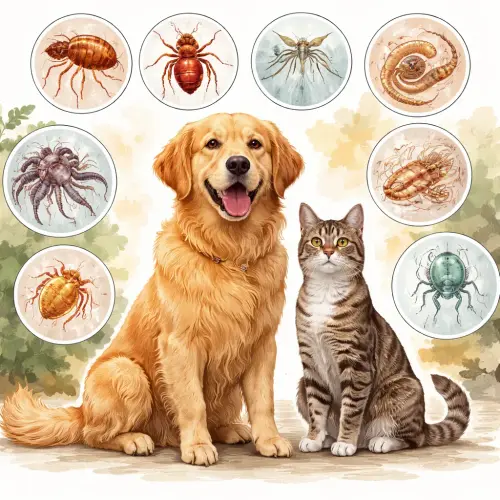
Understanding the Hidden Dangers: Why Pet Parasites Matter
Pets explore the world with their noses and mouths, which puts them at constant risk of encountering harmful parasites for pets. These organisms can live inside the intestines, lungs, heart, or on the skin, stealing nutrients and causing inflammation. Beyond discomfort, some parasites can transmit diseases to humans, making prevention a household-safety issue as well.
Recognizing the signs early can mean the difference between a simple deworming treatment and a serious, costly illness. In the sections below, we break down eight common pet parasites, their symptoms, how they spread, and what you can do about them.
8 Common Parasites That Can Harm Your Pet: Symptoms, Treatment, and Prevention
1. Fleas
Fleas are the most common external parasite for dogs and cats. They cause intense itching, allergic reactions, and can transmit tapeworms.
Symptoms: Excessive scratching, hair loss (especially at the tail base), red bumps on the skin, and visible tiny black specks (flea dirt) on the fur. For a related guide, see 7 Proven Reasons Your Dog Keeps Scratching and How to Stop It.
Transmission: Fleas jump from infested environments like yards, carpets, or other animals. They thrive in warm, humid conditions.
Treatment: Topical spot-ons, oral medications, and flea shampoos. Also treat your home with a fogger or spray for complete eradication.
Prevention: Year-round flea prevention products from your vet. Vacuum frequently and wash pet bedding in hot water.
2. Ticks
Ticks latch onto the skin and feed on blood. They can transmit Lyme disease, ehrlichiosis, and anaplasmosis.
Symptoms: Lethargy, fever, joint swelling, lameness, and sometimes a bullseye rash at the bite site (in humans). Pets may show no early signs.
Transmission: Ticks live in wooded, grassy, or brushy areas. Pets pick them up during walks or time outside.
Treatment: Manual removal with tweezers (pull straight out). Oral or topical tick repellents help kill attached ticks.
Prevention: Tick collars, oral preventatives, and checking your pet thoroughly after outdoor activities.
3. Roundworms
Roundworms are intestinal parasites that steal nutrients, leading to poor growth, a potbelly appearance, and even pneumonia in severe cases.
Symptoms: Vomiting (sometimes with visible worms), diarrhea, weight loss, and a dull coat. Puppies and kittens are especially vulnerable.
Transmission: Ingestion of eggs from contaminated soil, infected rodents, or through a mother’s milk.
Treatment: Deworming medications prescribed by a veterinarian. Multiple doses are often needed to break the life cycle.
Prevention: Regular fecal exams and routine deworming for puppies and kittens. Pick up feces promptly.
4. Hookworms
Hookworms attach to the intestinal wall and feed on blood, causing anemia and weakness.
Symptoms: Pale gums, dark or tarry stools, weight loss, and poor appetite. Heavy infestations can be fatal in young animals.
Transmission: Larvae penetrate the skin (often through paw pads) or are ingested from contaminated soil or feces.
Treatment: Oral dewormers with specific efficacy against hookworms. Iron supplements may be needed for anemic pets.
Prevention: Keep yards clean of feces. Monthly heartworm preventive products often include protection against hookworms.
5. Tapeworms
Tapeworms are segmented flatworms that live in the small intestine. They rarely cause severe illness but can rob nutrients and cause discomfort.
Symptoms: Scooting (dragging bottom on floor), licking or biting at the anus, and tiny rice-like segments in stool or around the tail.
Transmission: Ingestion of infected fleas (most common) or eating raw meat or infected rodents.
Treatment: Oral or injectable dewormers that dissolve the tapeworm inside the intestine. Flea control is essential to prevent recurrence.
Prevention: Strict flea management. Avoid feeding raw meat or allowing hunting of rodents.
6. Heartworms
Heartworms are a serious, potentially fatal parasite that lives in the heart and pulmonary arteries. They cause heart failure and lung disease.
Symptoms: Mild cough, fatigue after exercise, difficulty breathing, and fainting. In advanced cases, swelling of the abdomen (due to fluid buildup).
Transmission: Transmitted by infected mosquitoes. One bite can introduce larvae that mature into adult worms.
Treatment: Costly and risky — involves a series of injections to kill adult worms, along with strict rest. Prevention is far safer.
Prevention: Year-round monthly heartworm preventive medication (oral, topical, or injection). Annual testing is required.
7. Ear Mites
Ear mites are tiny arachnids that live in the ear canal, causing intense irritation and potential secondary infections.
Symptoms: Head shaking, scratching at ears, dark crumbly debris (looks like coffee grounds) inside the ear, and redness.
Transmission: Direct contact with an infested animal. Young pets and those in shelters are at higher risk.
Treatment: Prescription ear drops that kill the mites. Deep cleaning by a vet is often needed for severe cases.
Prevention: Routine ear checks and early treatment if any signs appear. Avoid sharing bedding or toys with unknown animals.
8. Giardia
Giardia is a protozoan parasite that infects the intestines, causing diarrhea and nutrient malabsorption.
Symptoms: Soft, foul-smelling diarrhea (may contain mucus), gas, vomiting, and weight loss. Some pets carry it without symptoms.
Transmission: Drinking contaminated water from puddles, streams, or unkempt bowls. Also through infected feces.
Treatment: Oral antibiotics (like metronidazole or fenbendazole) for several days. Recheck stools to ensure clearance.
Prevention: Provide clean, fresh water. Avoid letting pets drink from standing water. Clean bowls daily.
Recognizing Pet Parasite Symptoms Early
Early detection of pet parasite symptoms can prevent serious health complications. Watch for these general warning signs that may indicate a parasitic problem: For a related guide, see 7 Stressed Cat Signs Every Owner Must Know (Don’t Ignore).
- Unexplained weight loss or poor growth in young animals
- Changes in appetite (increased or decreased)
- Scooting, licking, or biting at the hindquarters
- Visible worms or segments in stool, vomit, or around the anus
- Coughing, gagging, or difficulty breathing (especially after exercise)
- Itchy ears or dark discharge in the ear canal
- Sudden lethargy or reluctance to play
If you notice any of these symptoms, schedule a veterinary checkup promptly. A simple fecal examination can identify many intestinal parasites.
Effective Prevention Strategies for Harmful Parasites for Pets
Prevention is the most reliable way to protect your companion. Here are the steps every owner should take:
- Use year-round preventive medication — Many monthly products cover heartworm, fleas, ticks, and intestinal worms.
- Keep your environment clean — Dispose of feces daily, wash bedding weekly, and vacuum frequently.
- Practice good hygiene — Wash your hands after handling pets, especially before meals. Keep litter boxes and kennels clean.
- Avoid risky environments — Prevent pets from drinking standing water, eating raw meat, or hunting rodents.
- Regular vet checkups — Annual or biannual examinations and fecal testing catch problems early.
Comparison of Treatment and Prevention Options
| Parasite | Treatment Approach | Prevention Product Type |
|---|---|---|
| Fleas | Oral/topical insecticide + home spray | Monthly oral or topical flea preventative |
| Ticks | Manual removal + oral/topical repellent | Tick collar or oral preventative |
| Roundworms | Deworming medication (multiple doses) | Monthly multi-parasite prevention |
| Hookworms | Oral dewormer + possible iron supplement | Heartworm preventive with hookworm protection |
| Tapeworms | Oral dewormer + flea control | Flea prevention + hunting restriction |
| Heartworms | Injectable adulticide therapy (risky) | Monthly heartworm preventive |
| Ear Mites | Prescription ear drops + cleaning | Ear hygiene + early treatment |
| Giardia | Oral antibiotics | Clean water + sanitation |
Useful Resources
For more detailed information about pet parasite prevention and treatment, visit these authoritative sources:
- American Veterinary Medical Association — Parasite Protection for Pets
- Centers for Disease Control and Prevention — Parasites and Pets
Frequently Asked Questions About parasites that can harm your pet
What are the most common parasites that can harm your pet?
The most common ones include fleas, ticks, roundworms, hookworms, tapeworms, heartworms, ear mites, and giardia. Each affects pets differently and requires specific treatment.
Can humans catch parasites from their pets?
Yes, some parasites like roundworms, hookworms, and giardia are zoonotic, meaning they can transfer from pets to people. Good hygiene and regular deworming reduce this risk.
How often should I deworm my dog or cat?
Puppies and kittens should be dewormed every 2–3 weeks until 16 weeks old, then monthly to 6 months. Adult pets typically need deworming 2–4 times per year, based on lifestyle and vet advice.
What are the first signs of pet parasite symptoms ?
Common early signs include weight loss, diarrhea, vomiting, scooting, intense itching, and visible worms in stool. Behavioral changes like lethargy or irritability can also occur.
Can heartworms be cured in dogs?
Yes, but treatment is expensive, painful, and carries risks. The standard therapy involves multiple injections to kill adult worms along with strict confinement. Prevention is much safer.
Are parasite preventions safe for my pet?
Most veterinary-approved preventives are very safe when used according to label directions. Side effects are rare but may include mild vomiting or drooling. Always consult your vet before starting any product.
My pet has scooting. Is it always worms?
Not always. Scooting can also be caused by anal gland issues, allergies, or skin infections. If it persists, see a vet for proper diagnosis. For a related guide, see 7 Surprising Reasons Your Dog Keeps Scratching and Proven Fixes.
Can indoor pets get parasites?
Yes. Fleas can come in on shoes or clothing, mosquitoes (heartworm vector) get indoors, and ear mites can spread through contact with other animals or bedding.
How do I collect a stool sample for my vet?
Collect a fresh sample (less than 24 hours old) using a clean plastic bag or container. Store it in the refrigerator if you cannot bring it immediately. A teaspoon is usually enough.
Are natural or home remedies effective for dog parasites?
Most natural remedies are not reliably effective and can be unsafe. For example, garlic or diatomaceous earth may cause harm. Stick to vet-recommended treatments for best results.
What should I do if I see fleas on my pet?
Start a vet-recommended flea treatment (topical or oral) immediately. Also treat your home with a fogger or spray and wash all bedding in hot water. Repeat as directed by the product.
Can ticks cause paralysis in pets?
Yes, certain tick species produce a toxin that causes ascending paralysis. Symptoms usually resolve within 24–72 hours after the tick is removed, but veterinary care is essential.
How long do tapeworms live in a dog?
Adult tapeworms can live for months inside the intestine, shedding segments (proglottids) that appear in stool. With effective treatment, they are eliminated within days.
Do cats get heartworms as often as dogs?
Cat heartworm disease occurs less frequently, but it is more unpredictable and harder to diagnose. Indoor cats are also at risk from mosquitoes. Prevention is recommended for cats in endemic areas.
Can a fecal test miss some parasites?
Yes. Fecal tests may miss low-level or intermittent shedding. Some parasites (like giardia or heartworm) require special testing methods. If symptoms persist, ask your vet about additional tests.
What are the dangers of hookworms in puppies?
Hookworms cause blood loss, leading to anemia, weakness, and even death in severe cases. Puppies can also develop a skin infection from larvae penetrating their paw pads.
Is it necessary to give heartworm prevention year-round?
Yes. Even in colder climates, mosquitoes can survive indoors or during mild spells. Year-round prevention ensures continuous protection and avoids gaps in coverage.
Can ear mites spread to other pets in the house?
Yes, ear mites are highly contagious among cats and dogs living together. All pets in the household should be treated if one is diagnosed.
What does giardia look like in dog stool?
Giardia typically causes soft, pale, foul-smelling diarrhea that may contain mucus. Stool consistency can vary, so confirmation requires a vet test.
How can I prevent my dog from getting parasites when hiking or camping?
Use a monthly parasite preventive that covers fleas, ticks, and heartworm. Avoid letting your dog drink from streams or puddles. Check for ticks daily and carry a tick removal tool.