



first vet visit tips Key Takeaways
Bringing home a new puppy or kitten is pure joy, but that first trip to the vet can feel a little intimidating.
- Start socializing your pet to car rides and handling before the appointment.
- Bring a detailed new puppy vet visit checklist to ensure nothing is missed.
- Stay calm and use high-value treats to create positive associations with the clinic.
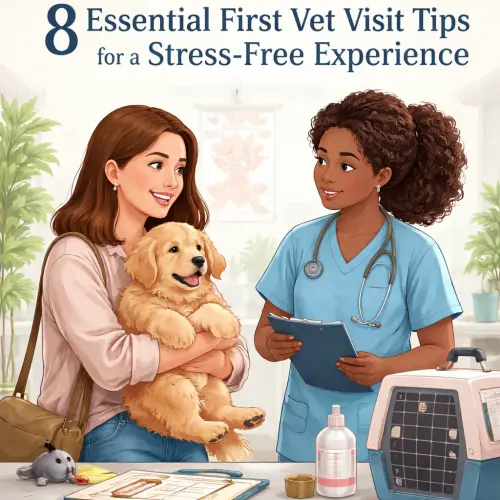
Why a Positive First Vet Visit Matters for Your Pet
A puppy or kitten’s first trip to the veterinarian is much more than a quick weigh-in. It’s a foundational experience that shapes how your pet reacts to medical care for years to come. When you follow smart first vet visit tips, you help your pet feel safe, curious, and cooperative instead of fearful. That early trust makes future exams, vaccinations, and even emergency visits far less stressful.
Beyond the emotional benefits, a thorough first appointment gives the vet a baseline for your pet’s health. They’ll check heart rate, temperature, eyes, ears, and teeth, and begin the vaccination schedule. Many vets also offer a quick fecal exam and talk about parasite prevention. Knowing what to expect at first vet visit helps you ask the right questions and prepare your pet.
8 First Vet Visit Tips for a Calm, Successful Appointment
These eight practical steps cover everything from pre-visit preparation to what to do while you’re in the exam room. Whether you’re a first-time pet parent or just need a refresher, these first vet visit tips will help you and your pet feel ready.
1. Schedule Wisely and Arrive Early
Choose a time when your pet is naturally calm — usually after a nap and a light meal, not right after a high-energy play session. Arriving ten to fifteen minutes early gives your pet time to sniff around the parking lot and lobby without rushing. A calm arrival prevents the adrenaline spike that can make the entire appointment feel overwhelming.
2. Acclimate Your Pet to the Carrier or Leash
If your pet is riding in a carrier, leave it open in your living room a few days before the visit. Toss in a soft blanket and a treat so it feels like a cozy den rather than a scary box. For dogs, practice walking calmly on a leash around the house. This simple preparation is one of the most helpful first vet visit tips because it reduces the shock of the transport experience.
3. Bring a Detailed New Puppy Vet Visit Checklist
Your vet will ask about food, potty habits, behavior, and any past medical history (even from the breeder or shelter). Write down your questions beforehand — like how often to feed, when to start heartworm prevention, or what signs of illness to watch for at home. A written new puppy vet visit checklist ensures you won’t forget anything important while you’re distracted by the excitement or worry of the moment.
4. Pack High-Value Treats and Familiar Comforts
Treats are your best tool for creating positive associations. Bring soft, smelly options like cut-up chicken or cheese — things your pet only gets during special events. A favorite toy or a small blanket from home can also provide comfort on the exam table. When you reward calm behavior during handling, your pet learns that good things happen at the vet. For a related guide, see 8 Proven Benefits of Regular Grooming for Your Pet’s Health.
5. Stay Calm and Use a Quiet Voice
Pets are masters at reading our emotions. If you’re tense, they’ll pick up on that anxiety. Take a few deep breaths in the waiting room, talk to your pet in a soft, cheerful tone, and avoid rushing your movements. This is one of the simplest yet most powerful first vet visit tips — your calm presence is their anchor. For a related guide, see 8 Essential Ear Care Tips for Pets: Avoid Painful Infections.
6. Let the Vet Team Guide the Introduction
Allow the veterinary technician and doctor to approach your pet on their own terms. They’re trained to read body language and will often let your pet sniff their hands before any touching. If your pet seems nervous, ask if you can hold them for parts of the exam. A good clinic will happily accommodate small adjustments to keep your pet comfortable.
7. Ask Questions About Nutrition, Vaccines, and Preventive Care
The first visit is the perfect time to build a preventive care plan. Ask about the vaccination schedule, flea and tick control, heartworm prevention, and what kind of food is best for your pet’s breed and age. Vets appreciate engaged pet parents, and your questions show you’re committed to your pet’s long-term well-being.
8. Celebrate With a Fun, Low-Key Activity Afterwards
After the appointment, give your pet a few minutes of quiet praise and a special treat away from the clinic. For puppies, a short, gentle walk in a safe area can help them decompress. Avoid overwhelming them with a trip to a busy dog park or a house full of loud visitors. Ending the experience on a positive note reinforces that the vet isn’t something to dread.
What to Expect at First Vet Visit: A Typical Appointment Timeline
If you’ve never been through a what to expect at first vet visit guide, here’s a quick overview of what usually happens. The appointment generally lasts thirty to forty-five minutes. You’ll check in, fill out a short medical history form, and then a technician will take your pet’s weight and temperature. After that, the veterinarian performs a nose-to-tail exam, discusses vaccinations, and answers all your questions. Many clinics also schedule the first round of vaccines during this visit, along with a fecal test to check for parasites. Knowing the flow helps you anticipate each step and keep your pet relaxed. For a related guide, see 8 Essential Things to Expect During a Vet Visit: A Checklist.
Useful Resources
For more detailed information on puppy and kitten care, the American Veterinary Medical Association’s puppy care guide offers expert-reviewed advice on vet visits, vaccines, and early socialization. Additionally, the ASPCA’s puppy care checklist covers everything from choosing a vet to setting up your home for a new pet.
Frequently Asked Questions About first vet visit tips
When should I schedule my puppy’s first vet visit?
Most vets recommend bringing your new puppy or kitten in within the first week after adoption, usually around 6 to 8 weeks of age. This allows for an early health check and the start of the vaccination schedule.
How long does the first vet appointment usually last?
A typical first visit takes about 30 to 45 minutes. This includes check-in, a nose-to-tail exam, vaccines, and time for you to ask questions. Some clinics may take a little longer if they run diagnostics like a fecal test.
What should I bring to the first vet visit?
Bring any adoption papers, vaccination records from the breeder or shelter, a fresh stool sample, your pet’s favorite treats, a familiar toy or blanket, and a written list of questions. A new puppy vet visit checklist can help you organize everything.
Should I feed my pet before the vet visit?
A light meal a few hours before the appointment is fine. Avoid a full meal right before the visit because travel and excitement can cause an upset stomach. Bring a small bag of treats for positive reinforcement during the exam.
How do I keep my puppy calm in the waiting room?
Sit in a quiet corner away from other animals if possible. Let your puppy sit on your lap or a familiar blanket. Use a calm voice and offer treats for relaxed behavior. Avoid letting your puppy greet every dog in the lobby.
Can I hold my pet during the vet exam?
Most vets encourage pet parents to hold their animals for comfort, as long as it doesn’t interfere with the exam. Ask the vet or technician if you can stay close to your pet’s head or hold them in your lap for parts of the checkup.
What vaccinations will my puppy get at the first visit?
The first round typically includes the distemper, adenovirus, parvovirus, and parainfluenza (DA2PP) vaccine. Some clinics also give the bordetella vaccine for kennel cough. Your vet will outline a schedule for boosters.
Do I need to bring a stool sample?
Yes, a fresh stool sample (collected within 12 hours of the appointment) helps the vet check for intestinal parasites like roundworms or hookworms. This is a routine part of a first vet visit checklist.
What if my pet is very scared or aggressive at the vet?
Tell the staff ahead of time so they can prepare a calm approach. They may use a towel, a gentle restraint, or recommend a fear-free handling technique. Some clinics offer pheromone sprays or quiet exam rooms for nervous pets.
How much does a first vet visit typically cost?
The cost varies widely depending on your location and the clinic. A standard first visit for a puppy or kitten usually ranges from $50 to $150, not including vaccines or tests. Many clinics offer wellness packages for new pets.
Can I visit the vet clinic before the appointment?
Yes, many clinics welcome a short “happy visit” where you and your pet stop by for just a few minutes, get a treat from the front desk, and leave without any procedures. This helps desensitize your pet to the environment.
What is a fear-free veterinary clinic?
A fear-free certified clinic uses low-stress handling, pheromones, and comforting environment adjustments to minimize fear and anxiety in pets. They avoid forceful restraint and prioritize the pet’s emotional well-being during each visit.
Should I bring my other pets to the first vet visit?
It’s best to leave existing pets at home unless you’re scheduling a simultaneous visit. A new pet’s first appointment can already be overwhelming, and a familiar but curious dog or cat might create extra stress.
How do I find the right veterinarian for my pet?
Ask for recommendations from friends, local breeders, or rescue groups. Look for a clinic that offers fear-free practices, clear communication, and a welcoming staff. Many vets offer a free initial consultation so you can see if they’re a good fit.
What questions should I ask at the first vet visit?
Ask about the vaccination schedule, parasite prevention, spay/neuter timing, recommended food, and signs of illness. You can also ask about microchipping, dental care, and how to handle common behavioral issues like house training.
Is it normal for my puppy to be scared of the car ride?
Very common. Practice short, fun car rides to positive destinations (like a park) before the vet visit. Use a crate or a pet seat belt for safety, and bring a familiar blanket to comfort your pet during the drive.
Can I use calming supplements before the visit?
Some calming treats or pheromone collars (like Adaptil for dogs or Feliway for cats) can help. Always check with your vet before giving any new supplement, especially for a young pet. Your vet may also recommend a prescription medication for extreme anxiety.
What happens if my pet has fleas or ticks at the first visit?
Your vet will likely apply a fast-acting flea treatment and prescribe a preventive plan. They’ll also check for any skin irritation or diseases transmitted by fleas. Don’t be embarrassed — parasites are common in new pets and easily treated.
When should I schedule the second vet visit?
Your vet will give you a recommended schedule based on your pet’s age and vaccine needs. Puppies often need booster vaccines every 3 to 4 weeks until they’re about 16 weeks old. The second visit might be two to four weeks after the first.
How do I help my cat feel safe during the first vet visit?
Cats often feel more secure in a carrier lined with a soft blanket. Cover the carrier with a light towel during the wait to reduce visual stimulation. Use treats designed for cats, and let the vet team approach slowly. Many cat owners request a quiet exam room away from barking dogs.