



keep pets safe during typhoons Key Takeaways
Typhoons bring more than heavy rain and wind—they cause flooding, power outages, and sudden evacuations.
- Create a dedicated pet emergency kit with food, meds, and comfort items to keep pets safe during typhoons .
- Microchip your pet and store recent photos in a waterproof sleeve for fast ID recovery.
- Practice storm drills so your dog or cat knows exactly where to go when the sirens sound.
Why Typhoon Pet Safety Demands Advance Planning
Typhoons bring more than heavy rain and wind—they cause flooding, power outages, and sudden evacuations. According to the American Veterinary Medical Association (AVMA), many pets become lost or injured during storms because owners wait until the last minute to act. Pet safety typhoons starts weeks before a storm is even forecast. Dogs and cats sense barometric changes and may become anxious, hide, or try to run away. Having a clear plan helps both you and them stay calm. For a related guide, see 7 Essential Questions New Pet Owners Ask (Avoid These.
A 2024 survey by the Federal Emergency Management Agency (FEMA) found that only 35% of pet owners have an emergency plan that includes their animals. That gap puts countless pets at risk. By taking a few deliberate steps now, you can dramatically improve your pet’s odds of staying safe and quickly reunited if separated.
1. Assemble a Disaster Kit Tailored for Your Pet
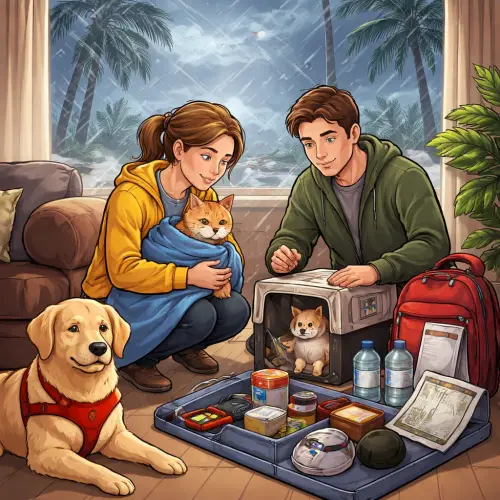
A well-stocked emergency kit is the foundation of any plan to keep pets safe during typhoons. Think of it as a go-bag for your furry family member. Store it in a waterproof container near your main exit or inside your car’s trunk.
Essentials for the Pet Disaster Kit
- At least a 7-day supply of dry food in a sealed, waterproof bag.
- Bottled water (half a gallon per day for a medium-sized dog, less for cats/small dogs).
- Copies of vaccination records, microchip numbers, and recent photos printed on waterproof paper.
- Medications (minimum 14-day supply) in childproof containers, plus a pet first-aid kit.
- Collapsible bowls, leash, harness, muzzle (if your dog is anxious around strangers), and a sturdy carrier or crate.
- Comfort items: a favorite toy, a blanket, and calming treats or pheromone spray.
Rotate food and water every six months. Check expiration dates on meds annually. Add a flashlight with extra batteries and a portable USB fan for hot, humid shelters.
2. Create a Detailed Evacuation Plan That Includes Every Pet
Evacuating with a pet is more complex than leaving with just humans. Your evacuation plan should answer: Where will you go? How will you transport each animal? What if you cannot take them? Start by identifying pet-friendly hotels or evacuation shelters within a 50-mile radius. Many emergency shelters now allow pets, but call ahead to confirm rules.
Practice the Drill Before the Storm
Run a practice evacuation twice a year. Crate your cat, leash your dog, grab the disaster kit, and load the car in under 15 minutes. Time yourself. This exercise reduces panic during a real emergency and helps your pet associate the crate with safety rather than fear. If you have multiple pets, assign one person per animal so nobody is left behind.
For pet owners with livestock, horses, or exotic animals, coordinate with local agricultural extension offices. They often have specialized transport resources for large animals during typhoon pet care tips scenarios.
3. Ensure Your Pet Has Reliable Identification
Lost pets are one of the most heartbreaking outcomes of a natural disaster. A sturdy collar with an ID tag is a good start, but tags can break or fall off. A microchip is a permanent, reliable form of ID that shelter workers and veterinarians scan when a lost animal is found.
Update your contact information with the microchip registry at least once a year. Write your phone number and an out-of-state emergency contact directly on the inside of the pet’s collar with a permanent marker. Keep a recent photo of your pet on your phone (showing any unique markings) and email a copy to yourself and a friend outside the disaster zone.
According to the American Society for the Prevention of Cruelty to Animals (ASPCA), microchipped pets are returned to their owners at a rate of over 52% compared to only 14% for unchipped animals. That statistic alone can motivate every owner to schedule a quick vet visit now.
4. Set Up a Safe Indoor Room During the Storm
Not all typhoons require evacuation. If you ride out the storm at home, create a safe room where your pets can feel secure. Choose an interior windowless space—a bathroom, laundry room, or hallway—with no hazards like loose wires or heavy furniture that could tip over.
Tips for the Safe Room
- Place a waterproof pet bed or thick blankets on the floor for comfort.
- Set out fresh water and a litter box in an adjacent area.
- Close curtains to block flashes of lightning that may frighten animals.
- Turn on a white noise machine or leave a radio playing talk shows at low volume to muffle thunder and wind.
- Stay in the room with your pet as much as possible. Your presence is the best anxiety reducer.
Never leave a pet chained outside during a typhoon. Flooding, flying debris, and power lines pose lethal risks. Even pets that normally live outdoors should come inside well before the storm arrives.
5. Manage Anxiety Naturally and Safely
Storms terrify many pets. A dog that trembles during fireworks will likely panic during a typhoon. Fortunately, there are safe ways to ease their distress without medication. Start with these methods:
Calming Tools and Techniques
- ThunderShirt or similar pressure wrap: Gentle, constant pressure helps many dogs and cats feel secure.
- Pheromone diffusers or sprays: Products such as Adaptil (for dogs) or Feliway (for cats) mimic calming hormones.
- Calming music or brown noise: Apps like iCalmDog or YouTube playlists designed for anxious pets can mask storm sounds.
- Natural supplements: L-theanine, chamomile, or CBD (consult your vet first) may reduce acute fear.
If your pet has severe storm phobia, talk to your veterinarian about prescription anxiety medication. Do not give human sedatives—they can be dangerous for animals. A short course of vet-prescribed alprazolam or trazodone can make a typhoon survivable for a terrified pet.
6. Plan for the Aftermath: Floodwater and Hazards
After the typhoon passes, new dangers emerge. Floodwater often contains sewage, chemicals, and sharp debris. Do not let your pet drink from or wade through standing water. Keep them on a leash even in familiar areas because roads may be washed out and wildlife (snakes, displaced rodents) may be stressed and aggressive.
Inspect your yard for broken glass, nails, or downed power lines before letting your pet outside. Check their paws and skin for cuts or irritations. If your pet appears lethargic, has vomiting, or refuses to eat after the storm, contact a veterinarian immediately—they may have ingested contaminated water or a chemical.
Keep your emergency kit accessible for at least two weeks after the storm. Power outages may continue, making it hard to refrigerate medications or prepare food. Refill your water supply as soon as tap water is declared safe.
7. Communication and Community Networks
No one should face a typhoon alone. Tell your neighbors that you have pets and ask them to check on your animals if you are separated. Join local social media groups dedicated to pet safety during typhoons —these communities share real-time updates on open shelters, lost-and-found animals, and available supplies.
Print a “PETS INSIDE” sign and tape it to your front door before the storm. List the types and number of animals so rescue workers know what to expect. If you evacuate, take the sign down so first responders do not waste resources searching an empty home. For a related guide, see 10 Essential Pet Care Basics Every Beginner Needs to Know.
Finally, create a shared document (Google Docs or a simple email chain) with out-of-state contacts who can help coordinate if your phone dies. Write down your pet’s microchip number, vet’s phone number, and your temporary location. Share it with one person who is not in the storm zone.
Practical Checklist for Typhoon Pet Preparedness
| Task | Timeline |
|---|---|
| Assemble pet disaster kit | Now — 30 days before storm season |
| Update microchip info and ID tags | Annually and before each storm season |
| Practice evacuation drill | Twice a year (spring and fall) |
| Identify pet-friendly shelter or hotel | Before storm is forecast |
| Set up indoor safe room | 24 hours before landfall |
| Stock calming aids and anxiety tools | 1 week before storm |
| Communicate plan with neighbors and out-of-state contact | 3 days before expected storm |
Useful Resources
For official guidance on pet safety typhoons, visit the American Veterinary Medical Association’s disaster preparedness page: AVMA Disaster Preparedness for Pet Owners. This resource includes printable checklists and information on pet first aid.
For up-to-date evacuation shelter policies and live disaster updates, check the Ready.gov pet owners page: Ready.gov Pets. It covers everything from assembling a go-bag to handling service animals during emergencies.
Frequently Asked Questions About keep pets safe during typhoons
What should I put in a pet emergency kit for typhoons?
Include 7+ days of dry food, water, medications, vaccination records, a leash, harness, crate, first-aid supplies, a flashlight, and comfort items. Store in a waterproof container.
How can I keep my dog calm during a typhoon?
Use a pressure wrap like ThunderShirt, play calming music, offer natural supplements (with vet approval), and stay close to your dog in a windowless room. Your presence is the best comfort.
Do microchips work during power outages?
Yes, microchips do not require power to function. Handheld scanners used by shelters and vets operate on batteries and will read the chip even if the electrical grid is down.
Can I take my pet to a human evacuation shelter?
Some shelters accept pets, but you must confirm ahead of time. Many have designated pet areas or require crates. Never assume—call your local emergency management office before the storm.
What if I have multiple pets and cannot transport them all?
Prioritize by size and health. Contact neighbors or friends ahead of time to coordinate transporting extra animals. Shelters may offer space for multiple pets if you notify them in advance.
How do I protect outdoor pets during a typhoon?
Bring all outdoor pets inside well before the storm arrives. If they cannot come inside, secure them in a sturdy, elevated shelter with bedding, food, and water. No animal should be left chained outside.
Should I sedate my pet for a typhoon?
Only under veterinary guidance. Many over-the-counter sedatives are unsafe. Prescription medications like trazodone can help severe anxiety, but always consult your vet first for proper dosing.
What should I do if my pet runs away during the storm?
Stay inside until the storm passes. Then search immediately, using a flashlight and calling your pet’s name. Contact local shelters, post on social media lost-pet groups, and check with neighbors.
How can I help a scared cat during a typhoon?
Provide a covered hiding spot like a carrier with a soft blanket. Use pheromone spray (Feliway) in the room. Stay calm and avoid forcing the cat out of its hiding place.
Is floodwater dangerous for pets?
Yes. Floodwater can contain sewage, bacteria, chemicals, and sharp debris. Do not let pets drink it or walk through it. Rinse their paws with clean water after any contact.
What happens to pets in a shelter after a typhoon?
Shelters try to reunite pets with owners as quickly as possible. They scan for microchips and post photos online. If your pet is lost, visit local shelters daily and file a lost-pet report.
How often should I update my pet’s microchip info?
At least once a year, and immediately after moving or changing phone numbers. Most registries offer online updates for a small fee. A current chip can save your pet’s life.
Can I use a human first-aid kit on my pet?
Some items are safe—like sterile gauze, adhesive tape, and tweezers—but many human medications are toxic to pets. Purchase a ready-made pet first-aid kit or build one with vet-approved supplies.
Should I keep my pet in a crate during the storm?
If your pet is crate-trained and sees it as a safe den, yes. If not, a crate may increase panic. Use a covered carrier or a bathroom instead. Never lock a panicked animal in a crate.
What food is safe for pets after a typhoon?
Stick with their regular dry food if you stocked it in your kit. Avoid giving them table scraps or flood-contaminated food. If dry food runs out, plain boiled chicken and rice can be a temporary substitute.
How do I clean my pet after floodwater exposure?
Rinse with clean, lukewarm water and mild pet shampoo. Check for cuts, debris, or skin irritation. Dry thoroughly to prevent fungal infections. If wounds appear, see a vet promptly.
What if I have to evacuate but have no car?
What if I have to evacuate but have no car is covered in the guide above with practical context, useful examples, and details readers can use to make a better decision.
Are there apps that help find lost pets after storms?
Yes. Apps like Finding Rover (uses facial recognition), Nextdoor, and Petco Love Lost connect owners with shelters and neighbors. Post a clear photo and your contact info immediately.
Can I train my dog to be calm during storms?
Yes. Desensitization using storm sound recordings at low volume, paired with treats, can help over weeks. Combine with positive reinforcement. For severe phobia, work with a certified animal behaviorist.
How long should I keep my emergency kit ready after the storm?
Keep it fully stocked for at least two weeks post-typhoon. Power and water may take that long to restore. After that, replenish used items and store the kit for the next season.