



storm safety tips for pet owners Key Takeaways
Severe weather doesn’t just threaten homes — it frightens animals and throws off their routines.
- storm safety tips for pet owners start long before the first raindrop falls — pre-planning is everything.
- A well-stocked pet emergency kit should include food, water, meds, and comfort items for at least 72 hours.
- Practice your evacuation route with your pet so they stay calm when it counts most.
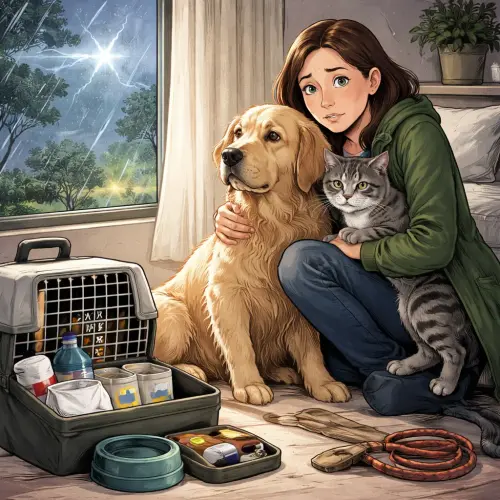
Why storm safety tips for pet owners Matter More Than You Think
Severe weather doesn’t just threaten homes — it frightens animals and throws off their routines. Dogs, cats, and other pets can panic, hide, or even run away during a storm. That’s why every responsible pet owner needs a solid pet storm preparedness guide ready to go.
Many people wait until a storm warning is issued, but by then it’s often too late to fully prepare. A proactive approach keeps your pet safe, reduces stress on your household, and helps you act quickly if you need to evacuate. Let’s walk through the ten most important tips, starting with what you should do before storm season even begins.
Tip 1: Build a Pet Emergency Kit Now
Your pet’s emergency kit should be separate from your family’s kit. Pack at least a three-day supply of food and water in sealed containers, along with bowls, a manual can opener, and any medications your pet takes. Include a copy of vaccination records, a recent photo (in case they get lost), and a leash or harness.
Don’t forget comfort items like a favorite toy or blanket. The familiar scent can significantly reduce anxiety during a storm. Keep the kit in an easily accessible spot — not tucked away in the back of a closet.
Tip 2: Identify Your Pet Before Storm Season
Microchipping is the most reliable way to reunite with a lost pet after a disaster. Make sure the chip is registered with your current contact information. In addition, your pet should wear a sturdy collar with an ID tag that includes your phone number.
If you have multiple pets, consider color-coded collars or tags. This small step can prevent confusion if you need to evacuate quickly. A pet storm preparedness guide always lists identification as a top priority because panic can cause even well-behaved pets to bolt.
Tip 3: Practice Getting Your Pet Into a Carrier or Vehicle
Many pets associate carriers with vet visits and resist entering them. To change that association, start training weeks before any storm threat. Place the carrier in a comfortable area, put treats and toys inside, and let your pet explore it on their own terms.
Once your pet is comfortable inside, practice short car rides. This will make an actual evacuation far less stressful. A pet that panics during a mock drill will likely panic during a real emergency, so repetition is key.
How to Create a Safe Space Inside Your Home
Even if you don’t need to evacuate, a storm can still be terrifying for your pet. A dedicated safe zone inside your home provides security and reduces anxiety. Choose a quiet, interior room like a bathroom, laundry room, or basement — away from windows and exterior doors.
Tip 4: Set Up a Storm Shelter Zone for Your Pet
Make this space cozy and familiar. Bring in your pet’s bed, some toys, and a few treats. If you have a crate-trained pet, put the crate in the room with the door open. The enclosed space can feel very safe during loud thunder or wind.
Consider using a white noise machine or a fan to muffle the sounds of the storm. Some owners find that calming pheromone diffusers or pressure wraps (like ThunderShirts) also help. Test these tools ahead of time so you know what works before a real storm arrives.
Tip 5: Keep Calm – Your Pet Reads Your Energy
Your pet takes emotional cues from you. If you act anxious or rushed, they will pick up on it. During a storm, speak in a calm, reassuring voice and move deliberately. Avoid yelling or sudden movements.
If you have a cat that hides, don’t force them out — just ensure they have access to food, water, and a litter box in their safe space. Dogs often want to be near you, so staying close can be comforting for both of you.
Evacuation Planning: A Critical Part of storm safety tips for pets
If authorities order an evacuation, you should be ready to leave immediately — with your pets. Never leave pets behind, even if you think you’ll return soon. Storms can change direction, roads can flood, and you may not be able to get back for days.
Tip 6: Know Where You Can Go With Your Pet
Not all emergency shelters accept pets. Research pet-friendly hotels, boarding facilities, and shelters in your area before storm season. Identify at least two options in different directions from your home.
Ask your veterinarian if they offer boarding during emergencies. Many clinics keep a list of trusted pet-friendly resources. Keep these contact details in your emergency kit and as a note on your phone.
Tip 7: Create a Pet Evacuation Checklist
Post a simple checklist near your door: grab the emergency kit, food and water supplies, medications, leashes, carriers, and any comfort items. If you have a pet that needs special handling (like a fearful cat or a large dog), note those steps too.
Practice your evacuation drill once a month. Time yourself to see how quickly you can get everything loaded. The goal is to be out the door in under 10 minutes. This habit is a core part of any pet storm preparedness guide.
During the Storm: Keeping Your Pet Calm and Safe
The storm itself is the most stressful time for pets. Your role shifts from planning to active reassurance. These four tips will help you get through the worst of it.
Tip 8: Use Noise Dampening Strategies
Loud thunder and wind are the primary triggers for pet panic. Close curtains to block lightning flashes and reduce the noise as much as possible. Turn on the TV, radio, or a white noise app to create a steady, predictable sound.
Some dogs respond well to calming music playlists designed specifically for canines. There are even free apps and YouTube channels that play tempest-taming frequencies. Experiment with these before a storm to see if they help your pet.
Tip 9: Never Leave a Pet Tied Up or Unsupervised Outdoors
This might seem obvious, but it’s worth saying: bring your pets inside before the storm hits. Outdoor enclosures, dog houses, and tie-outs offer no protection from flying debris, lightning, or flooding. Even a split-second decision to let your dog out to potty during a storm can put them at risk.
If you absolutely must let your pet out, use a leash and stay with them. Keep the time very short and watch the sky. Better yet, set up a patch of fake grass or puppy pads indoors for bathroom breaks.
Tip 10: Stay with Your Pet Until the Danger Passes
Your presence is the most powerful calming tool you have. Stay in the same room as your pet, talk softly, and offer gentle petting if they welcome it. Avoid forcing affection on a scared animal — sometimes just being nearby is enough.
After the storm passes, check your immediate area for hazards like downed power lines, broken glass, or sharp debris before letting your pet explore. Keep them on a leash for the first few outdoor trips in case landmarks have changed and your pet becomes disoriented.
Useful Resources
For more detailed emergency planning, the American Veterinary Medical Association offers an excellent disaster preparedness checklist at AVMA Disaster Preparedness for Pet Owners.
The Humane Society also provides guidance on keeping pets safe during natural disasters, including specific advice for different types of weather events: Humane Society Pet Disaster Preparedness.
Frequently Asked Questions About storm safety tips for pet owners
What is the most important thing to do before a storm to keep my pet safe?
The single most important step is to ensure your pet has proper identification — ideally a microchip linked to your current contact info — and a well-stocked emergency kit that includes food, water, and medications for at least 72 hours.
Should I take my pet with me if I evacuate?
Yes, always take your pets when you evacuate. If it’s not safe for you to stay, it’s not safe for them either. Never leave pets behind, even if you think you’ll be back soon.
What should I put in a pet emergency kit?
Include food, water, bowls, medications, vaccination records, a recent photo, leash, harness, collar with ID, carrier, comfort items like a toy or blanket, and a manual can opener. Pack everything in a waterproof container.
How can I calm my dog during a thunderstorm?
Create a quiet indoor space away from windows, use white noise or calming music, and stay with your dog. Some dogs respond well to pressure wraps like ThunderShirts or calming pheromone diffusers. Practice these methods ahead of time.
Is it safe to let my cat go outside during a storm?
No. Keep all cats indoors during a storm. Outdoor cats can become disoriented, injured by debris, or hit by lightning. Bring them inside well before the storm arrives.
What if my pet hides during a storm and I can’t find them?
Keep doors and windows closed so they can’t escape. Check common hiding spots like under beds, inside closets, or behind furniture. Leave their carrier open and place treats inside to encourage them out. Use a calm voice to call them.
How do I practice an evacuation drill with my pet?
Start by getting your pet used to their carrier and car rides. Then simulate an emergency by gathering your kit, leashing your pet, and loading them into the car. Time yourself and repeat monthly so it becomes routine.
Can I keep my dog in a crate during a storm?
Yes, if your dog is crate-trained and sees the crate as a safe space. Crate coverings can help dampen noise and provide an extra sense of security. Never force a dog into a crate if they are panicking.
What kind of ID is best for pets during emergencies?
A combination of a microchip and a visible collar tag with your phone number is best. The microchip serves as permanent backup if the collar is lost. Make sure the chip is registered in a national database.
How long should my pet’s food and water supply last in an emergency kit?
Plan for at least three days, but a full week’s supply is better. Store food in airtight containers and rotate it every few months to keep it fresh. Don’t forget a supply of fresh water.
What do I do if I have to leave my pet at home during a storm?
If you absolutely cannot take them, leave them inside a safe room with plenty of food and water. Never leave them tied up or crated in a way that prevents movement. Leave a note on your door indicating how many pets are inside for rescue workers.
Should I keep pets on a leash after a storm?
Yes, at least for the first few outdoor trips. Storms can rearrange the landscape and your pet may become disoriented or panic at unfamiliar sights and smells. A leash prevents them from bolting.
What are signs my pet is stressed during a storm?
Common signs include pacing, panting, trembling, hiding, excessive barking or meowing, drooling, loss of appetite, and seeking constant attention. Some pets may become destructive if highly anxious.
Can I give my pet medication to calm them during a storm?
Only give medication prescribed by your veterinarian. Never use human anxiety medication for pets. Some vets prescribe anti-anxiety meds for severe storm phobia — discuss this well before storm season.
How do I protect my pet from lightning?
Keep all pets indoors during thunderstorms. Remove metal collars or tags if the pet will be in a direct lightning path (though indoor risk is very low). The greater danger is from panic and running into hazards.
What should I do if my pet escapes during a storm?
Search the immediate area first, then contact local shelters, animal control, and veterinary clinics. Post on social media and community boards. Having a current photo and microchip gives you the best chance of reunion.
Do I need a pet first aid kit for storms?
Yes. Include bandages, antiseptic wipes, tweezers, a muzzle (injured pets may bite), and a pet-specific first aid guide. You can buy pre-made kits or assemble your own and keep it with your emergency supplies.
How can I prepare an outdoor cat for a storm?
You can’t fully protect an outdoor cat during a storm. The best approach is to keep them indoors permanently, or at least bring them inside well before a storm warning. If they refuse, provide a sheltered area they can access on their own.
What if my pet has special medical needs during an emergency?
Keep a two-week supply of any prescription medications and a copy of your pet’s medical records in your emergency kit. Include instructions for any daily care routines. If power may be lost, plan for refrigeration needs as well.
How often should I update my pet’s emergency plan?
Review and update your plan at least once a year, or whenever your pet’s health or living situation changes. Rotate food and water supplies every few months. Practice evacuation drills monthly during storm season.