



train your pet effectively Key Takeaways
Training your pet at home doesn’t require professional gear or endless patience — just the right techniques and a clear plan.
- The most powerful tool for training is consistency: every family member must use the same cues and rewards.
- Positive reinforcement — rewarding desired behaviors — works faster and builds a stronger bond than punishment.
- Short, frequent sessions (5–10 minutes) are far more effective than hour-long drills.
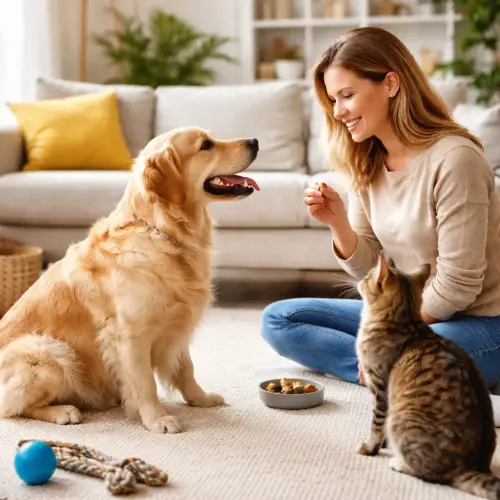
Why You Should Train Your Pet Effectively Starting Today
A well-trained pet is a happier, safer, and more integrated member of your household. When you train your pet effectively, you reduce problem behaviors like excessive barking, chewing, or pulling on the leash. More importantly, training strengthens the communication and trust between you and your animal companion. Many owners believe training requires endless time or expensive classes, but the truth is that with the right approach, you can make significant progress at home using effective pet training tips that fit your schedule. For a related guide, see 8 Proven Benefits of Regular Grooming for Your Pet’s Health.
Before diving into the eight methods, it helps to understand the core principles behind successful training. All the techniques below rely on clear cues, consistent timing, and a reward system that your pet finds motivating. Whether you are teaching a dog, cat, or even a parrot, the same psychological foundations apply. For a related guide, see 7 Essential Questions New Pet Owners Ask (Avoid These.
The Science Behind Positive Reinforcement
Behavioral science shows that animals repeat actions that lead to a positive outcome. When you reward a behavior with a treat, praise, or play, your pet’s brain releases dopamine — the same feel-good chemical humans experience. This makes the desired behavior more likely to recur. Understanding this biological process helps you avoid common pitfalls like punishment, which can create fear and confusion.
Method 1: Master the Art of Timing and Consistency
The single biggest mistake owners make when they try to train their pet effectively is inconsistent timing. A reward given even three seconds late can accidentally reinforce the wrong action. For example, if you say “sit” and your dog sits, but you fumble in a pocket for five seconds before giving the treat, your dog may associate the treat with standing back up.
Effective pet training tips for timing include: have treats ready before you ask for a behavior, mark the exact moment the behavior occurs with a clicker or a sharp “yes!” and deliver the reward within one second. Consistency also means using the same word for the same command every time — no swapping between “down” and “lie down.”
Method 2: Use High-Value Rewards to Motivate
Not all treats are created equal in your pet’s mind. Dry kibble may work for a hungry dog, but for challenging behaviors, you need something that your pet would cross the room for. Soft, smelly treats (like tiny pieces of chicken, cheese, or freeze-dried liver) usually top the list for dogs. For cats, consider squeeze tubes of wet food or bits of tuna.
When you train your pet effectively, you gradually vary the reward schedule: start with a treat every single time, then move to a random schedule where they never know when the next treat will come. This variable reward system actually makes behaviors more durable.
Method 3: Master the Three D’s — Duration, Distance, Distraction
Many owners assume a command is learned once the pet performs it in a quiet living room. But the real test is proofing the behavior in real-world conditions. To train your pet effectively, you need to gradually increase three variables:
- Duration: How long your pet must hold the behavior (e.g., stay for 5 seconds, then 30 seconds, then 2 minutes)
- Distance: How far you move away while they hold the behavior
- Distraction: How many interesting things are happening around them (other people, animals, noises)
Work on only one D at a time. For example, practice “stay” with you at 5 feet away in a quiet room, then reward. Once that is solid, add a mild distraction like a fan or TV noise, keeping the distance the same.
Method 4: Capture and Shape Natural Behaviors
You don’t always have to lure or prompt a behavior — sometimes you can simply wait for your pet to offer it naturally and then capture it with a reward. For instance, if your dog lies down on their own, mark and treat that moment. Soon they’ll start offering “down” more often because they know it earns a reward.
Shaping takes this a step further: reward small approximations toward a final behavior. Want your dog to touch their nose to a target? First reward a look at the target, then a step toward it, then a sniff, then a nose touch. This is an incredibly powerful way to train your pet effectively without force or frustration.
Method 5: Practice in Short, Focused Sessions
Pets, especially young ones, have short attention spans. A 10-minute training session that is fun and fast-paced yields far better results than a 30‑minute slog that frustrates both of you. For effective pet training tips, aim for two to three sessions per day, each lasting 5 to 10 minutes.
Always end a session on a high note — after a successful repetition, give an extra big reward and release your pet to play. This leaves them excited for the next session. If your pet seems bored or distracted, shorten the session or lower the criteria.
Method 6: Teach Calmness with a “Settle” or “Mat” Command
Many behavior problems stem from an over‑aroused state. Teaching your pet to go to a mat or bed and relax on cue is one of the most valuable effective pet training tips you can learn. Start by tossing treats onto the mat so your pet steps on it. Once they are comfortable, add a cue like “go to bed.” Gradually increase the time they must stay on the mat, and reward calm behavior (not just lying down, but relaxed muscle tone, soft eyes).
A reliable settle command helps in situations like visitors arriving, meal preparation, or when you need your pet to be calm during a vet visit.
Method 7: Use Hand Signals Alongside Verbal Cues
Dogs and cats are highly attuned to visual communication. Adding a consistent hand signal to each verbal cue helps your pet understand more clearly, especially as they age and their hearing declines. For example, an open palm for “stay” and a pointed finger down for “down.”
When you train your pet effectively, pair the hand signal with the verbal cue at the same time, then slowly phase out the verbal cue in noisy environments. Many pets actually respond faster to hand signals than to words.
Method 8: Address Unwanted Behavior with Redirection, Not Punishment
Punishment — yelling, scolding, or physical corrections — can damage trust and increase anxiety. Instead, use redirection: interrupt the unwanted behavior with a neutral sound (like “eh-eh” or a clap) and immediately ask for a behavior you do want (like “sit” or “drop it”). Then reward that replacement behavior.
For example, if your puppy is chewing the sofa leg, say “leave it” and offer a chew toy instead. When the puppy takes the toy, praise and treat. Over time, your pet learns that how to train your pet at home means offering appropriate behaviors leads to rewards, while unwanted ones get no reinforcement.
Comparing Methods: Which Technique Works Best for Which Problem?
| Training Method | Best For | Time to See Results | Difficulty Level |
|---|---|---|---|
| Timing and Consistency | All foundational commands | Immediate / 1 week | Easy |
| High-Value Rewards | Stubborn pets, recall, focus | Immediate | Easy |
| Three D’s (Proofing) | Reliability in distractions | 2–4 weeks | Moderate |
| Capturing and Shaping | Tricks, complex behaviors | Varies (1–3 weeks) | Moderate |
| Short Sessions | Puppies, cats, short attention spans | 1–2 weeks | Easy |
| Settle / Mat Training | Hyperactivity, door etiquette | 2–3 weeks | Moderate |
| Hand Signals | Senior pets, noisy environments | 1 week | Easy |
| Redirection | Chewing, jumping, barking | Immediate / 1–2 weeks | Easy |
Putting It All Together: Your First Week Plan to Train Your Pet Effectively
Here is a simple daily structure to help you implement these effective pet training tips and consistently train your pet effectively:
- Morning (5 min): Practice two known cues (e.g., sit, down) with high-value rewards. End with a quick game of tug or fetch.
- Midday (5 min): Work on one new behavior using capturing or shaping (e.g., touch a target).
- Evening (10 min): Proof one cue with a small distraction (e.g., ask for stay while you turn on the TV). Then practice redirection if any unwanted behaviors occurred during the day.
Keep a training log for the first two weeks. Write down which method you used, how your pet responded, and any adjustments needed. This simple tracking will reveal patterns and accelerate progress.
Useful Resources
For a deeper dive into behavior modification and reward-based training, check out the American Veterinary Society of Animal Behavior’s position statement on humane dog training. For practical step-by-step guides, the ASPCA’s behavior resources offer free tips for common issues.
Frequently Asked Questions About train your pet effectively
What is the fastest way to train your pet effectively ?
The fastest method combines high-value rewards with precise timing. Use a marker word or clicker to mark the exact moment your pet performs the desired behavior, then immediately reward. Short, focused sessions of 5–10 minutes repeated multiple times a day yield the quickest results.
How long does it take to train a pet at home?
Basic commands like sit and down can be learned in a few sessions (1–3 days). Reliable behaviors in distracting environments usually take 2–4 weeks of consistent practice. Complex tricks or behavior modification may require several months.
Can I train my pet without treats?
Yes, but food is usually the most efficient reinforcer for initial learning. Once a behavior is solid, you can replace treats with praise, petting, play, or access to favorite activities (like going outside).
What is the best age to start training a puppy?
You can begin gentle training as early as 8 weeks old using positive methods. At this age, focus on bonding, name recognition, and simple cues. More structured sessions can begin around 10–12 weeks.
How do I train my dog to stop jumping on people?
Teach an incompatible behavior such as sit. When your dog jumps, turn away and ignore. When all four paws are on the floor, ask for a sit and reward. Consistency from everyone who enters the home is key.
What should I do if my pet ignores commands?
First, rule out distractions, fatigue, or discomfort. Then lower the criteria: go back to an easier version of the command. Increase reward value. If the pet still ignores, end the session and troubleshoot — they may be stressed or the environment may be too challenging.
Can I train my cat at home?
Absolutely. Cats respond well to positive reinforcement with high-value treats like tuna or squeeze treats. Use short sessions (2–5 minutes) and capture natural behaviors like sitting or touching a target. Clicker training works excellently for cats.
How do I stop my dog from barking excessively?
Identify the trigger (doorbell, passersby, boredom). Teach a “quiet” cue by waiting for a brief pause in barking, marking it, and rewarding. Management tools like white noise or blocking visual triggers can help during training.
What is the best way to potty train a puppy?
Take your puppy out frequently (every 1–2 hours), after meals, and after naps. Use a designated potty spot. Reward immediately after elimination. Confine the puppy to a small area when unsupervised. Clean accidents with an enzymatic cleaner.
Should I use a clicker for training?
A clicker provides a precise marker that speeds up learning, but it is not required. You can use a consistent word like “yes” or a tongue click. The key is consistency and timing, not the tool itself.
How do I train my dog to walk nicely on a leash?
Stop walking when your dog pulls. Wait until the leash is loose, then reward and continue. Use high-value treats to encourage heeling beside you. Practice in a low-distraction area first, then gradually add challenges.
What treats are best for training?
Soft, smelly, bite-sized treats (pea-sized) that are easy to chew quickly. Good options: boiled chicken, cheese, freeze-dried liver, or commercial training treats. Rotate treats to keep your pet’s interest high.
Can I train an older dog?
Yes. Older dogs can learn new behaviors, though it may take slightly longer because of ingrained habits. Use positive reinforcement and be patient. Many older dogs benefit from low-impact training that doesn’t stress joints.
How do I train my dog to stay?
Start with your dog in a sit or down. Say “stay” with a hand signal (open palm). Take one step back, then immediately return and reward. Gradually increase distance, duration, and distraction. If your dog breaks the stay, go back a step.
What is redirection in pet training?
Redirection is gently interrupting an unwanted behavior and guiding your pet toward a desired alternative. For example, if your dog chews a shoe, offer a chew toy instead. When your dog takes the toy, reward. This teaches what to do instead.
How do I know if my pet is stressed during training?
Signs include yawning, lip licking, whale eye (showing the white of the eye), tucked tail, avoidance, or sudden freezing. If you see these, end the session, lower the criteria, or take a break. Never push through stress.
Can I use punishment to stop bad behavior?
Behavior experts strongly advise against punishment as a primary method. Punishment can increase fear, anxiety, and aggression. Instead, use redirection, management (preventing access to the behavior), and reinforce an alternative behavior.
How often should I practice training with my pet?
Two to three short sessions per day (5–10 minutes each) is ideal for most pets. Consistency matters more than total time. You can also weave training into daily routines — ask for a sit before meals or a stay before opening the door.
What should I do if my dog resource guards food or toys?
Resource guarding needs careful management. Never punish. Work on trading up — offer a high-value treat in exchange for the guarded item. Consult a certified behavior professional if the guarding is severe or involves biting.
How do I train my pet to come when called?
Start indoors with no distractions. Say your pet’s name and “come” in a happy tone, then run backward or make exciting noises. When your pet reaches you, reward with a high-value treat and praise. Never use recall for unpleasant things like punishment or nail trims.