



make your cat feel safe at home Key Takeaways
Products like Feliway mimic the calming facial pheromones cats use to mark safe territory.
- make your cat feel safe at home by offering multiple hideaways and vertical spaces where they can retreat when overwhelmed.
- Establish consistent routines for feeding, play, and quiet time to reduce feline anxiety and build lasting trust.
- Small changes like using synthetic pheromones or providing safe window perches can dramatically lower stress levels in multi-pet households.
Why Creating a Secure Environment Helps Make Your Cat Feel Safe at Home
Your cat’s wild ancestors survived by staying alert to threats. That instinct remains strong in your domestic feline, which means your home can sometimes feel overwhelming. Sudden noises, new furniture, unfamiliar guests, or even a rearranged litter box can trigger stress. When you actively make your cat feel safe at home, you lower their cortisol levels, reduce destructive behaviors, and strengthen your bond. Think of it as building a sanctuary tailored to their natural instincts. For a related guide, see 8 Signs Your Pet Needs More Attention.
The Science Behind Feline Security
Cats rely on territory, scent, and routine to feel secure. They have scent glands on their cheeks, paws, and tail, and they use these to mark familiar objects. When those objects change or disappear, your cat loses its security map. Cat safety at home begins with preserving those scent markers and providing predictable daily activities.
1. Offer Elevated Perches and Vertical Territory
Cats feel safest when they can observe their environment from above. Installing cat shelves, a sturdy cat tree near a window, or even clearing a top shelf in a bookshelf gives your cat a vantage point. This is one of the fastest ways to make your cat feel safe at home because it satisfies their natural need to survey for predators or prey. Place perches in quiet rooms away from high-traffic hallways for best results.
2. Create Cozy Hideaways in Low-Traffic Zones
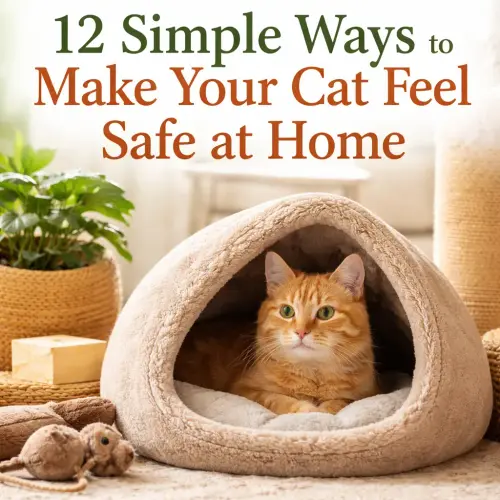
Every cat needs a “den” — a covered, enclosed space where they can disappear completely. Cardboard boxes with a hole cut in the side, covered cat beds, or even a blanket draped over a chair all work perfectly. These hideaways give your cat a private retreat when visitors arrive or during thunderstorms. Rotate the location every few weeks to keep it fresh while maintaining that core sense of cat safety at home.
3. Stick to Consistent Daily Routines
Cats are creatures of habit. Feed your cat at the same times each day, schedule play sessions after work, and keep bedtime rituals predictable. When your cat knows what comes next, their stress drops significantly. This consistency is a foundational aspect of helping make your cat feel safe at home — especially for kittens adapting to a new household or senior cats who may feel vulnerable.
4. Use Synthetic Pheromone Diffusers
Products like Feliway mimic the calming facial pheromones cats use to mark safe territory. Plug a diffuser into a room where your cat spends the most time, especially if you have multiple cats or are introducing a new pet. Many veterinarians recommend these diffusers as a first step to make your cat feel safe at home during stressful transitions like moving houses or adding a new baby to the family.
5. Provide Multiple, Clean Litter Boxes
The “one box per cat plus one” rule is non-negotiable. A dirty or competitive litter box setup is a major stressor. Place boxes in quiet, accessible locations away from loud appliances and in different rooms if possible. Scoop daily and wash boxes with mild soap weekly. Proper litter box management is critical to cat safety at home and prevents territorial conflicts.
6. Let Your Cat Initiate Affection and Handling
Forceful petting or picking up a cat that doesn’t want to be held damages trust. Let your cat approach you, sniff your hand, and rub against you before you pet. Watch for tail flicks or flattened ears — these are signs your cat needs space. Respect their boundaries and they will learn over time that you are a source of safety, which helps make your cat feel safe at home on their terms.
7. Offer “Safe” Windows with Bird Feeders Outside
Window perches are excellent enrichment, but only if the window is secure. Ensure screens are sturdy and windows can’t open far enough for a cat to escape. Place a bird feeder or a hummingbird feeder outside the window — this provides mental stimulation and gives your cat a purposeful, enjoyable way to spend time. When used correctly, window perches greatly support cat safety at home.
8. Keep a Quiet, Predictable Soundscape
Loud televisions, shouting, and sudden banging can terrify a cat. Keep the volume moderate, especially if you work from home or have kids. Some owners play soft classical music or white noise machines to mask street sounds. A calm acoustic environment is a subtle but powerful tool to make your cat feel safe at home.
9. Use Food Puzzles and Interactive Toys
Mental stimulation prevents boredom and its related stress. Start with simple treat-dispensing balls and move up to puzzle feeders that require paw manipulation. Problem-solving channels your cat’s hunting instincts into a positive activity. A mentally engaged cat is more relaxed overall, which supports long-term cat safety at home.
10. Introduce New Pets or People Gradually
Never force introductions. When bringing a new cat, dog, or even a baby into the home, keep your existing cat separated for several days. Use scent swapping by rubbing cloths on each animal and placing them near the other’s sleeping area. Allow visual contact through a baby gate before direct interaction. A slow, controlled introduction is vital to make your cat feel safe at home during these changes.
11. Choose Safe, Non-Toxic Plants and Avoid Hazards
Many common houseplants like lilies, poinsettias, and dieffenbachia are toxic to cats. Replace them with safe options like spider plants, Boston ferns, or cat grass. Also secure dangling cords, hide toxic cleaning supplies, and keep small objects that could be swallowed off low surfaces. A hazard-free environment is essential for cat safety at home and prevents expensive emergency vet visits. For a related guide, see 7 Essential Ways to Keep Pets Safe During Typhoons.
12. Use Positive Reinforcement, Not Punishment
Never shout at or swat your cat for unwanted behaviors like scratching furniture or jumping on counters. Instead, redirect them to an appropriate alternative — a scratching post or a high shelf — and reward them with treats and praise when they use it. Punishment breaks trust and makes your cat fearful of you. Gentle redirection is the kindest approach to make your cat feel safe at home.
Creating a Multi-Cat Haven for Cat Safety at Home
If you have multiple cats, resource competition is a common stress trigger. Provide separate food and water stations in different rooms, plus multiple litter boxes. Offer at least one hideaway per cat, ideally in different vertical levels. A calm multi-cat household is possible when each cat has its own safe zone, reinforcing overall cat safety at home.
Signs Your Cat Feels Secure
Watch for these positive indicators: your cat sleeps with their belly exposed, purrs when you approach, kneads on soft surfaces, and maintains relaxed body posture with ears forward and tail upright. They may also “bunt” their head against you — a trust signal. These behaviors confirm you’ve successfully helped make your cat feel safe at home.
Useful Resources
For more guidance on feline behavior and stress reduction, the American Association of Feline Practitioners offers a detailed overview of environmental enrichment: AAFP Environmental Needs Checklist. Additionally, the Cornell Feline Health Center provides free resources on reading cat body language: Cornell Feline Health Center.
Your cat doesn’t need a palace — they need a sanctuary. By implementing even just three or four of these tips, you’ll notice your cat becoming more relaxed, confident, and affectionate. Remember, every cat is different, so watch their cues and adjust. Now we’d love to hear from you: what tip worked best for your feline friend? Share your experience in the comments below to help other cat owners make your cat feel safe at home.
Frequently Asked Questions About make your cat feel safe at home
How long does it take for a new cat to feel safe at home?
It varies widely. Some cats adjust in a few days, while others need weeks or even months. Provide a safe room with food, water, litter, and a hiding spot. Let them explore at their own pace. For shy cats, allow 2–3 weeks before introducing full house access.
Do cats feel safer with lights on or off at night?
Cats have excellent night vision and generally prefer dim lighting. A completely dark room can be disorienting, but a nightlight in the hallway is enough. Avoid bright overhead lights that can startle them during nighttime movement.
Can too much affection stress a cat?
Yes. Forcing petting, picking up, or holding when a cat is not receptive increases anxiety. Let the cat initiate contact. Over-handling can damage the trust you build to make your cat feel safe at home.
What are the best hiding spots for cats?
Cardboard boxes with a small entrance, covered cat caves, open-bottomed cat trees, and spaces under beds or sofas are ideal. Avoid spots near loud appliances or heavy foot traffic. Ensure the hiding place has an exit so your cat never feels trapped.
Do cat pheromone diffusers really work?
Multiple studies show synthetic feline facial pheromones reduce stress-related behaviors like scratching, urine spraying, and hiding. They are not a cure-all but work best when combined with environmental enrichment and routine consistency.
My cat hides all day. Should I be worried?
Occasional hiding is normal. If a cat hides for more than a few days, stops eating, or shows signs of illness, consult a veterinarian. Otherwise, respect the hiding behavior and make the area comfortable with water and a litter box nearby.
How many litter boxes do I need for two cats?
Follow the “n+1” rule: three litter boxes for two cats. Place them in different rooms to reduce competition. This setup is a cornerstone of cat safety at home in multi-cat households.
Do cats like music to feel safe?
Some studies suggest cats prefer classical or species-specific music with tempos similar to purring. Avoid heavy bass or loud rock. Soft classical music or white noise can mask sudden outdoor sounds and help make your cat feel safe at home.
Is it okay to have multiple cat trees in one home?
Yes, especially in multi-cat homes. Multiple vertical perches allow each cat to claim a spot without conflict. Place trees in different rooms or at different heights to avoid competition.
Should I cover the crate when transporting my cat?
Yes, covering the carrier with a blanket or towel reduces visual stimuli, which helps lower stress during car rides. Make sure there’s some airflow. A covered crate is an effective tool to make your cat feel safe at home during travel.
Can rearranging furniture cause cat stress?
Absolutely. Cats rely on familiar landmarks and scent trails. Major furniture rearrangement can confuse and stress them. If you must rearrange, do it slowly over days, and keep their favorite sleeping spots unchanged.
How do I introduce a new cat to my resident cat safely?
Use a separate room for the new cat for 3–7 days. Swap bedding to exchange scents. Then allow visual contact through a baby gate before face-to-face meetings. Supervise all interactions and separate if there’s hissing or aggression.
Do cats like having a routine for playtime?
Yes. Cats thrive on predictability. Schedule two 10–15 minute play sessions daily, ideally at the same times each day. This routine reduces stress and strengthens your bond.
Is there such a thing as a cat-safe houseplant list?
Yes. The ASPCA maintains a comprehensive list of toxic and non-toxic plants for cats. Safe choices include spider plants, Areca palms, Boston ferns, and cat grass. Always double-check before purchasing new greenery.
Can a scared cat become more confident over time?
With patience and consistent positive experiences, even extremely shy cats can gain confidence. Use treats, gentle voices, and allow them to approach you. Avoid forcing interaction. Progress may take months, but it is possible.
Do cats feel safe near windows at night?
Some cats enjoy watching night activity, but others may become anxious seeing outdoor animals. Close blinds or curtains at night if your cat seems alert or fearful. A window perch in a safe room can still be used during the day.
Should I use a calming collar for my cat?
Calming collars infused with pheromones or herbal extracts can help some cats. However, they only work when the collar is worn. Some cats dislike collars. Diffusers are often a better first choice for cat safety at home.
How do I know if my cat is stressed vs. relaxed?
Relaxed cats have soft eyes, ears forward or slightly sideways, a still tail, and relaxed body posture. Stressed cats may have dilated pupils, flattened ears, a tucked tail, rapid breathing, or excessive grooming. Learning these signs helps you adjust.
Can leaving a TV on help my cat feel less lonely?
Some cats benefit from soft background noise when left alone. Nature shows or cat-specific videos can provide visual stimulation. However, avoid loud action movies that may cause fear.
What is the most important thing to make your cat feel safe at home ?
Consistency. Predictable feeding, play, and quiet time create a foundation of security. Combine that with vertical space, hiding spots, and gentle handling for a comprehensive approach to cat safety at home.