



stop destructive chewing in dogs Key Takeaways
Destructive chewing is a normal canine behavior, but it can quickly become a costly and frustrating problem for owners.
- Identify the root cause of your dog’s destructive chewing — boredom, anxiety, teething, or hunger — to choose the right solution.
- Combine environmental management, physical exercise, and mental enrichment for a comprehensive approach to stop dog chewing .
- Consistency and positive reinforcement are the cornerstones of lasting behavior change; punishment often backfires.
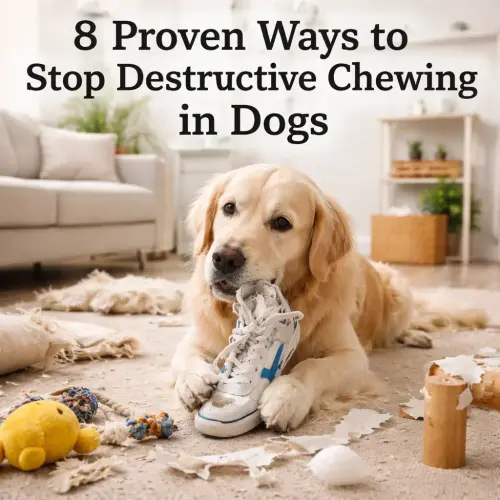
Understanding Why Dogs Chew — The First Step to Stop Destructive Chewing in Dogs
Before you can fix the behavior, you need to understand why your dog is chewing. Puppies explore the world with their mouths and chew to relieve teething pain. Adult dogs may chew out of boredom, excess energy, anxiety (especially separation anxiety), or simple hunger. Some breeds, like Labradors and Terriers, have a naturally stronger drive to chew. Recognizing the trigger is the first step to implementing the right strategy to stop destructive chewing in dogs.
1. Manage the Environment to Prevent Chewing Problems
The simplest way to stop dog chewing is to make forbidden items inaccessible. This management step buys you time while you work on training. Use baby gates to block off rooms, keep shoes and remote controls in closets or drawers, and cover electrical cords with cord protectors or bitter-tasting sprays. When you cannot supervise, confine your dog to a dog-proofed area or a crate (if they are crate-trained).
Practical Management Tips
- Pick up clothing, kids’ toys, and shoes the moment they hit the floor.
- Use a taste deterrent like bitter apple spray on furniture legs and baseboards. Reapply regularly.
- Keep trash cans behind a cabinet door or use a locking lid.
2. Provide Appropriate Chew Toys and Rotate Them
Dogs need to chew — give them legal outlets. Offer a variety of textures and types: rubber Kongs, nylon bones, rope toys, and edible chews like bully sticks or rawhide alternatives. The key is rotation. Dogs get bored with the same toys. Keep three or four toys out at a time and swap them every few days. Stuff a Kong with peanut butter or yogurt and freeze it for a long-lasting challenge. Providing the right toy is a cornerstone of any plan to stop destructive chewing in dogs. For a related guide, see 8 Signs Your Pet Is Bored: Simple Ways to Spot and Fix It.
3. Increase Physical Exercise to Burn Energy
A tired dog is a well-behaved dog. Many destructive chewing cases stem from pent-up energy. Aim for at least 30–60 minutes of purposeful exercise daily, depending on your dog’s breed and age. This can include walks, runs, fetch, or playing with a flirt pole. For high-energy breeds, consider adding a second walk or a session at a dog park. Physical exertion reduces the urge to chew on your belongings.
4. Use Mental Enrichment to Fight Boredom
Mental stimulation is just as important as physical exercise. Puzzle toys, snuffle mats, and treat-dispensing balls engage a dog’s brain and tire them out. Teach new tricks or practice obedience commands for 10–15 minutes each day. Scent work — hiding treats around the house for your dog to find — is an excellent boredom buster. When a dog’s mind is occupied, they are far less likely to seek out dog chewing solutions that involve your sofa.
5. Address Separation Anxiety With Training and Routine
If your dog only chews when left alone, the root cause may be separation anxiety. Chewing becomes a self-soothing behavior. To stop destructive chewing in dogs with anxiety, you need to change their emotional response to your departure. Start with very short absences (seconds to minutes) and gradually increase the time. Leave a special toy or treat-filled Kong only when you leave. Consider a white noise machine or television to mask outside sounds. For severe cases, consult a veterinarian or certified behaviorist. Medication may be part of a comprehensive plan.
6. Correct Chewing With Redirection, Not Punishment
When you catch your dog chewing something they shouldn’t, never yell or hit. This increases anxiety and can worsen the behavior. Instead, calmly say “uh-oh” or “leave it,” then immediately hand them an acceptable chew toy. When they take the toy, praise enthusiastically. This redirection technique teaches your dog what is allowed. Consistency is critical — every family member must follow the same protocol. Positive reinforcement is the most effective way to stop dog chewing permanently. For a related guide, see 7 Behavioral Problems in Dogs: Expert Solutions and Training.
7. Rule Out Medical Issues and Hunger
Sometimes chewing is a sign of a medical problem. Dogs with gastrointestinal issues, nutritional deficiencies, or dental pain may chew on non-food items to soothe discomfort. If your dog suddenly starts chewing destructively and you have ruled out other causes, schedule a vet visit. Additionally, ensure your dog is on a high-quality diet that meets their caloric needs. A hungry dog is more likely to chew. Adding a small amount of wet food or incorporating puzzle feeders at mealtime can increase satiety and reduce the drive to chew.
8. Use Bitter Deterrents and Motion-Activated Alarms
For persistent chewers who target specific areas (like door frames or curtains), taste deterrents can be a helpful short-term tool. Apply a commercial bitter spray or a homemade vinegar-and-water solution to problem surfaces. For outdoor or large-area chewing, consider motion-activated air cans or ultrasonic alarms that startle a dog when they approach a forbidden zone. These devices work as a deterrent without your presence, helping to stop destructive chewing in dogs when you are not there to redirect.
Useful Resources
For more information on canine behavior and training, the American Kennel Club (AKC) offers a detailed guide on managing chewing behaviors: AKC: Why Do Dogs Chew and How to Stop It.
The ASPCA also provides a thorough overview of environmental management and behavioral modification techniques: ASPCA: Destructive Chewing.
Frequently Asked Questions About stop destructive chewing in dogs
What is the best way to stop destructive chewing in dogs?
The best approach combines management, appropriate chew toys, adequate exercise, positive redirection, and addressing underlying causes like anxiety or boredom. There is no one-size-fits-all solution.
Is it normal for puppies to chew destructively?
Yes, puppies explore with their mouths and chew to relieve teething pain, which peaks around 4–6 months. It is a natural phase that most outgrow with proper redirection.
How long does it take to stop dog chewing ?
It varies. Simple boredom-based chewing may improve within a week or two with consistent management and enrichment. Anxiety-based or deeply ingrained habits can take several months of dedicated training.
Can I use punishment to stop destructive chewing ?
Punishment is not recommended. It can increase fear and anxiety, making the chewing worse. Positive redirection and environmental management are far more effective.
What are the best chew toys for aggressive chewers?
Look for toys made of tough rubber or nylon, such as Kong Extreme, Goughnuts, or Nylabone Dura Chew. Avoid toys with squeakers that can be easily torn apart.
Does bitter apple spray really work?
It works for many, but not all, dogs. Some dogs are not bothered by the taste. It requires reapplication and is best used alongside other management strategies.
Why does my dog only chew when I am away?
This strongly suggests separation anxiety. Consult with a veterinarian or a certified behaviorist to develop a desensitization and counterconditioning plan.
Can exercise really stop destructive chewing ?
Yes, regular physical and mental exercise is one of the most effective ways to reduce destructive chewing by burning off excess energy and alleviating boredom.
Should I crate my dog to stop chewing?
Crate training can be a helpful management tool, but only if the dog is properly acclimated to the crate as a positive space. Never use it as punishment.
What if my dog eats the toys I give them?
Always supervise your dog with any new toy. Choose toys appropriate for your dog’s size and chewing strength. If they destroy and ingest toys, opt for indestructible options or edible chews designed to be safely consumed.
Can a change in diet help stop destructive chewing ?
Possibly. If your dog is chewing due to nutritional deficiencies or hunger, switching to a high-quality, calorie-appropriate food may reduce the drive. Consult your vet before making diet changes.
Is destructive chewing a sign of a medical problem?
It can be. Dental pain, gastrointestinal discomfort, or pica can cause excessive chewing. If the behavior appears suddenly and other causes are ruled out, a vet check is wise.
How do I stop my dog from chewing on furniture?
Use a taste deterrent on furniture legs, block access with gates or furniture covers, and provide plenty of legal chew options. Consistently redirect your dog to those options.
What are the best dog chewing solutions for teething puppies?
Frozen washcloths, rubber teething toys, and chilled Kong stuffers soothe sore gums. Provide a variety and rotate frequently to keep their interest.
Will my dog grow out of destructive chewing ?
Many dogs grow out of it as they leave puppyhood, especially if their needs for exercise and mental stimulation are met. However, some adult dogs continue if the underlying cause is not addressed.
How many toys should I have to stop destructive chewing ?
Having a selection of 8–12 toys and rotating 3–4 at a time is ideal. This keeps them novel and interesting without overwhelming your dog.
Can I use a shock collar to stop destructive chewing ?
No. Shock collars are inhumane and can cause fear, anxiety, and aggression. They address the symptom, not the cause, and should never be used for chewing.
What is pica in dogs and does it cause destructive chewing ?
Pica is the compulsive eating of non-food items. It can cause destructive chewing and is a serious medical condition that requires veterinary diagnosis and treatment.
How do I stop destructive chewing when I am not home?
Combine confinement to a safe area, leave a filled Kong or puzzle toy, ensure the dog has been exercised, and consider using a pet camera or dog walker for longer absences.
Is it safe to give my dog rawhide to stop chewing?
Rawhide can be a choking hazard and may cause digestive blockages. Safer alternatives include bully sticks, beef trachea, or high-quality digestible chews. Always supervise.