


mental stimulation tips for pets Key Takeaways
Scent games are excellent pet enrichment activities that engage a pet’s most powerful sense.
- Mental stimulation for pets significantly reduces boredom and anxiety across all species.
- Dedicated pet enrichment activities such as puzzle toys and scent games target natural instincts.
- Consistency with these tips prevents behavioral issues and promotes long-term cognitive health.
Why Mental Stimulation Tips for Pets Matter for Their Well-Being
A bored pet is often a destructive or anxious pet. When animals lack mental challenges, they may chew furniture, bark excessively, or develop repetitive behaviors. Providing regular mental stimulation for pets taps into their natural problem-solving instincts, keeping their brains sharp and emotions balanced. Research from veterinary behaviorists confirms that enrichment activities reduce stress hormones and increase feelings of contentment. Whether you have a high-energy dog or a curious cat, these strategies offer profound benefits. For a related guide, see 7 Proven Ways to Prevent Pet Obesity and Boost Health.
The Science Behind Pet Enrichment
Animals thrive when they can engage in species-specific behaviors. For dogs, this might mean sniffing and searching; for cats, stalking and pouncing. Structured pet enrichment activities mimic these natural tasks, providing a sense of accomplishment. Studies from the American College of Veterinary Behaviorists highlight that mentally stimulated pets show fewer signs of depression and cognitive decline as they age. This makes enrichment a cornerstone of preventive care.
10 Proven Mental Stimulation Tips for Pets You Can Start Today
Each of these tips is designed to fit seamlessly into your daily routine. Start with one or two and gradually expand your pet’s enrichment menu. The key is variety and consistency.
1. Rotate Puzzle Toys to Keep Challenges Fresh
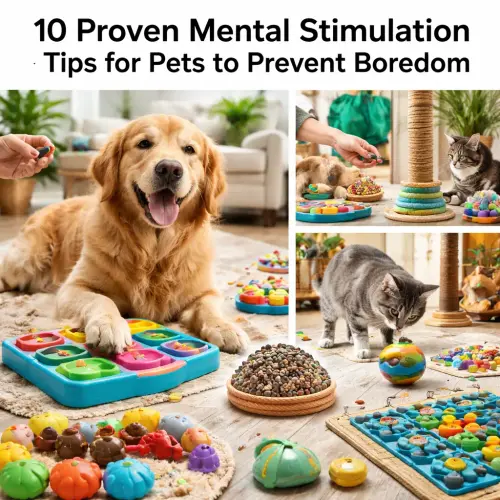
Puzzle toys that dispense treats require your pet to solve a problem to earn a reward. However, pets can lose interest if the same toy is available all the time. Rotate two or three different puzzles every few days to maintain novelty. For dogs, try the Outward Hound Nina Ottosson series; for cats, consider Doc and Phoebe’s Cat Co. feeding mice. This is a foundational mental stimulation tip for pets that works for most species.
2. Hide Treats for a Scent-Work Game
Scent games are excellent pet enrichment activities that engage a pet’s most powerful sense. Start by hiding treats in plain sight and gradually make the hiding spots harder. For dogs, use a snuffle mat or hide kibble around a room. For cats, hide small treats in paper bags or cardboard boxes. This activity builds confidence and provides a natural outlet for foraging instincts.
3. Teach a New Trick or Command
Learning is mentally exhausting in the best way. Spend five to ten minutes each day teaching a new cue, such as “spin,” “high five,” or “touch a target.” Mental stimulation for pets through training strengthens impulse control and deepens communication. Use positive reinforcement with small, high-value treats to keep sessions fun and productive. Rotate tricks weekly to prevent plateauing.
4. Create an Indoor Obstacle Course
Use household items like cushions, chairs, and broomsticks to build a simple agility course. Guide your pet through tunnels, over jumps, and around cones. This combines physical movement with cognitive problem-solving, making it one of the most engaging dog enrichment activities (or cat activities, as felines often enjoy jumping over low obstacles). Keep sessions short to avoid frustration.
5. Offer Interactive Feeders for Every Meal
Turn mealtime into a mental workout by using interactive feeders instead of a standard bowl. Mental stimulation for pets begins with how they eat. Food-dispensing balls, wobble feeders, and lick mats encourage slower eating and focused attention. This is especially beneficial for fast eaters and helps prevent bloat in dogs. For cats, tricky bowls require paw manipulation to release food.
6. Play the “Find It” Game Around the House
This classic game works well for dogs and cats. Have your pet stay in one room while you hide a favorite toy or treat in another area. Release them with a cue like “Find it!” and let them search. This taps into their hunting instincts and is a fantastic pet enrichment activity when you have limited outdoor space. Start easy to build confidence, then increase difficulty.
7. Introduce Novel Textures and Surfaces
Pets are naturally curious about new sensations. Place different materials like grass mats, bubble wrap (supervised), carpet squares, or aluminum foil in their environment. Allow them to explore and investigate. This form of environmental enrichment for pets stimulates tactile and visual senses. It’s particularly helpful for indoor cats who may crave variety in their territory.
8. Use Food Puzzles to Slow Down Meals
Food puzzles are a subset of puzzle toys specifically designed for meal delivery. Brands like West Paw Toppl or the Fable Feed can hold wet food, kibble, or pureed treats. Freezing the contents adds difficulty and keeps pets occupied longer. These pet enrichment activities are excellent for post-meal calmness and mental fatigue. Rotate the shape and difficulty level weekly.
9. Schedule Regular “Sniffaris” on Walks
Instead of a brisk walk focused on distance, dedicate a few weekly walks to “sniffaris.” Allow your dog to stop and sniff as much as they like. This is a powerful form of mental stimulation for dogs because processing scent information is highly demanding for their brains. A 20-minute sniffari can be as tiring as a long run. It also fulfills their innate need to gather information about their environment.
10. Practice “Look at That” (LAT) Training
This simple training exercise builds attention and calm observation. When your dog notices a trigger (another dog, a person), mark the moment and reward them for remaining calm. This cognitive activity for pets teaches emotional regulation and focus. It’s a foundational skill for reactive dogs and a great brain exercise for all canines. Practice for a few minutes daily to see improvements in impulse control.
How to Choose the Best Enrichment for Pets Based on Their Personality
Not every tip will suit every pet. Observe your pet’s preferences: does your dog love to chew, or are they more driven by scent? Does your cat prefer chasing or batting? Matching the activity to their natural style increases engagement and success. Below is a simple guide to help you decide.
| Pet Personality | Recommended Pet Enrichment Activities | Example Product or Game |
|---|---|---|
| Food-obsessed | Puzzle feeders, frozen Kongs, snuffle mats | Outward Hound Brick Puzzle |
| Active and playful | Obstacle courses, fetch with a twist, tug-of-war | DIY cardboard box tunnels |
| Shy or cautious | Slow scent games, quiet treat hiding, new textures | Snuffle mat or lick mat |
| Intelligent and independent | Advanced trick training, multi-step puzzles, hide-and-seek | Nina Ottosson Multi-step puzzle |
Common Mistakes to Avoid with Mental Stimulation for Pets
Even with the best intentions, pet owners sometimes fall into traps that reduce the effectiveness of enrichment. Avoid these pitfalls to get the most out of your efforts.
Overwhelming Your Pet Too Quickly
Introducing too many new challenges at once can cause stress. Start with one activity for a few days and allow your pet to master it before adding another. The goal is confidence, not frustration. Mental stimulation tips for pets work best when phased in gradually.
Leaving Puzzle Toys Out Constantly
Puzzle toys lose their appeal when always available. Store them out of sight and bring them out only during designated enrichment sessions. This preserves novelty and increases motivation. A stored toy is a special toy.
Useful Resources
For more information on mental stimulation for pets, consider these expert sources:
- American Veterinary Society of Animal Behavior – Enrichment Guidelines
- Association of Professional Dog Trainers – Mental Stimulation for Dogs
Start today by choosing one mental stimulation tip for pets that excites you and your companion. Consistency and patience will reward you with a happier, healthier pet.
Frequently Asked Questions About mental stimulation tips for pets
What is the best mental stimulation for dogs?
Scent games and puzzle toys are consistently rated highest by trainers for engaging a dog’s natural problem-solving instincts. They are accessible pet enrichment activities that work for most breeds.
How much mental stimulation does a pet need daily?
Most experts recommend at least 15 to 30 minutes of dedicated mental stimulation for pets per day, split into short sessions. This can include training, puzzle work, or scent games.
Can mental stimulation replace physical exercise for dogs?
No, mental stimulation complements but does not replace physical exercise. Dogs need both for optimal health. However, a good session of enrichment can tire a dog out faster than a walk. For a related guide, see Raising A Healthy Pet: 11 Trusted Answers for First-Time.
What are cheap mental stimulation ideas for cats?
Cardboard boxes, paper bags, homemade treat puzzles, and hiding food around the house are excellent low-cost pet enrichment activities for cats.
Are puzzle toys safe for all pets?
Most puzzle toys are safe if used under supervision and matched to your pet’s chewing strength. Avoid toys with small parts that could be swallowed. Always buy from reputable brands.
How do I know if my pet is bored?
Signs of boredom include excessive sleeping, destructive chewing, pacing, barking, and attention-seeking behaviors. Introducing mental stimulation for pets often reduces these actions.
What is the difference between enrichment and training?
Enrichment focuses on providing opportunities for natural behaviors, while training teaches specific cues. Both are forms of mental stimulation for pets and overlap often.
Can old dogs benefit from mental stimulation?
Absolutely. Mental stimulation for dogs in senior years can slow cognitive decline, improve mood, and strengthen the bond with owners. Use low-impact activities like scent games.
Do cats need mental stimulation as much as dogs?
Yes, cats are highly intelligent and need pet enrichment activities to prevent boredom and related behavioral issues like aggression or inappropriate elimination.
How often should I change enrichment activities?
Rotate activities every two to three days to keep things fresh. This prevents habituation and ensures your pet stays engaged with mental stimulation tips for pets.
Are food puzzles good for overweight pets?
Yes, food puzzles slow down eating and can be used to serve portion-controlled meals. They are excellent enrichment for pets on a weight management plan.
What is a snuffle mat and how does it help?
A snuffle mat is a fabric mat with hiding spots for treats. It encourages foraging, which is a natural and calming mental stimulation for dogs.
Can I use mental stimulation to help with separation anxiety?
Yes, providing a puzzle toy before you leave can help distract and relax your pet. Combined with other behavior modification, it can reduce anxiety symptoms. Always consult a vet for severe cases.
How do I introduce a new enrichment activity to a shy pet?
Start by placing the new item near their food bowl without pressure. Allow exploration at their pace. Reward any interaction. This gentle approach works well for all pet enrichment activities.
What are the best mental stimulation games for puppies?
Hide-and-seek, simple treat puzzles, and basic obedience training are great for puppies. These mental stimulation tips for pets build focus and prevent bad habits early.
Is there such a thing as too much mental stimulation?
Yes, overstimulation can cause stress and fatigue. Watch for signs like avoidance or hypervigilance. Balance mental stimulation for pets with quiet rest time.
Do rabbits need mental stimulation too?
Yes, rabbits benefit from chew toys, tunnels, and foraging opportunities. Enrichment for pets applies to all companion animals, not just dogs and cats.
How does mental stimulation affect my pet’s sleep?
Mentally stimulating activities help pets fall asleep more easily and sleep more deeply. A tired brain is just as important as a tired body for quality rest.
What if my pet ignores the enrichment I provide?
Try adjusting the difficulty level or switching to a different type of activity. Some pets prefer tactile challenges over food puzzles. Keep experimenting with mental stimulation tips for pets.
Can mental stimulation help with aggression?
In many cases, providing appropriate mental stimulation for pets reduces frustration-related aggression. However, always work with a certified trainer or behaviorist for aggression issues.