



dog training tips for first-time owners Key Takeaways
Bringing home your first puppy or adult dog is exciting, but training can quickly become overwhelming without the right foundation.
- Master the core dog training tips for first-time owners like consistency, timing, and positive reinforcement.
- Learn how to prevent and fix common mistakes, from pulling on the leash to jumping on guests.
- Get pro-level advice that makes training fun, effective, and stress-free for both you and your dog.
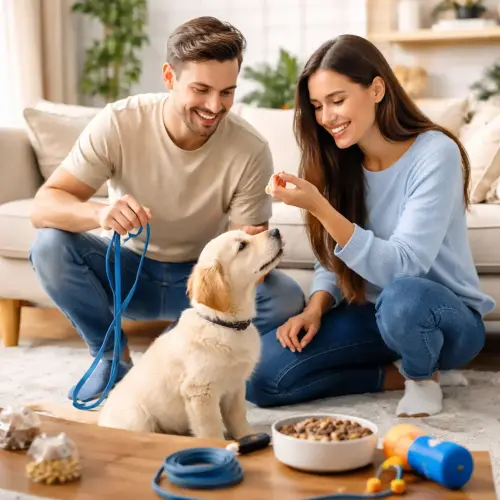
Why Every New Owner Needs a Solid Training Plan
Raising a dog is one of life’s great joys — but it also comes with real responsibilities. Without a consistent approach, behaviors like barking, chewing, and ignoring commands can quickly become habits. That’s why it’s critical to start with a clear set of dog training tips for first-time owners that build trust and clarity from day one.
The first few weeks together set the tone for your entire relationship. Dogs thrive on routine and clear communication. When you understand how they learn, you can avoid frustration and set them up to succeed.
The Science Behind Positive Reinforcement
Modern trainers agree: rewarding the behaviors you want to see works far better than punishing mistakes. Using treats, praise, or play immediately after your dog does something right strengthens that behavior. This is why positive reinforcement is the backbone of all the training tips for new dog owners in this article.
10 Training Tips for New Dog Owners: Step-by-Step Guide
1. Start with a Consistent Daily Routine
Dogs feel secure when they know what to expect. Feed, walk, and train at roughly the same times each day. A predictable schedule helps your dog settle in faster and makes house training much easier.
Common mistake: Changing the schedule on weekends or skipping walks because you’re tired.
Pro tip: Set alarms on your phone for feeding and potty breaks during the first month to keep yourself consistent.
2. Use a Marker Word or Clicker
Your voice is a powerful tool. Choose a short word like “yes” or use a clicker to “mark” the exact moment your dog does the right thing. Then follow immediately with a treat.
Common mistake: Waiting too long to reward — even three seconds is too late for your dog to connect the action with the reward.
Pro tip: Practice the “charging” exercise: click + treat, click + treat, ten times in a row. This teaches your dog that the clicker always means a high-value reward is coming.
3. Keep Training Sessions Short and Fun
A five-minute session twice a day is more effective than one long, boring session. Stop while your dog is still eager — never push until they lose interest.
Common mistake: Trying to teach three or four commands in one session.
Pro tip: Focus on just one command per session until your dog responds correctly at least 8 out of 10 times before adding a new one.
4. Master the Loose-Leash Walk
Pulling is the number one complaint among first-time dog owner tips. Teach your dog that a loose leash leads to moving forward, while tension stops the walk.
Common mistake: Yanking the leash back when your dog pulls — this can hurt their neck and doesn’t teach the right lesson.
Pro tip: Stop walking the moment the leash tightens. Stand still like a tree. When your dog looks back or takes a step toward you, mark and reward, then continue.
5. Socialize Carefully and Gradually
Expose your puppy or new dog to different people, surfaces, sounds, and friendly, vaccinated dogs — but always at their pace. Forced interactions can cause fear instead of confidence.
Common mistake: Taking a shy puppy to a busy dog park on the first day.
Pro tip: Use the “look at that” game: whenever your dog notices a person or another dog, say “yes” and reward for calm eye contact rather than reacting.
6. Teach “Leave It” and “Drop It” Early
These two commands can prevent your dog from eating something dangerous, picking up trash on walks, or destroying your shoes. Start with low-value items and work up.
Common mistake: Chasing your dog when they grab something forbidden — they learn it’s a fun game.
Pro tip: Trade a high-value treat for whatever is in your dog’s mouth. They’ll learn that dropping things earns something better.
7. Crate Training Is Your Secret Weapon
A crate, when introduced positively, becomes your dog’s cozy den. It helps with house training, prevents destructive behavior when unsupervised, and gives your dog a safe place to decompress.
Common mistake: Using the crate for punishment — your dog must love their crate, not fear it.
Pro tip: Feed all meals inside the crate with the door open at first. Then gradually close the door for short periods while they’re eating or chewing a stuffed Kong.
8. Never Punish After the Fact
If you come home to a chewed sofa, your dog won’t understand why you’re angry. Punishment after the fact causes confusion and fear, not learning.
Common mistake: Rubbing your dog’s nose in an accident or yelling after they’ve already done the damage.
Pro tip: Supervise your puppy like a toddler. If you can’t supervise, use a crate or tether to prevent mistakes from happening in the first place.
9. Practice Training in Different Locations
Your dog may respond perfectly in your living room, but fail completely at the park. Dogs don’t automatically generalize commands — you have to teach them.
Common mistake: Only training in the same quiet room every time.
Pro tip: Move from low distraction (living room) to medium distraction (backyard) to high distraction (park bench away from others). Increase difficulty slowly.
10. Celebrate Small Wins and Stay Patient
Dogs learn at different rates. Some puppies house-train in two weeks; others take two months. Your attitude matters more than your dog’s speed.
Common mistake: Comparing your dog’s progress to a friend’s dog or expecting perfection in a week.
Pro tip: Keep a training journal. Write down one small success each day — even if it’s just “sat for the first time without a treat lure.” Over time, you’ll see how far you’ve come.
Common Training Pitfalls and How to Avoid Them
Even with the best dog training tips for first-time owners, it’s easy to fall into certain traps. Here are the three most common challenges and how to handle them:
Inconsistency Between Family Members
Everyone in the household needs to use the same commands and rules. If one person allows jumping and the other doesn’t, your dog gets confused.
Hold a quick family meeting to agree on the word for each command (“down” vs. “off the couch”) and the rules about furniture, feeding, and greetings.
Using the Wrong Reward
Not all treats are equal. In a quiet room, kibble might work fine. At the park, you may need chicken, cheese, or freeze-dried liver to keep your dog’s attention.
Experiment with different rewards and always use your dog’s current favorite for the most challenging situations.
Expecting Perfection Too Soon
Mistakes are part of learning. If your dog has an accident inside or ignores a command, it’s not rebellion — it’s a gap in your training. Go back to basics, increase reinforcement, and reduce distractions.
Useful Resources
For more in-depth guidance on training tips for new dog owners, check out these trusted sources:
- American Kennel Club (AKC) Training Articles — Expert advice on everything from basic commands to advanced behavior.
- ASPCA Dog Behavior Resources — Reliable guides on preventing and solving common behavior problems.
Every dog is different, and patience is your greatest tool. Stick with these dog training tips for first-time owners, celebrate the small wins, and you’ll build a partnership that lasts a lifetime. Start with the tip that feels most urgent today — your dog will thank you.
Frequently Asked Questions About dog training tips for first-time owners
How long does it take to potty train a puppy?
Most puppies start to get the hang of house training within 4 to 6 months, but some small breeds or rescue dogs may take up to a year. Consistency with the schedule and crate training speeds up the process.
What is the best age to start training a puppy?
You can start basic training as early as 8 weeks old. Puppies are capable of learning simple commands like “sit,” “come,” and “leave it” at this age, as long as sessions are short and positive.
How long should each training session last?
For puppies, 3 to 5 minutes per session is ideal. For adult dogs, 5 to 10 minutes works well. Two to three short sessions per day are far more effective than one long session.
My dog barks at everything — how do I stop it?
First, identify the trigger (doorbell, people passing by, other dogs). Then teach an alternative behavior like going to a mat or just focusing on you. Reward quiet moments and avoid yelling, which can sound like barking to your dog.
What should I do if my dog pulls on the leash?
Stop moving as soon as the leash tightens. Stand still and wait for your dog to look back or release the pressure. Then mark and reward. A front-clip harness can also help reduce pulling.
Is it okay to use treats for training every day?
Yes, treats are a powerful training tool. Just account for them in your dog’s daily calorie intake. You can also use a portion of their regular kibble as rewards to avoid overfeeding.
How do I teach my dog to and quot;drop it and quot;?
Start with a low-value toy in your dog’s mouth. Hold a high-value treat near their nose and say “drop it.” When they open their mouth to get the treat, mark and reward. Practice with increasingly valuable items.
My dog ignores me when there are other dogs around — what now?
Your dog is over threshold. Move farther away from the distractions until your dog can focus on you again. Practice the “look at that” game to build focus gradually.
Should I use a prong or shock collar?
Veterinarians and certified trainers strongly advise against aversive tools like prong or shock collars. They can cause fear, pain, and worsen behavior problems. Positive reinforcement is safer and more effective.
How do I stop my dog from jumping on guests?
Teach your dog that sitting earns attention and jumping gets nothing. Ask guests to ignore your dog until all four paws are on the floor. Then they can say hello. Consistency is key.
Can I train an older dog successfully?
Absolutely. Older dogs can learn new behaviors, though they may need more repetition and patience than a puppy. The same positive reinforcement principles apply at any age.
What does and quot;capturing calmness and quot; mean in dog training?
This is a technique where you reward your dog for settling down on their own. When your dog lies down quietly or relaxes, say “yes” and give a small treat. Over time, they learn that calm behavior pays off.
How do I know which treats my dog likes best?
Offer two or three different treats in your open hands and see which one your dog goes for first. Soft, smelly treats like freeze-dried liver or cheese are usually high-value for most dogs.
Should I train my dog in the morning or evening?
Both work, but timing matters. Avoid training right after a big meal or when your dog is overly tired. Many trainers find that a short session before a meal works well because your dog is more motivated by food.
What is the most important command for a new dog?
Many trainers consider “come” (recall) the most important because it can keep your dog safe. Teaching a reliable recall requires lots of practice in low-distraction environments and rewarding every time.
How can I prevent separation anxiety from developing?
Help your dog feel comfortable being alone by practicing short departures — just step out for 30 seconds at first. Leave a stuffed Kong or puzzle toy to keep them busy, and never make a big fuss when leaving or returning.
My puppy bites my hands and feet — is this normal?
Yes, puppies explore the world with their mouths. However, you should teach bite inhibition by yelping or saying “ouch” when they bite too hard and then pausing play. Offer a chew toy instead.
What does and quot;positive reinforcement and quot; really mean?
It means adding something your dog likes (treat, praise, toy) immediately after a desired behavior to increase the likelihood that behavior will happen again. It’s about rewarding the good, not punishing the bad.
How do I train my dog to sit?
Hold a treat near your dog’s nose, then slowly lift it over their head. As their nose follows the treat up, their rear will naturally lower to the ground. As soon as they sit, say “yes” and give the treat. Repeat.
Should I hire a professional dog trainer?
If you’re feeling overwhelmed, dealing with aggression, or your dog isn’t progressing after two weeks, a certified professional trainer can make a huge difference. Look for a force-free, positive reinforcement trainer through the APDT or CCPDT.