


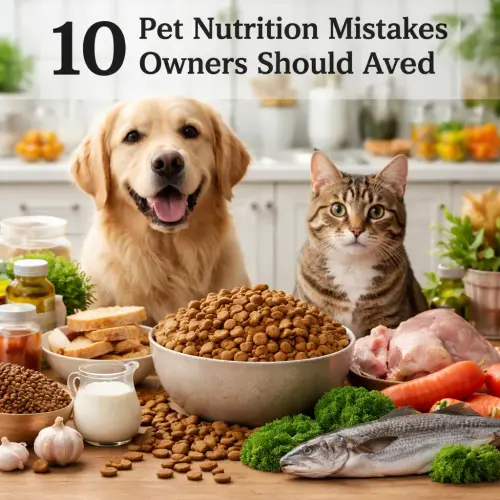
Pet Nutrition Mistakes Owners Should Avoid Key Takeaways
Feeding your pet seems simple, but many well-meaning owners unknowingly make errors that can lead to obesity, allergies, or long-term health issues.
- The biggest pet nutrition mistakes owners should avoid include overfeeding treats and relying on grain-free diets without veterinary guidance.
- Many owners overlook species-specific needs, such as cats requiring taurine and dogs needing balanced protein sources.
- Small changes—like measuring portions and reading ingredient labels—can dramatically improve your pet and #8217;s health and longevity.
Why Understanding Pet Nutrition Mistakes Owners Should Avoid Matters
Proper nutrition is the foundation of your pet’s well-being. When you know the most frequent pet nutrition mistakes owners should avoid, you can prevent common problems like digestive upset, skin issues, and weight gain. Dogs and cats have unique dietary requirements that differ from human needs, so what seems healthy for you may be harmful to them. By educating yourself, you become a better advocate for your pet’s health and happiness. For a related guide, see 11 Mistakes New Dog Owners Should Avoid: Proven Guide.
Common Pet Nutrition Mistakes Owners Should Avoid with Dog Food
1. Free-Feeding Without Measuring Portions
Leaving a bowl of kibble available all day encourages overeating. Many owners are surprised to learn that obesity affects over 50% of dogs in the United States. Measure your dog’s daily portion based on weight, activity level, and calorie density. Use a standard measuring cup rather than estimating by eye.
2. Choosing Grain-Free Diets Unnecessarily
Grain-free dog foods became trendy, but most dogs digest grains like rice or oats perfectly well. Unless your vet diagnoses a grain allergy, grain-free diets offer no proven benefit and may be linked to heart issues in some breeds. Stick to a balanced diet with wholesome grains unless advised otherwise.
3. Feeding Table Scraps as Regular Meals
Sharing a bite of chicken or a bit of cheese now and then is fine, but making table scraps a habit leads to nutritional imbalances. Many human foods are too high in fat, salt, or sugar for dogs. Reserve treats for training and stick to a complete commercial diet as the mainstay.
Frequent Cat Nutrition Mistakes Every Owner Should Recognize
4. Feeding Cat Food Formulated for Dogs
Cats are obligate carnivores and require taurine, an amino acid found only in animal tissues. Dog food lacks adequate taurine, and a cat eating dog food for even a few weeks can develop serious heart and eye problems. Always feed species-appropriate formulas.
5. Overusing Dry Food as the Sole Diet
While dry kibble is convenient, cats evolved to get moisture from prey. A diet consisting solely of dry food can contribute to chronic dehydration and urinary tract issues. Incorporate wet food or add water to dry kibble to support kidney health.
Less Obvious Common Pet Feeding Errors You Might Be Making
6. Giving Too Many Treats
Treats should make up no more than 10% of your pet’s daily caloric intake. Many owners hand out treats liberally, unknowingly doubling their pet’s calorie load. Opt for low-calorie training treats or break larger treats into smaller pieces.
7. Ignoring Life-Stage Nutrition
Puppies and kittens need higher levels of protein, fat, and specific nutrients for growth. Senior pets often require fewer calories and added joint support. Feeding adult food to a growing pet or vice versa can cause long-term health issues. Check your pet food label for the correct life stage.
8. Switching Foods Too Quickly
Abrupt diet changes often cause vomiting or diarrhea. When transitioning to a new food, mix increasing amounts of the new formula with the old over 7 to 10 days. This gradual shift gives your pet’s digestive system time to adjust.
How to Spot Hidden Dog Nutrition Mistakes in Commercial Foods
Reading pet food labels is a skill every owner should learn. Look for a named protein source (like chicken or salmon) as the first ingredient. Avoid vague terms like “meat meal” or “animal by-product” unless specified. Also, check that the food meets AAFCO (Association of American Feed Control Officials) standards for complete nutrition.
For reliable label-reading guidance, consult the FDA’s pet food selection guide.
Supplement Pitfalls: Another Set of Pet Nutrition Mistakes Owners Should Avoid
Many pet owners add vitamins or joint supplements without consulting a veterinarian. Over-supplementing can cause toxicity, especially with fat-soluble vitamins like A and D. If your pet eats a complete commercial diet, extra supplements are rarely needed. Always get a vet’s recommendation before adding anything to your pet’s bowl.
Useful Resources
For further reading on balanced pet diets and common pitfalls, visit these trusted sources:
By staying aware of the most common pet nutrition mistakes owners should avoid, you can make smarter choices that support your pet’s health for years to come. Remember, a balanced diet tailored to your pet’s species, age, and activity level is one of the best gifts you can offer. Always keep an open line of communication with your veterinarian for personalized advice. For a related guide, see 10 Vet-Approved Diet Tips: Essential Guide for Healthy Pets.
Frequently Asked Questions About Pet Nutrition Mistakes Owners Should Avoid
What is the most common pet nutrition mistake owners make?
Overfeeding is the top mistake. Many owners misjudge portions or give too many treats, leading to obesity and related health problems.
Can I feed my dog the same food every day?
Yes, dogs can eat the same complete diet daily. Switching foods unnecessarily may upset their stomach. The key is to choose a high-quality food that meets all nutritional needs.
Is grain-free dog food better for my pet?
Not for most dogs. Grain-free diets are only recommended if your vet confirms a grain allergy. Otherwise, grains provide valuable nutrients and fiber.
How often should I feed my adult cat?
Most adult cats do well with two meals per day. Free-feeding may lead to obesity. Divide the daily portion into morning and evening servings.
What treats are safe for dogs with allergies?
Look for single-ingredient treats like freeze-dried chicken, sweet potato chews, or carrot sticks. Always check the label and avoid common allergens like beef or dairy if your dog has sensitivities.
Do cats need wet food every day?
Wet food is beneficial for hydration, but it is not mandatory. If your cat eats only dry food, ensure fresh water is always available and consider adding a water fountain to encourage drinking.
Can I give my dog human vitamins?
No. Human vitamins often contain ingredients like xylitol or excessive iron that are toxic to dogs. Use only pet-specific supplements under veterinary guidance.
How do I transition my pet to a new food?
Mix 75% old food with 25% new food for 2 days, then 50/50 for 2 days, then 25/75 for 2 days, then fully switch. Monitor for loose stools or vomiting.
What should I look for on a pet food label?
Look for a named protein source as the first ingredient, an AAFCO statement, and a specific life stage (e.g., adult maintenance). Avoid foods with vague by-products or excessive fillers.
Is raw feeding safe for dogs?
Raw diets can be balanced but carry risks of bacterial contamination and nutritional deficiencies. Consult a veterinary nutritionist before starting a raw diet.
How much water should my cat drink daily?
A cat should drink about 1 ounce of water per pound of body weight each day. Increase moisture by offering wet food or a water fountain.
Can puppies eat adult dog food?
No. Puppies need higher protein, fat, and calcium for growth. Adult food can cause developmental issues. Feed a complete puppy formula until they reach adulthood (usually 12–24 months).
Are vegetables necessary in a cat and #8217;s diet?
Cats are obligate carnivores, so vegetables are not biologically necessary. However, small amounts of cat-safe veggies (like steamed pumpkin) can aid digestion if tolerated.
What ingredients should I avoid in cat food?
Avoid foods with artificial colors, BHA/BHT preservatives, or high carbohydrate fillers like corn syrup. Cats thrive on diets rich in animal protein and moderate fat.
Can I feed my dog a vegetarian diet?
Dogs can survive on a carefully formulated vegetarian diet, but it is challenging to meet all nutritional needs. Most veterinarians recommend a balanced omnivorous diet.
How do I know if my pet is overweight?
You should be able to feel your pet’s ribs without pressing hard. If you cannot see a waistline or feel excess fat padding, consult your vet for a weight management plan.
Is it okay to give my cat milk?
Most adult cats are lactose intolerant. Milk can cause diarrhea and stomach upset. Offer fresh water instead. If you want a treat, use lactose-free cat milk.
What is the best feeding schedule for a dog?
Two meals per day, spaced 8–12 hours apart, works well for most adult dogs. Puppies may need three or four smaller meals. Consistency helps with digestion and house training.
Can I mix wet and dry food together?
Yes. Mixing both adds moisture and variety. Adjust portion sizes so the total daily calories match your pet’s needs. Combine them at feeding time, not stored together.
When should I consult a vet about my pet and #8217;s diet?
If your pet experiences chronic digestive issues, sudden weight changes, skin problems, or if you plan a major dietary shift (such as raw or homemade), a vet’s input is essential.