



reduce stress before a vet visit Key Takeaways
Recognizing early signs of stress—like lip licking, whale eye (showing the whites of the eyes), tucked tail, or yawning—gives you the chance to intervene before anxiety escalates.
- Learn how to reduce stress before a vet visit by practicing at-home handling exercises and using calming products.
- Master pre-visit preparation techniques like carrier training and scent familiarization to calm your pet at the vet.
- Discover simple mindfulness and logistical tips that help you stay calm, which directly influences your pet’s confidence.
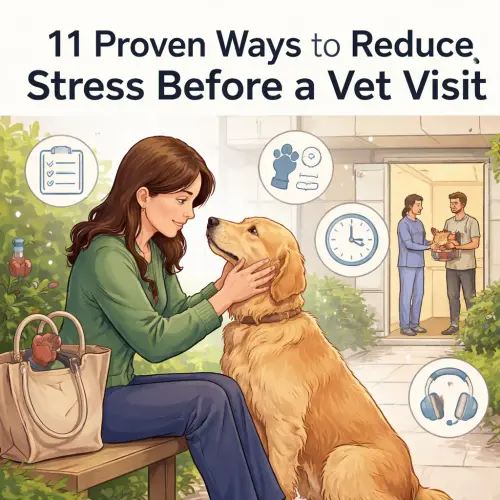
Why You Need to Reduce Stress Before a Vet Visit
Veterinary visits are essential for your pet’s health, yet they often trigger anxiety. Pets pick up on your nervousness, the strange smells, and the clinical environment. When you actively work to reduce stress before a vet visit, you create a positive feedback loop: a calmer pet means a smoother exam, and a smoother exam means a less anxious owner. This proactive approach benefits everyone involved. For a related guide, see 11 Proven Ways Regular Vet Visits Help Pets Live Longer.
The Ripple Effect of a Calm Pet at the Vet
A calm pet at the vet allows the veterinarian to perform a more thorough examination. When an animal is relaxed, their vital signs are more accurate, and the vet can focus on preventive care rather than managing fear-based behaviors. This ultimately leads to better long-term health outcomes.
Understanding Your Pet’s Stress Signals
Recognizing early signs of stress—like lip licking, whale eye (showing the whites of the eyes), tucked tail, or yawning—gives you the chance to intervene before anxiety escalates. Addressing these signals with calming techniques will further help you reduce stress before a vet visit.
11 Pre-Vet Visit Tips to Keep Everyone Calm
Each of these tips is designed to be practical and easy to implement. Start with a few that feel most manageable and gradually add more as you build confidence.
1. Practice Carrier or Car Harness Training at Home
If your pet associates the carrier or car harness with only negative experiences, anxiety spikes the moment they see it. Instead, make the carrier a cozy, familiar space. Leave it out in your living room with soft bedding and treats inside. Encourage your pet to explore it on their own terms. This simple step is a powerful way to reduce stress before a vet visit.
2. Use a Synthetic Pheromone Spray or Diffuser
Products like Adaptil for dogs or Feliway for cats release calming pheromones that mimic natural signals of well-being. Spray the carrier or car interior 15 minutes before leaving. Many veterinarians recommend these as a safe, medication-free tool to calm a pet at the vet.
3. Schedule the Appointment During a Quiet Time
Call your clinic and ask about low-traffic hours. Early mornings or mid-afternoons on weekdays are often quieter. A calmer waiting room environment naturally helps you reduce stress before a vet visit by minimizing overstimulation.
4. Bring High-Value Treats and a Favorite Toy
Pack treats your pet only gets during vet visits: tiny pieces of boiled chicken, cheese, or a special liver biscuit. Use them generously in the waiting room and during the exam. This positive association makes the visit more tolerable. Reward every calm moment to reinforce that being relaxed brings good things.
5. Desensitize to Handling at Home
Most pets dislike having their paws touched, ears examined, or mouths opened. A few times per week, gently handle these areas while giving treats. For example, touch a paw and immediately reward. Repeat until your pet stays relaxed. This makes the vet’s exam feel familiar and less threatening, which helps you reduce stress before a vet visit. For a related guide, see 8 Essential Things to Expect During a Vet Visit: A Checklist.
6. Use a Calming Vest or Wrap
Products like the ThunderShirt apply gentle, constant pressure to a pet’s torso, similar to swaddling a baby. This pressure can lower heart rate and reduce anxiety. Put the wrap on at home, let your pet wear it for 10–15 minutes, then head to the appointment.
7. Burn Off Nervous Energy Before You Go
For dogs, a moderate walk or a short play session about 20–30 minutes before leaving can work wonders. For cats, interactive play with a wand toy helps release pent-up energy. A slightly tired pet is more likely to stay calm during the car ride and check-in.
8. Stay Calm Yourself — Your Pet Feels Your Emotions
Pets are masters at reading human emotions. If you are tense, your pet will pick up on it. Practice deep breathing in the car. Speak in a soft, cheerful voice. Remind yourself that you are doing this for your pet’s well-being. Your composure is contagious and one of the most effective pre-vet visit tips.
9. Cover the Carrier for Cats and Small Pets
Visual stimuli can overwhelm an anxious cat. Draping a light blanket over the carrier blocks out unfamiliar sights while still allowing airflow. This simple trick helps calm a pet at the vet by creating a dark, den-like space.
10. Arrive Early and Use a Calming Routine
Give yourself five extra minutes to sit in the parking lot and let your pet acclimate. Offer a treat and gentle praise before entering the building. Rushing only amplifies anxiety for both of you.
11. Ask About Fear-Free or Low-Stress Veterinary Practices
Many clinics now follow Fear Free guidelines, which emphasize treating pets in a gentle, low-stress manner. These practices typically use separate waiting areas for dogs and cats, offer treats during exams, and move at the pet’s pace. Inquire ahead of time if your clinic is certified or has a low-stress approach.
Additional Pre-Visit Preparation for Special Cases
Some pets need extra support. If your pet has a history of extreme anxiety or aggression, talk to your veterinarian about medication options. A mild anti-anxiety medication prescribed for the morning of the visit can make a world of difference, especially when combined with the behavioral strategies above.
When to Consider a Mobile Vet
If car rides alone cause panic, a mobile veterinary service that comes to your home removes that stress entirely. Many mobile vets are Fear Free certified and provide complete wellness exams in your driveway or living room.
Acclimating a Rescue Pet to Vet Visits
Rescue pets often have unknown histories and may associate certain smells or sights with trauma. Take extra time with pre-vet visit tips like scent swapping (rubbing a towel on the clinic seat and placing it in your pet’s bed) and short, happy car rides to non-vet locations.
Useful Resources
For more guidance on reducing your pet’s stress, the American Veterinary Medical Association offers a helpful guide on helping pets cope with veterinary visits.
The Fear Free organization provides a directory of certified professionals and at-home training tips: Fear Free Happy Homes.
Frequently Asked Questions About reduce stress before a vet visit
How can I reduce stress before a vet visit for my dog?
Start with carrier or harness training, use synthetic pheromones, and burn off energy with a walk beforehand. Stay calm yourself and bring high-value treats.
How can I calm my cat at the vet?
Cover the carrier with a blanket, use Feliway spray, and handle your cat gently at home to desensitize it to being touched. Choose a quiet appointment time.
What are the best pre-vet visit tips for anxious pets?
Desensitize to handling, use a calming vest, arrive early, and ask your vet about Fear Free practices. Consistency is key.
Are there natural ways to reduce stress before a vet visit?
Yes, pheromone sprays, calming music, lavender essential oil (used cautiously), and gentle massage can help. Always consult your vet before using any new product.
Should I give my pet medication to calm down before the vet?
Discuss this with your veterinarian. For pets with severe anxiety, a prescribed anti-anxiety medication may be appropriate and safe when used as directed.
How long does it take to train a pet to be calm at the vet?
It varies. Some pets adjust in a few weeks with consistent practice; others may need months of gradual desensitization. Patience and positive reinforcement are essential.
Can I use CBD oil to calm my pet before a vet visit?
Some owners report benefits, but research is mixed. Always check with your vet first, as CBD can interact with other medications and its quality is not regulated.
What should I bring to the vet to help my pet relax?
High-value treats, a favorite toy, a familiar blanket, and a towel with your scent on it. These comfort items can significantly reduce anxiety.
How do I calm my pet in the waiting room?
Sit quietly, offer treats for calm behavior, and avoid eye contact with other pets. If your pet is overwhelmed, ask to wait in the car until an exam room is ready.
Is it okay to reschedule if my pet seems too stressed?
Yes, if your pet is panicked, rescheduling may be the kindest choice. A forced visit can worsen fear. Try again with more preparation another day.
What if my dog is aggressive at the vet?
Inform the staff ahead of time so they can prepare a safe exam room. A muzzle or basket muzzle may be used temporarily for everyone’s safety.
How can I help my cat who hates the carrier?
Leave the carrier out all the time, place treats and catnip inside, and gradually increase the time your cat spends in it. Never force them in.
Are there specific breathing techniques for owners to stay calm?
Try box breathing: inhale for four seconds, hold for four, exhale for four, and hold for four. Repeat a few times in the car before going inside.
What is the best time of day for a low-stress vet appointment?
Early morning appointments tend to be quietest, as the clinic hasn’t filled up yet. Mid-afternoon on weekdays can also work.
Can I bring another pet for support?
It’s generally not recommended, as two anxious pets can feed off each other’s energy. A second pet may also distract the veterinary team.
How do I find a Fear Free certified vet?
Visit the Fear Free website and use their Find a Professional directory. Many clinics now advertise Fear Free certification on their homepage.
What if my pet vomits or has diarrhea from stress?
This is a common stress response. Keep a clean-up kit in your car and inform the vet. Over time, desensitization can reduce this reaction.
Do calming treats work?
Some contain ingredients like L-theanine or chamomile that may take the edge off. Effectiveness varies by pet. Read labels carefully and consult your vet.
How many vet visits does it take for a pet to get used to it?
With consistent positive reinforcement, many pets improve after three to five visits. However, each animal is unique; some may always need extra support.
What is the most important thing to remember?
Stay patient and kind. Your goal is to build trust over time. Every small success—one calm car ride, one treat accepted in the lobby—is a victory. You can reduce stress before a vet visit with practice and love.