



signs your cat may be sick Key Takeaways
Recognizing subtle changes in your cat’s behavior, appetite, and grooming early can make a life-saving difference.
- Early detection of signs your cat may be sick improves treatment outcomes and reduces suffering.
- Pain in cats often shows up as hiding, vocalizing, or changes in litter box habits — not just limping.
- A sudden change in eating, drinking, or grooming is one of the most reliable early indicators.
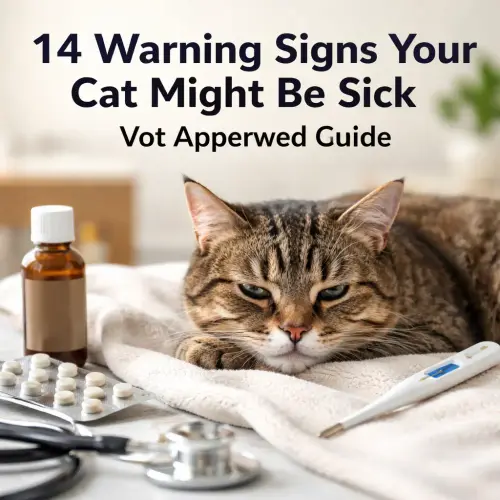
Why Spotting signs your cat may be sick Early Matters
Cats are masters at masking illness, a survival instinct inherited from their wild ancestors. By the time a cat shows obvious cat pain symptoms, the condition may have already progressed. Learning the 14 signs cat in pain or discomfort listed here helps you act quickly, which can mean a faster recovery, lower vet costs, and less stress for your pet. This guide is based on veterinary consensus and trusted resources such as the ASPCA common cat diseases page and VCA Hospitals’ pain recognition guide.
14 signs your cat may be sick — What to Watch For
1. Hiding More Than Usual
A cat that suddenly spends most of the day under the bed, inside a closet, or in other secluded spots may be trying to protect itself. Hiding is one of the earliest signs your cat is sick and often indicates pain, stress, or a developing illness. If your cat is also refusing treats or favorite toys, it’s time to call your veterinarian.
2. Changes in Eating or Drinking Habits
Whether your cat stops eating altogether, eats less, or suddenly becomes ravenous, any shift in appetite is a red flag. Increased thirst (polydipsia) can signal kidney disease, diabetes, or thyroid issues. Decreased thirst may accompany fever or nausea. Monitor water and food intake daily.
3. Litter Box Issues
Urinating outside the box, straining, blood in urine, or a sudden increase in frequency are classic cat pain symptoms linked to urinary tract infections, crystals, or blockages — especially in male cats. Constipation can also cause pain and should be evaluated promptly. For a related guide, see 12 Common Pet Illnesses Explained: Essential Warning Signs.
4. Vocalizing — Yowling, Growling, or Excessive Meowing
Increased vocalization, especially low-pitched yowls or growls, often signals pain, disorientation, or anxiety. Older cats with cognitive decline may yowl at night. If your cat is suddenly noisy and you can’t find another cause, see a vet.
5. Changes in Grooming
A cat that stops grooming will look matted, greasy, or dandruffy — a common sign of arthritis, obesity, or dental pain. Conversely, over-grooming a specific area (like the belly or legs) can indicate localized pain, allergies, or skin irritation.
6. Unusual Aggression or Irritability
If your normally friendly cat hisses, swats, or bites when touched, especially in a specific spot, assume pain. This is one of the most direct signs your cat may be sick and warrants a veterinary exam — do not assume it’s just “bad mood.”
7. Posture Changes — Hunched or Stiff
A cat in pain often sits hunched with its head down and back curved upward, or it may lie in a tucked position (chin on floor, body tight). A head-pressing behavior (pushing the head against walls) is a neurological emergency.
8. Limping or Reluctance to Jump
Limping is obvious pain, but many cats hide it. Watch for hesitation before jumping onto furniture, a stiff gait, or sleeping more than usual. This is a key cat pain symptom in older cats with arthritis.
9. Breathing Changes — Rapid, Open-Mouth, or Labored
Breathing faster than 30 breaths per minute at rest, open-mouth breathing (unless after intense play), or any signs of effort are emergencies. These can indicate heart disease, respiratory infection, or severe pain.
10. Excessive Sleeping or Lethargy
While cats sleep a lot, a sick cat sleeps even more — and seems less responsive. If your cat doesn’t wake up for meals, play, or petting, this is a serious sign your cat is sick. Combine lethargy with other symptoms for a clearer picture.
11. Weight Loss or Gain
Rapid weight loss (especially in older cats) often signals hyperthyroidism, diabetes, or kidney disease. Weight gain can also be a sign your cat may be sick, as it may slow down due to pain or illness. Weigh your cat monthly at home.
12. Eye or Nose Discharge
Cloudy eyes, squinting, excessive tearing, or colored discharge (green, yellow) suggests infection, injury, or allergies. Runny nose with sneezing often points to upper respiratory infections common in multi-cat households.
13. Bad Breath (Halitosis)
Foul-smelling breath is not normal and usually indicates dental disease, oral infections, or systemic problems like kidney failure (which can cause an ammonia-like odor). A dental checkup is recommended.
14. Sudden Changes in Social Behavior
A once-affectionate cat that now avoids contact — or a previously aloof cat that suddenly clings — can signal pain or illness. Changes in interaction with family members are valid signs your cat is sick and should not be dismissed.
What to Do If You Notice signs your cat may be sick
If you observe one or more of these 14 signs cat in pain, start by noting when the behavior began and any other changes in appetite, energy, or elimination. Then schedule a veterinary appointment. For emergency signs — difficulty breathing, collapse, severe vomiting/diarrhea, or suspected poisoning — go to an emergency vet immediately.
Never give over-the-counter pain relievers to cats — many are toxic. Instead, keep your cat comfortable with a warm, quiet space and avoid handling painful areas. Your vet may recommend blood work, urinalysis, imaging, or a pain management plan.
Useful Resources
For more information on recognizing illness in cats, visit VCA Hospitals’ guide to pain recognition and the ASPCA’s common cat diseases page.
Frequently Asked Questions About signs your cat may be sick
What are the most common signs your cat is sick ?
The most common signs your cat is sick include hiding, loss of appetite, lethargy, litter box changes, and reduced grooming.
How can I tell if my cat is in pain?
Look for cat pain symptoms such as limping, hunched posture, vocalizing, aggression when touched, and avoiding normal activities like jumping.
Do cats hide when they are sick?
Yes, hiding is one of the earliest signs your cat may be sick. Cats instinctively conceal weakness to avoid predators.
What does a sick cat’s behavior look like?
Sick cats often appear withdrawn, sleep more, refuse food, and may show aggression or clinginess.
Can cats have pain without limping?
Absolutely. Pain can show as hiding, loss of appetite, or a hunched posture — not just limping.
How can I check my cat’s health at home?
Monitor food and water intake, litter box output, weight, grooming, and energy levels. Any persistent change is a potential sign your cat is sick.
Is not eating for 24 hours dangerous for a cat?
Yes. Cats can develop hepatic lipidosis (fatty liver disease) after just 24-48 hours without food. Seek veterinary help immediately.
Why is my cat peeing outside the litter box?
This can indicate a urinary tract infection, bladder stones, or stress. It is a common cat pain symptom.
Can a cat hide pain from its owner?
Yes, cats are experts at hiding pain. That’s why knowing the 14 signs cat in pain is so important for early detection. For a related guide, see 8 Warning Signs of Infection in Pets Every Owner Must Know.
What does it mean when a cat stops grooming?
Stopping grooming often signals pain (e.g., arthritis) or illness. The coat becomes greasy and matted.
Is rapid breathing a sign of pain in cats?
Yes, rapid breathing (over 30 breaths per minute at rest) is a serious sign your cat may be sick and requires immediate vet attention.
What are the early signs of kidney disease in cats?
Increased thirst, increased urination, weight loss, and bad breath (ammonia smell) are early signs your cat is sick with kidney disease.
Can dental problems cause cats to stop eating?
Yes. Dental pain is one of the most common cat pain symptoms, leading to reduced appetite or dropping food while eating.
Why is my cat suddenly aggressive?
Sudden aggression is often pain-related. If your cat hisses or swats when touched in a specific area, assume pain.
How often should I take my cat to the vet?
Annual checkups are recommended for adult cats; senior cats (9+ years) should see a vet every 6 months.
Can stress make a cat sick?
Yes, stress can cause urinary issues, vomiting, and decreased appetite. It can also mimic signs your cat may be sick.
What does head pressing mean in cats?
Head pressing (pushing head against walls or objects) indicates a neurological problem and is an emergency sign your cat may be sick.
Why does my cat yowl at night?
Yowling at night can be a cat pain symptom from arthritis, or a sign of cognitive dysfunction in older cats.
Can I give my cat pain relievers from the pharmacy?
No — many human pain relievers (like ibuprofen and acetaminophen) are toxic to cats. Always consult a vet.
What should I do if I think my cat is in pain?
Keep your cat warm and quiet, avoid handling painful areas, and contact your veterinarian or emergency clinic.