



ways to keep your indoor cat active Key Takeaways
If your indoor cat spends most of the day napping or staring out the window, they might be missing out on essential physical and mental stimulation.
- Daily play sessions of just 10-15 minutes can significantly improve indoor cat activity and prevent obesity.
- Rotating toys and introducing puzzle feeders are affordable enrichment for indoor cats that keep boredom away.
- Vertical spaces like cat trees and window perches satisfy natural climbing instincts and reduce stress.
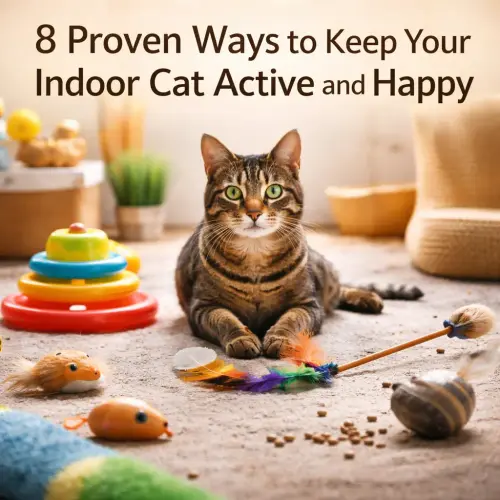
Why Finding Ways to Keep Your Indoor Cat Active Matters
Indoor cats live longer, safer lives than their outdoor counterparts, but they face unique challenges. Without the hunting, climbing, and exploring that outdoor cats enjoy, indoor cats often become sedentary. This lack of movement can lead to obesity, diabetes, joint problems, and destructive behaviors like scratching furniture or over-grooming.
More importantly, boredom affects a cat’s emotional well-being. Cats are natural hunters, and when they can’t express that instinct, frustration builds. The good news? You don’t need a big house or expensive gear to create a stimulating environment. Simple changes to your daily routine and home setup can transform your cat’s quality of life.
What Happens When Indoor Cats Are Not Active
Overweight cats are more prone to urinary tract issues, arthritis, and liver disease. Beyond physical health, under-stimulated cats often develop anxiety or obsessive-compulsive behaviors. Introducing consistent enrichment for indoor cats is the best prevention.
8 Practical Ways to Keep Your Indoor Cat Active
These strategies are easy to implement and backed by cat behavior experts. Start with one or two and build from there.
1. Schedule Short, Interactive Play Sessions Daily
Cats are crepuscular, meaning they’re most active at dawn and dusk. Mimic that rhythm by scheduling 10-15 minute play sessions in the morning and evening. Use wand toys with feathers or fuzzy attachments to simulate prey movement — darting, hiding, and pouncing. This not only burns energy but strengthens your bond.
Takeaway: Consistency matters more than length. Two short sessions daily are more effective than one long session once a week. Always let your cat “catch” the toy to satisfy their hunting instinct.
2. Rotate Toys to Keep Indoor Cat Activity Fresh
Cats get bored with the same toys after a few days. Keep four to six toys in rotation, swapping them out every 3-4 days. This makes old toys feel new again without spending a dime. Include a mix of crinkle balls, catnip mice, and wand toys.
Takeaway: Store out-of-rotation toys in a sealed bag with a sprinkle of catnip for an extra surprise when you bring them back.
3. Create Vertical Climbing Spaces
Indoor cats crave height. A tall cat tree, wall-mounted shelves, or a sturdy bookcase with a clear path to the top gives your cat territory to patrol and perch on. Vertical space reduces conflicts in multi-cat homes and provides excellent exercise.
Takeaway: Place cat trees near windows so your cat can watch birds and squirrels — that counts as mental enrichment for indoor cats too.
4. Use Puzzle Feeders and Food-Dispensing Toys
Instead of pouring kibble into a bowl, use puzzle feeders or slow-feed mats. This turns mealtime into a hunting game. Simple options include a muffin tin with treats hidden under tennis balls or a store-bought puzzle where your cat has to slide pieces to release food.
Takeaway: Puzzle feeders make cats work for food, which burns calories and stimulates their brain. Start with an easy puzzle and increase difficulty as your cat learns.
5. Set Up a Window Perch with a Bird Feeder View
Window seats are one of the cheapest indoor cat activity boosters. Install a suction-cup cat hammock on a sunny window, then place a small bird feeder on the other side of the glass. Your cat will spend hours watching, chattering, and tracking movement.
Takeaway: Even without a feeder, a window perch near a tree or busy sidewalk provides visual stimulation. Ensure the window screen is secure if you open it.
6. Teach Tricks and Commands Using Clicker Training
Cats can learn sit, high-five, and even fetch. Clicker training uses a small clicker to mark desired behavior, followed by a treat. Sessions last just a few minutes and provide intense mental focus. It’s a fantastic way to keep your indoor cat active while building trust.
Takeaway: Use tiny, high-value treats (like freeze-dried chicken) and keep sessions short and positive. Always end on a success.
7. Incorporate Catnip and Silver Vine for Solo Play
Catnip, silver vine, and valerian root can spark a burst of playful activity. Sprinkle dried catnip on a scratching pad or inside a paper bag for your cat to discover. Some cats become more active and playful for 10-15 minutes after exposure. Not all cats respond to catnip, but about 50-70% do. Silver vine works for a higher percentage, including some cats who ignore catnip.
Takeaway: Offer catnip toys only once or twice a week to keep the novelty high. Overuse can dull the effect.
8. Set Up an Obstacle Course or Treasure Hunt
Use boxes, tunnels, paper bags, and blankets to create a mini obstacle course. Hide treats or kibble in different spots around the room and let your cat sniff them out. This mimics natural foraging behavior and encourages movement in a fun, exploratory way.
Takeaway: Change the course layout each week to maintain interest. Even a simple paper bag on its side can become a tunnel for a curious cat.
Benefits of Committing to These Ways to Keep Your Indoor Cat Active
When you consistently apply these ideas, you’ll likely see your cat more engaged, calmer during quiet hours, and less prone to destructive scratching or yowling at night. Physical activity also strengthens the immune system, helps maintain a healthy weight, and can delay age-related cognitive decline.
Plus, interactive play strengthens the human-animal bond. Your cat will associate you with fun and safety, making vet visits and handling easier over time. The investment is minimal — mostly your time and attention — but the payoff is huge for both of you.
| Activity | Time Required | Cost | Mental or Physical Benefit |
|---|---|---|---|
| Interactive wand play | 10-15 min, 2x/day | $5-$20 | Physical and mental |
| Toy rotation | 5 min every 3-4 days | $0 | Mental |
| Vertical climbing space | One-time setup | $30-$200 | Physical |
| Puzzle feeders | 5 min setup | $10-$30 | Mental |
| Window perch with bird feeder | One-time setup | $20-$50 | Mental |
| Clicker training | 5-10 min/day | $10-$20 | Mental |
| Catnip-based solo play | Passive (cat-driven) | $5-$10 | Physical and mental |
| Obstacle course / treasure hunt | 15-20 min setup | $0 | Physical and mental |
How to Choose the Right Enrichment for Indoor Cats
Not every cat loves every activity. A senior cat with arthritis may prefer a low puzzle feeder and a window perch, while a kitten might need more energetic wand play and obstacle courses. Observe your cat’s natural preferences: do they stalk, pounce, climb, or hide? Tailor your choices to their personality.
Start with one new activity per week. Introduce it during a calm time of day, and never force interaction. If your cat ignores something, try it again later in a different spot. Some cats need time to warm up to new objects.
Useful Resources
For deeper guidance on cat behavior and enrichment, check out these trusted sources:
- American Veterinary Medical Association – Cat Care Resources – Expert advice on feline health, behavior, and nutrition.
- Ohio State University Indoor Cat Initiative – Research-based recommendations for enriching indoor cat environments.
Frequently Asked Questions About ways to keep your indoor cat active
How much exercise does an indoor cat need daily?
Most indoor cats benefit from at least two 10- to 15-minute interactive play sessions per day, along with access to toys and climbing spaces for self-directed activity.
What is the best toy for an indoor cat that doesn’t like to play?
Start with a wand toy that mimics small prey — slow, erratic movements often trigger a cat’s natural hunting instinct even if they seem uninterested at first. Also try silver vine, which is more potent than catnip for many cats.
Can I train my cat to use a puzzle feeder?
Absolutely, but start with an easy puzzle. Place a few treats on top or just under a flap so your cat learns that pulling or moving pieces releases food. Gradually increase difficulty as they get the hang of it.
Is it safe to leave puzzle feeders out all day?
Yes, as long as the feeder is clean and made of pet-safe materials. Remove any small parts that could be chewed off or swallowed. Supervise the first few uses to ensure your cat doesn’t get frustrated or stuck.
What are good low-cost enrichment for indoor cats ?
Cardboard boxes, paper bags, toilet paper tubes with treats inside, and crumpled paper balls are free or nearly free. Rotate them regularly to keep things interesting.
How often should I rotate my cat’s toys?
Every 3 to 4 days is ideal. Cats lose interest in the same toys quickly, but reintroducing them after a few days makes them feel new again.
Does catnip work on all cats?
No. Around 50-70% of cats respond to catnip. Kittens under 6 months old and some older cats don’t react. Silver vine or valerian root are great alternatives for non-responders.
My cat is overweight. Will these activities help?
Yes. Combined with a portion-controlled diet, consistent interactive play and puzzle feeders can help overweight cats lose weight. Consult your vet for a tailored plan.
Can I leave my cat alone with a wand toy?
No. Wand toys have strings and small attachments that can cause strangulation or be ingested if unsupervised. Always put wand toys away after interactive play.
How do I create a cat-friendly vertical space on a budget?
Install inexpensive wall shelves at staggered heights, or use a sturdy bookshelf with a clear path for jumping. Even a tall scratching post helps.
What if my cat ignores toys completely?
Try different types — some cats prefer toys that crinkle, others like ones that bounce. Also, check if your cat is in pain (dental issues, arthritis) by visiting a vet.
How can I encourage my cat to play alone?
Set out puzzle feeders, treat balls, or catnip-stuffed toys. A window perch with outdoor activity can also keep them engaged for hours without you.
Is laser pointer play good for my cat?
Laser pointers can be fun but frustrating because cats never physically catch the red dot. Always end a laser session by letting the dot land on a physical toy or treat so they have a sense of accomplishment.
Do automatic cat toys work for indoor cat activity ?
Some cats enjoy motion-activated toys that flutter or roll, but they don’t replace interactive play with you. Use automatic toys as supplements, not replacements.
How can I tell if my cat is bored?
Signs include excessive sleeping, over-grooming, destructive scratching, meowing at night, or changes in appetite. Introducing more enrichment often resolves these.
Should I let my cat outside for exercise?
Leash training or a secure catio (outdoor enclosure) can provide safe outdoor time. Free-roaming exposes cats to cars, predators, and disease, so supervised access is best.
Can puzzle feeders replace regular meals?
Yes, many cat owners use puzzle feeders for all meals. Your cat eats their normal kibble portion but has to work for it, which provides mental enrichment and slows down fast eaters.
How do I introduce a new toy to a shy cat?
Place the toy near their food bowl or a favorite resting spot without interacting. Let them investigate it on their own. You can also rub a bit of catnip on it to encourage interest.
What are the best enrichment for indoor cats in a small apartment?
Wall shelves for vertical space, a cat tree in a corner, window perches, and interactive play sessions work well even in small apartments. Use every vertical inch available.
How long does it take to see results from new enrichment?
Some cats respond immediately; others need days or even weeks to warm up. Be patient and consistent. Small improvements in mood and activity levels can appear within a week.