


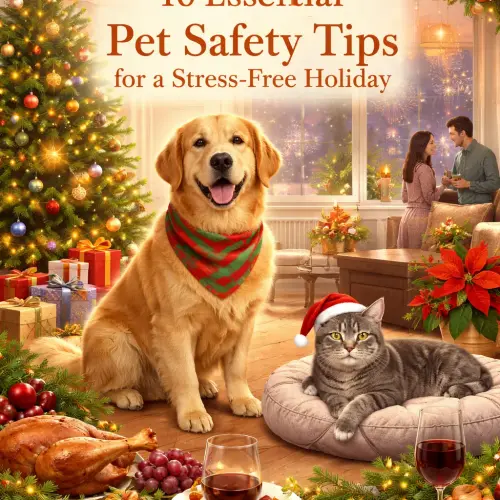
pet safety tips Key Takeaways
Poinsettias, mistletoe, holly berries, and lilies are common holiday plants that can be toxic.
- Keep toxic foods like chocolate, grapes, and xylitol far from pets — they can cause serious illness.
- Create a quiet, escape-proof space for your pet during fireworks or loud parties to reduce stress.
- Secure decorations, cords, and small ornaments to prevent choking, entanglement, or injury.
Understanding the Importance of Pet Safety Tips During Celebrations
During holidays, our homes transform with festive foods, decorations, and gatherings. While these changes are exciting for us, they can be overwhelming or even dangerous for pets. Pet safety tips aren’t just a checklist — they’re a way to ensure your dog, cat, or other companion feels secure and stays healthy while you celebrate. By planning ahead, you can avoid emergency vet visits and create a stress-free environment for everyone. For a related guide, see 12 Dangerous Household Items That Can Poison Pets: Expert Safety Guide.
Tip #1: Secure Toxic Foods Out of Reach
Many holiday staples are poisonous to pets. Chocolate, raisins, grapes, macadamia nuts, xylitol (found in sugar-free treats), and alcohol can cause vomiting, seizures, or organ failure. Always keep platters on high counters or behind closed doors, and remind guests not to feed table scraps. If you suspect ingestion, contact your vet or the ASPCA Animal Poison Control Center immediately. For a related guide, see 12 Dangerous Foods Dogs Should Never Eat: Essential Safety.
Tip #2: Create a Calm, Quiet Sanctuary
Loud gatherings, bright flashing lights, and fireworks can trigger anxiety in pets. Set up a quiet room with their bed, water, favorite toys, and a sound machine playing soft music or white noise. This dedicated safe space helps your pet retreat when they feel stressed, which is one of the most effective pet safety tips for noise-sensitive animals.
Tip #3: Decorate With Pet Safety in Mind
Christmas trees, tinsel, garlands, and electric candles all pose risks. Cats may chew on exposed wires and suffer electric shocks, while curious dogs might knock over trees or swallow ornaments. Anchor your tree securely, hang breakable ornaments high, and avoid tinsel (which can cause intestinal blockages). Use battery-operated candles instead of real flames to prevent burns or fires.
Tip #4: Keep Holiday Plants Away From Pets
Poinsettias, mistletoe, holly berries, and lilies are common holiday plants that can be toxic. Ingesting even small amounts may cause drooling, vomiting, or more severe reactions. Opt for pet-safe artificial plants or keep real greenery in rooms your pet cannot access. If you’re unsure about a plant’s toxicity, check the ASPCA’s list of toxic and non-toxic plants.
Tip #5: Watch for Escape Risks During Parties
With guests coming and going, doors often remain open longer than usual. A frightened or excited pet may dash outside and become lost. Ensure your pet wears a collar with updated ID tags and a microchip. Designate one person to monitor the front door, or use a baby gate to create a barrier. This simple habit is a crucial holiday pet safety tip that prevents escapes.
Tip #6: Avoid Overly Rich or Fatty Foods
Rich dishes like turkey skin, gravy, butter-laden sides, and desserts can trigger pancreatitis in dogs and cats. Symptoms include vomiting, diarrhea, and abdominal pain. Stick to their regular diet and offer small, safe treats like plain cooked carrots or a tiny bit of unseasoned turkey meat. Educate guests about pet safety during holidays so they don’t sneak your pet a harmful bite. For a related guide, see 14 Human Foods Toxic to Dogs and Cats: Essential Safety Guide.
Tip #7: Manage Noise and Firework Anxiety
Fireworks and party poppers create sudden loud noises that terrify many pets. Before the festivities begin, exercise your pet to help them feel tired and relaxed. Consider using a thunder-shirt, calming pheromone diffuser, or a vet-approved anxiety medication. Keep windows closed and curtains drawn to muffle sounds. Never take your pet to a fireworks display — even a well-behaved dog can panic and run away.
Tip #8: Supervise Pets Around Guests and Children
Some pets feel nervous around unfamiliar people, especially during crowded gatherings. Children may accidentally tug ears or tails, and excited guests might overwhelm a shy animal. Establish a rule that pets can retreat to their safe room anytime. Supervise all interactions between pets and young children to prevent bites or scratches. This proactive approach to pet safety tips protects both your guests and your pet.
Tip #9: Check Your Cleaning Supplies and Guests’ Belongings
Holiday cleaning often involves stronger chemicals. Store cleaners, disinfectants, and laundry pods out of reach. Additionally, guests may bring suitcases or bags containing medications, edibles, or personal items that could harm a curious pet. Ask visitors to keep belongings in a closed closet or high shelf. A quick sweep for hazards before the party begins supports pet safety during holidays.
Tip #10: Stick to Your Pet’s Routine as Much as Possible
Pets thrive on consistency. Even with festivities, try to maintain regular feeding times, walks, and play sessions. This stability reduces stress and helps your pet feel secure amid the chaos. End each celebration by spending a few quiet minutes with your pet, reinforcing positive behavior and ensuring they are comfortable before you turn in for the night.
Useful Resources
For more detailed guidance on common pet toxins and emergencies, visit the Pet Poison Helpline — a trusted resource for pet owners. The American Kennel Club’s Holiday Safety Tips also offers a comprehensive checklist that complements the advice above.
Frequently Asked Questions About pet safety tips
What are the most important pet safety tips for holidays?
The most critical tips include securing toxic foods, creating a quiet retreat, supervising guests, and keeping decorations and cords out of reach. These pet safety tips cover the biggest risks during celebrations.
Can pets eat turkey on Thanksgiving?
Pets can eat small amounts of plain, cooked, boneless turkey meat without skin or seasoning. Avoid giving them turkey skin, gravy, or any meat cooked with onions or garlic, which are toxic.
Is chocolate really that dangerous for dogs?
Yes, chocolate contains theobromine and caffeine, which can cause vomiting, diarrhea, rapid breathing, seizures, and even death in dogs. Dark chocolate and baking chocolate are the most toxic.
How do I calm my pet during fireworks?
Create a safe room with familiar bedding, use white noise or calming music, try a thunder-shirt or anxiety wrap, and consider pheromone diffusers. If anxiety is severe, consult your vet about medication.
Are poinsettias poisonous to cats and dogs?
Poinsettias are mildly toxic, causing drooling or mild vomiting, but they are rarely fatal. Still, it’s best to keep them out of reach or choose pet-safe alternatives.
What should I do if my pet eats something toxic?
Contact your veterinarian or the ASPCA Animal Poison Control Center immediately. Do not induce vomiting unless instructed, as some substances cause more damage when vomited.
How can I prevent my cat from climbing the Christmas tree?
Anchor the tree securely, use a tree skirt, and place citrus peels or aluminum foil around the base — cats dislike these textures. You can also use a motion-activated air spray near the tree.
Is xylitol dangerous for pets?
Extremely dangerous. Xylitol, found in sugar-free gum, candy, and baked goods, causes a rapid insulin release in dogs, leading to hypoglycemia (low blood sugar) and potential liver failure.
Should I crate my pet during parties?
Crating can be safe if your pet is already crate-trained and sees it as a den. For pets not used to crates, a quiet room with their bed and toys is a better option.
What holiday foods are safe for dogs?
Safe options include plain cooked turkey (no skin, bones, or seasoning), plain green beans, carrots, and small amounts of unsweetened applesauce. Always introduce new foods in very small quantities.
Can I give my cat a treat from the table?
It’s better to avoid table scraps altogether. Cats can have tiny pieces of plain cooked turkey or cat-safe commercial treats, but many human foods cause upset stomachs or pancreatitis.
How do I keep my dog from bolting out the door?
Use a baby gate to create a barrier between the entryway and the rest of the house, keep a leash handy, and ask someone to monitor the door. Reinforce a ‘wait’ command with training treats.
Are tinsel and ribbons dangerous for cats?
Yes, cats are attracted to shiny objects and may ingest tinsel or ribbon, which can cause linear foreign body obstructions in the intestines — a life-threatening emergency requiring surgery.
What are signs of pet anxiety during holidays?
Common signs include pacing, panting, drooling, trembling, hiding, excessive barking or meowing, destructive behavior, and loss of appetite. Recognize these early to help your pet feel safe.
Can I use essential oils to calm my pet?
Many essential oils are toxic to pets, especially when diffused in concentrated amounts. Lavender in very low dilution may be safe for some dogs, but always consult your vet before using any aromatherapy.
Is it safe to dress my pet in holiday costumes?
Only if the costume fits properly, doesn’t restrict movement, breathing, or vision, and your pet tolerates it. Never leave a costumed pet unsupervised, as they can chew and choke on parts.
What should I do if my pet gets lost during a holiday event?
Search your home and neighborhood immediately, check with neighbors, post on local social media lost-pet groups, and contact animal shelters. Having your pet microchipped and wearing a collar with ID tags greatly increases the chance of a safe return.
Are artificial trees safer than real ones for pets?
Artificial trees are generally safer because they don’t shed needles that can be ingested or cause mouth injuries. However, they still pose tipping risks and cord hazards, so secure them well.
How can I help my pet adjust after a holiday party?
Return to your normal routine as quickly as possible: feed at regular times, take walks as usual, and give extra attention. Clean up any leftover decorations or food to prevent late-night snacking.
What is the best way to introduce my pet to guests?
Allow your pet to approach guests on their own terms. Keep the first interactions calm and brief, and give your pet a treat for friendly behavior. If your pet hides, don’t force them out — respect their comfort zone.