


dangerous objects pets commonly swallow Key Takeaways
Every year, veterinary emergency rooms treat thousands of pets for swallowing foreign objects.
- The seven dangerous objects pets commonly swallow range from obvious hazards like bones to surprising items like socks and coins.
- Symptoms of an intestinal blockage include vomiting, lethargy, loss of appetite, and abdominal pain—any of these warrant immediate veterinary attention.
- Prevention is straightforward: pet-proof your home, supervise chew time, and know which objects require an emergency vet visit.
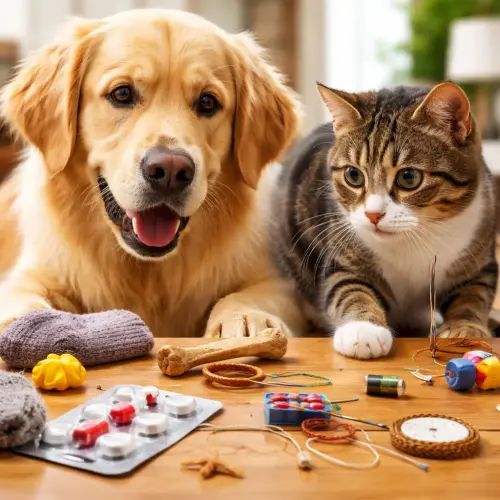
Why Recognizing Dangerous Objects Pets Commonly Swallow Saves Lives
Pets explore the world with their mouths. Puppies and kittens are especially prone to chewing and swallowing items they shouldn’t, but even adult dogs and cats can fall victim to a tempting object. The consequences range from mild stomach upset to life-threatening intestinal perforation. Understanding the specific dangerous objects pets commonly swallow helps you act quickly when an incident occurs—and better yet, prevent it from happening at all. For a related guide, see 12 Dangerous Household Items That Can Poison Pets: Expert Safety Guide.
The Hidden Danger of Household Items
Many pet owners don’t realize that seemingly harmless items like socks or corn cobs can cause catastrophic blockages. A foreign body obstruction often requires emergency surgery costing thousands of dollars. Beyond the financial burden, these surgeries carry risks for your pet, especially if the object has been lodged for more than 24 hours.
Object #1: Common Objects Dogs Eat — Bones and Rawhide
Bones are perhaps the most misunderstood treat in pet ownership. While the image of a dog chewing a bone feels classic and natural, the reality is that cooked bones splinter easily. These sharp fragments can puncture the esophagus, stomach, or intestines. Even raw bones pose risks if swallowed whole or in large chunks.
Why Bones Are Among the Most Dangerous Objects Pets Commonly Swallow
Cooked poultry bones, pork ribs, and ham bones are particularly brittle. When a dog crushes them with their powerful jaws, the resulting shards are razor-sharp. Rawhide chews also rank high on the list of dangerous objects pets commonly swallow because they soften and can become lodged in the throat or form a sticky mass in the stomach.
What to Do If Your Pet Swallows a Bone
If your dog swallows a bone piece, monitor them closely for gagging, pawing at the mouth, or vomiting. Do not induce vomiting unless directed by your veterinarian, as a sharp bone can cause more damage coming back up. Instead, call your vet or an emergency animal hospital immediately.
Object #2: Socks and Fabric Items
Socks are surprisingly one of the most dangerous objects pets commonly swallow, especially for dogs. The fabric absorbs moisture and expands in the stomach, creating a blockage that often requires surgical removal. Underwear, T-shirts, and even stuffed animal fluff present the same risk.
Why Fabrics Are Deceptively Dangerous
A sock may pass through a large dog’s digestive tract, but more often it gets stuck in the small intestine. The longer it remains, the more the intestinal tissue becomes damaged from pressure and lack of blood flow. This can lead to necrosis within 48 hours. Cats also swallow fabric items like hair ties, ribbons, and string—more on that below.
Object #3: Common Objects Dogs Eat — Corn Cobs and Fruit Pits
Corn cobs are a classic barbecue leftover that dogs find irresistible. Unfortunately, they are also among the most dangerous objects pets commonly swallow. A corn cob is the perfect size to lodge in the intestine, and it does not break down in stomach acid. Similarly, fruit pits—peach, plum, avocado—pose a dual threat of blockage and toxicity from cyanogenic compounds.
Recognizing the Signs of a Corn Cob Blockage
Dogs who swallow a corn cob typically show symptoms within 12 to 24 hours. Look for repeated vomiting, straining to defecate, a hunched posture, and lethargy. If you suspect your dog ate a corn cob, do not wait—seek veterinary care immediately. These cases almost always require surgery.
Object #4: Coins and Small Metal Objects
Pets swallow coins more often than people realize. Pennies minted after 1982 are especially dangerous because they contain zinc. When stomach acid breaks down the coin, zinc is released into the bloodstream, causing red blood cell destruction, kidney damage, and potentially fatal anemia. Other metal objects like batteries and magnets are even more urgent emergencies.
The Danger of Multiple Magnets
If a pet swallows more than one magnet, the magnets can attract each other across different parts of the intestinal tract. This pinches the tissue between them, cutting off blood supply and causing perforation within hours. This is one of the most life-threatening scenarios involving dangerous objects pets commonly swallow.
Object #5: String, Yarn, and Tinsel
Cats are notorious for eating string, ribbon, yarn, and especially Christmas tinsel. This falls under a category called “linear foreign bodies.” One end of the string gets anchored—often under the tongue or in the stomach—while the rest travels through the intestines. The intestine then bunches up like an accordion, causing severe damage.
Why Strings Are Among the Most Dangerous Objects Pets Commonly Swallow for Cats
Unlike a solid object, string can saw through the intestinal wall as the digestive tract continues to contract. This leads to peritonitis, a life-threatening infection. Never pull a string protruding from your cat’s mouth or anus, as this can cause catastrophic tearing. Take your cat to the vet immediately.
Object #6: Toys and Chew Toy Fragments
Paradoxically, some of the dangerous objects pets commonly swallow are toys designed for pets. Tennis balls can be chewed into pieces and swallowed, while squeakers inside toys are a common surgical finding. Even durable rubber toys eventually wear down, and small pieces can lodge in the airway or intestine.
Choosing Safer Toys
Choose toys appropriate for your pet’s size and chewing style. For aggressive chewers, avoid toys with stuffing, squeakers, or small parts that can be detached. Monitor play sessions and replace toys as soon as they show signs of damage. A good rule of thumb: if the toy is small enough to fit entirely inside your pet’s mouth, it is too small.
Object #7: Common Objects Dogs Eat — Rocks and Gravel
Rock eating, or pica, is a behavioral issue seen in some dogs, particularly puppies and certain breeds like Labrador Retrievers. Swallowing rocks is extremely dangerous because they are heavy, non-digestible, and have sharp edges. A rock can cause dental fractures, esophageal damage, or a heavy blockage that is difficult for the intestines to move.
Why Rocks Are a Veterinary Nightmare
Unlike softer objects, rocks do not compress or break down. They often require surgical removal, and the procedure can be more complex due to the weight and hardness of the stone. If your dog repeatedly eats rocks, consult your veterinarian to rule out nutritional deficiencies or underlying medical conditions.
How to Pet-Proof Your Home Against Dangerous Objects Pets Commonly Swallow
Prevention is the most effective strategy. Walk through each room of your home at pet-eye level and identify potential hazards. Keep laundry off the floor, secure trash cans with locking lids, and store small items like batteries, coins, and sewing supplies in closed drawers. During holidays, be especially vigilant about decorations, bones from meals, and guests’ belongings.
What to Do in an Emergency
If you see your pet swallow a dangerous object—or if you suspect they have—call your veterinarian or the nearest emergency animal hospital immediately. Do not wait for symptoms to develop. In many cases, early intervention can resolve the issue with endoscopy rather than surgery. Have the Pet Poison Helpline (855-764-7661) saved in your phone for additional guidance. For a related guide, see 10 Heatstroke Symptoms in Pets: Expert Warning Signs and Safety Steps.
| Object Type | Primary Risk | Urgency Level |
|---|---|---|
| Cooked bones | Perforation, blockage | Emergency |
| Socks / fabric | Intestinal obstruction | Emergency |
| Corn cob | Complete blockage | Emergency |
| Coins (post-1982) | Zinc toxicity | Emergency |
| String / tinsel | Linear foreign body | Emergency |
| Toy fragments | Blockage / choking | High |
| Rocks / gravel | Blockage / dental damage | High |
Useful Resources
For more detailed information on pet-proofing and emergency signs, consult these trusted sources:
- VCA Animal Hospitals: Foreign Body Obstruction in Dogs — Comprehensive overview of symptoms, diagnosis, and treatment options.
- PetMD: Foreign Body Obstruction in Dogs and Cats — Vet-reviewed guide covering everything from causes to recovery.
Frequently Asked Questions About dangerous objects pets commonly swallow
What are the most dangerous objects pets commonly swallow?
The most dangerous include cooked bones, socks, corn cobs, coins (particularly zinc pennies), strings, toy fragments, and rocks. Each of these objects can cause intestinal blockage, perforation, or toxicity.
How do I know if my dog swallowed something dangerous?
Common symptoms include vomiting, gagging, loss of appetite, lethargy, abdominal pain, straining to defecate, or dark/black stools. If you witness your pet swallowing an object, do not wait for symptoms—seek veterinary help immediately.
Can a sock pass through a dog’s digestive system naturally?
Occasionally a small sock may pass through a large dog, but it is dangerous to assume this will happen. Most socks cause obstruction and require veterinary intervention. Never wait more than 12 hours without professional evaluation.
Should I induce vomiting if my pet swallows a dangerous object?
Only if specifically instructed by your veterinarian. Inducing vomiting can be harmful with sharp objects, batteries, or caustic materials. Always call your vet first for guidance.
What should I do if my cat eats string?
Do not pull any visible string from your cat’s mouth or anus. This can cause severe internal tearing. Take your cat to an emergency vet immediately. String is a classic linear foreign body that requires professional removal.
How much does surgery cost to remove a swallowed object from a pet?
Costs vary widely by location and complexity, but expect $1,500 to $5,000 or more for emergency foreign body surgery. This estimate includes diagnostics, anesthesia, surgery, and hospitalization.
Are rawhide chews safe for dogs?
Rawhide carries significant risks including choking, blockage, and digestive irritation. Many veterinarians recommend safer alternatives like digestible dental chews or rubber toys designed for heavy chewers.
Can a dog pass a corn cob?
It is extremely unlikely. Corn cobs do not break down in stomach acid and are the perfect size to lodge in the small intestine. Nearly all cases require surgical removal.
What fruits are toxic to dogs besides the pit concern?
Grapes, raisins, and currants are highly toxic to dogs and can cause acute kidney failure. Onions, garlic, and macadamia nuts are also dangerous. Always research before sharing human food with your pet.
How long after swallowing an object will my dog show symptoms?
Symptoms typically appear within 12 to 48 hours, but can sometimes take longer. The timing depends on the size and location of the object. Some obstructions can be present for days before severe symptoms develop.
Can pets swallow batteries? What happens?
Yes, especially button batteries. They can cause electrical burns, leakage of caustic chemicals, and heavy metal poisoning. This is a life-threatening emergency requiring immediate veterinary intervention.
Are tennis balls dangerous for dogs?
Tennis balls are dangerous when chewed into pieces. The outer fuzz can also wear down tooth enamel over time. Aggressive chewers should never be left unsupervised with tennis balls.
What does a linear foreign body mean?
A linear foreign body is a long, thin object like string or ribbon that becomes anchored at one point while the intestines attempt to propel it forward. This causes bunching and sawing of the intestinal wall, often leading to perforation.
Can my pet pass a small coin?
While a small coin might pass through a large dog, it is never safe to assume. Coins containing zinc (post-1982 pennies) can cause heavy metal poisoning even if they pass. Always consult a vet.
Why does my dog eat rocks?
Rock eating can stem from nutritional deficiencies, boredom, anxiety, or an underlying medical condition called pica. It is important to address the root cause with your veterinarian to prevent repeat incidents.
Is it safe to give my dog a pig ear or bully stick?
These can be safer than rawhide but still carry risks. Always supervise your dog with any chew item, select the appropriate size, and discard small pieces to prevent swallowing.
What are the signs of zinc poisoning in dogs?
Symptoms include vomiting, diarrhea, pale gums, lethargy, jaundice (yellowing of skin/eyes), and dark urine. Zinc poisoning can cause red blood cell destruction and kidney failure.
Can cats swallow dangerous objects too?
Yes, cats commonly swallow string, ribbon, tinsel, hair ties, small toys, and rubber bands. Cats also face risks from lilies and other toxic plants, though those are not foreign body issues.
How can I prevent my puppy from swallowing dangerous objects?
Puppy-proof your home by removing small items, using baby gates to restrict access, providing safe chew toys, and supervising all playtime. Crate training when unsupervised is also effective.
When should I take my pet to the emergency vet for a swallowed object?
Anytime you witness your pet swallowing a dangerous object, or if they show any signs of obstruction (vomiting, lethargy, abdominal pain, inability to defecate), go to an emergency vet immediately. Time is critical in these cases.