



prevent pet accidents at home Key Takeaways
Cleaning products, medications, antifreeze, and even certain human foods can be deadly if ingested.
- Learn how to prevent pet accidents at home by identifying common dangers in each room.
- Discover simple training techniques that reinforce safe behavior around doors, stairs, and kitchens.
- Get a practical checklist for pet-proofing every area of your home, from the living room to the garage.
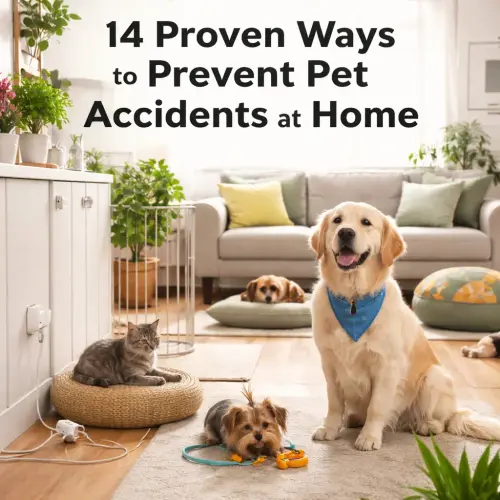
Why Every Pet Owner Should Prevent Pet Accidents at Home
Your home is your pet’s entire world. Yet many common household items — cleaning supplies, loose cords, open windows — pose real dangers that most owners overlook. Taking proactive steps to prevent pet accidents at home doesn’t just protect your belongings; it saves trips to the emergency vet and gives you peace of mind. Whether you share your space with a curious puppy, an agile cat, or a senior pet with wobbly legs, these tips will help you identify and reduce risks before an accident happens. For a related guide, see 12 Dangerous Household Items That Can Poison Pets: Expert Safety Guide.
1. Secure Toxic Substances Out of Reach
Cleaning products, medications, antifreeze, and even certain human foods can be deadly if ingested. Store all chemicals in locked cabinets or on high shelves. Keep purses and backpacks off the floor — pets can easily snatch gum, pills, or hand sanitizer. A simple rule: if it’s toxic to a toddler, it’s toxic to your pet.
2. Hide Electrical Cords and Charging Cables
Puppies and kittens love to chew on dangling cords, risking electrocution or burns. Use cord covers, cable clips, or spiral wrap to bundle wires out of sight. Unplug chargers when not in use. For persistent chewers, apply a bitter-tasting spray designed for pets.
3. Choose Pet-Safe Houseplants
Many popular plants — lilies, sago palm, aloe vera, and pothos — are toxic to cats and dogs. Before bringing a new plant home, verify it against the ASPCA’s list of non-toxic plants. Place hanging planters in spots your pet can’t jump to, and keep fallen leaves swept up.
4. Install Baby Gates at Stairs and Doorways
Falls from stairs are a leading cause of injury for both puppies and senior pets. Install sturdy baby gates at the top and bottom of stairs. Use pressure-mounted gates in doorways to block access to rooms with hazards like a hot oven or loose wiring.
5. Keep Trash Cans Sealed
Curious noses can flip open lids and get into rotting food, sharp objects, or toxic wrappers. Use trash cans with locking lids or store them inside a cabinet. Empty the kitchen bin frequently, especially after preparing meals with bones, onion skins, or chocolate.
6. Block Access to Windows and Balconies
Open windows are an invitation for cats to lean out and fall. Install secure window screens that are strong enough to withstand a pet’s weight. On balconies, add mesh netting or plexiglass panels to prevent small dogs from squeezing through railings.
7. Create a Safe Zone for the Garage and Workshop
Garages often contain antifreeze (which tastes sweet to pets), paints, pesticides, and sharp tools. Keep all chemicals in sealed containers on high shelves. Sweep up nails, screws, and metal shavings. Never leave car fluids leaking on the floor.
8. Supervise Playtime with Toys and Chews
Chewed-off pieces, squeakers, and stuffing can cause intestinal blockages. Choose toys sized appropriately for your pet’s breed. Inspect toys regularly and discard any that are frayed or broken. Avoid rawhide and cooked bones, which splinter easily.
9. Train a Solid “Leave It” and “Drop It”
Behavioral training is one of the most effective ways to prevent pet accidents at home. Teaching a reliable “leave it” command stops your dog from picking up dropped pills, chicken bones, or other hazards before they swallow them. Practice daily with low-value items first, then build up to real-world temptations.
10. Secure Furniture and Heavy Objects
A jumping dog or climbing cat can topple a bookshelf, television, or lamp. Anchor tall furniture to the wall with brackets or straps. Avoid placing heavy objects on low tables that your pet can knock over. Especially important for large-breed puppies who don’t yet know their own strength.
11. Close Toilet Lids and Cover Bathtubs
Small pets can drown in open toilets, and toilet bowl cleaners are toxic if ingested. Keep the lid down at all times. Never leave a bathtub filled with water unattended. If you use a bucket for mopping, empty it immediately after use.
12. Provide a Consistent Daily Routine
Pets thrive on predictability. A stable schedule for feeding, potty breaks, walks, and playtime reduces anxiety — which can lead to destructive behaviors like chewing or scratching. A calm pet is less likely to have accidents of any kind, from house soiling to jumping off high surfaces.
13. Use Paw-Friendly Flooring and Rugs
Tile and hardwood can make senior pets slip and injure their hips or legs. Place non-slip runners in hallways and yoga mats in front of food bowls. For puppies, avoid slick surfaces during potty training — they learn more confidently on easy-to-clean vinyl or laminate that offers some grip.
14. Schedule Regular Veterinary Checkups
Routine vet visits help catch underlying health issues — like vision loss, arthritis, or urinary tract infections — that can lead to accidents in the house. Pain or illness often makes pets behave unpredictably. Keeping up with vaccines and parasite prevention also lowers the risk of disease from environmental exposure.
Quick Safety Checklist to Prevent Pet Accidents at Home
Use this handy checklist monthly to stay on top of home safety:
- Walk every room at pet-eye level and remove dangling cords, small objects, and accessible toxins.
- Verify that window screens are secure and balcony gaps are blocked.
- Check that trash cans are locked and garage chemicals are elevated.
- Replace any worn toys, scratched scratching posts, or unstable furniture anchors.
- Refresh your pet’s “leave it” training with a short practice session.
Useful Resources
For an authoritative list of toxic and non-toxic plants, visit the ASPCA Toxic and Non-Toxic Plants Database.
For detailed guidance on pet-proofing your home room by room, check out the Humane Society’s Home Pet-Proofing Guide.
Frequently Asked Questions About Prevent Pet Accidents at Home
Taking time to prevent pet accidents at home is one of the best investments you can make in your pet’s quality of life. Start with the biggest risks — toxins and falls — then work through the rest of the checklist. Your pet will thank you with more tail wags and fewer vet visits.
Frequently Asked Questions About prevent pet accidents at home
What are the most common pet accidents in the home?
The most frequent incidents include ingestion of toxic foods or plants, falls down stairs, cord electrocution, and intestinal blockages from toy parts. Many of these can be avoided with simple pet-proofing steps.
How can I pet-proof my kitchen to prevent accidents?
Keep all food waste sealed in a locking trash can. Store cleaning supplies in a cabinet with a childproof latch. Never leave stove knobs accessible, and watch for hot surfaces when cooking.
Are essential oil diffusers safe for pets?
Many essential oils — including tea tree, citrus, and peppermint — are toxic to cats and dogs. Use only pet-safe diffusers in ventilated rooms, or avoid them altogether in homes with birds or cats. For a related guide, see 14 Human Foods Toxic to Dogs and Cats: Essential Safety Guide.
How do I stop my dog from chewing electrical cords?
Use cord covers or spiral cable wrap. Apply bitter apple spray to cords, and provide plenty of safe chew toys. Unplug devices when not in use and manage your dog’s environment with baby gates if needed.
Is it safe to have houseplants with cats?
Only if you choose non-toxic varieties such as spider plants, Boston ferns, or areca palms. Always verify a plant before purchase, and place hanging plants where your cat cannot jump or climb to them.
What should I do if my pet ingests something poisonous?
Contact your veterinarian or the ASPCA Animal Poison Control Center (888-426-4435) immediately. Do not induce vomiting unless instructed by a professional. Keep the product packaging or plant sample for identification.
How often should I check my home for pet hazards?
Perform a room-by-room safety walk once a month. Also do a quick visual scan whenever you bring new items — such as electronics, furniture, or plants — into the house.
Can baby gates really prevent pet accidents ?
Yes. Baby gates block access to staircases, kitchens with hot appliances, and rooms with exposed wires or small objects. They are one of the most cost-effective tools for home pet safety.
What are the signs of a blocked intestine in a dog?
Vomiting, loss of appetite, lethargy, straining to defecate, and a hunched posture are common signs. If you suspect your pet ate a toy part or bone, see a vet immediately.
How can I keep my senior pet safe at home?
Use non-slip rugs on slick floors, provide ramps for furniture and stairs, keep food and water bowls at an easy height, and ensure low-traffic areas are well-lit. Regular vet exams help manage arthritis and vision loss.
Are candle warmers safer than open flames for pets?
Candle warmers eliminate the risk of open flames, but the scented wax can still be dangerous if ingested. Place warmers on high shelves and never leave them unattended with a pet in the room.
What human foods are most dangerous for pets?
Chocolate, grapes, raisins, onions, garlic, xylitol (found in gum and peanut butter), macadamia nuts, and alcohol are highly toxic. Even small amounts can cause severe illness. For a related guide, see 10 Essential Pet Safety Tips for a Stress-Free Holiday.
How do I safely store medications around pets?
Keep all human and pet medications in cabinets with childproof latches. Never leave pill bottles on nightstands or countertops. Dispose of expired medications at a pharmacy drop-off, not in the trash.
Is it okay to let my cat play with string or ribbon?
No. String, ribbon, and yarn can cause linear foreign-body obstructions in cats, which is often fatal without surgery. Supervise all play with string toys and store them out of reach when not in use.
What should I do about open windows in summer?
Install secure, pet-proof screens that can’t be pushed out. Keep windows only partially open if your pet is large enough to push against a screen. Consider window stops that limit how far a window can open.
How can I prevent my dog from eating things on walks?
Practice “leave it” and “drop it” commands in low-distraction settings first. Use a basket muzzle if your dog scavenges aggressively. Keep treats handy to reward breaking focus from street litter.
Are electric shock mats safe for training?
These mats deliver a mild static pulse to keep pets off counters or furniture. They are generally safe but should not be used on puppies under six months or senior pets with health conditions. Always test on your own hand first.
What is the best way to block under-the-couch access?
Use pool noodles or foam pipe insulation stuffed into the gap. Alternatively, buy a furniture gap blocker or attach a fitted fabric skirt to the couch. This prevents pets from getting stuck or chewing hidden objects.
Can indoor pets still get fleas or ticks?
Yes. Fleas and ticks can hitch a ride on clothing, shoes, or other pets. Indoor-only pets should still be on year-round preventive medication recommended by your veterinarian.
How do I choose a pet-safe cleaning product?
Look for products labeled as non-toxic, plant-based, and free of bleach, ammonia, and phthalates. Vinegar, baking soda, and hydrogen peroxide make effective DIY cleaners. Always rinse surfaces thoroughly before letting pets back into the area.