


Foods That Are Dangerous for Dogs and Cats Key Takeaways
Every pet owner should know which foods that are dangerous for dogs and cats are hiding in their kitchen.
- Chocolate, grapes, onions, and xylitol are among the most foods that are dangerous for dogs and cats .
- Symptoms of poisoning vary widely; early recognition saves lives.
- Immediate veterinary care is critical if your pet ingests any of these items.
Why Every Pet Owner Must Know About Foods That Are Dangerous for Dogs and Cats
As loving pet parents, we often share our meals with our furry companions without realizing the hidden risks. While some human foods are safe in moderation, many common kitchen staples can trigger severe reactions, organ failure, or death. Understanding foods that are dangerous for dogs and cats is a fundamental part of pet poison prevention and responsible care. For a related guide, see 11 Dangerous Foods That Can Cause Serious Health Problems in Pets.
In this guide, we break down ten toxic ingredients you should keep far away from your pets. We also provide actionable steps to protect your dog or cat, and what to do if an accident happens. This information applies to both dog and cat safety and is crucial for new pet owners, families with pets, and anyone committed to harmful human foods for pets education.
Understanding Pet Toxicity: Why Some Human Foods Are Harmful
Not all human foods affect dogs and cats the same way. Their metabolism, body weight, and unique physiology make them vulnerable to substances we handle easily. For example, dogs and cats cannot metabolize theobromine in chocolate or certain compounds in onions, leading to toxic buildup. This is why even small amounts of some foods that are dangerous for dogs and cats can cause severe health emergencies.
Many of these dangers apply to both species, but some foods may be more harmful to cats due to their smaller body size and different liver enzymes. Always err on the side of caution and avoid feeding your pet any item from our list.
The Role of Pet Weight and Age
Smaller pets, puppies, kittens, and senior animals are at a higher risk of toxic foods for pets complications. Their bodies are less efficient at processing toxins, so even a tiny amount can trigger serious symptoms. Always consult your veterinarian if you suspect ingestion, regardless of the quantity.
The Top 10 Foods That Are Dangerous for Dogs and Cats
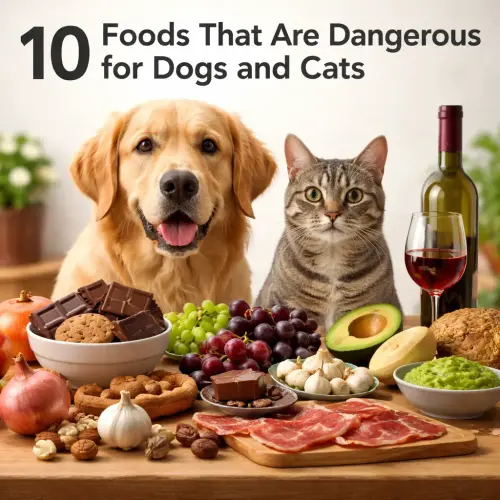
Below is a detailed list of the most common foods that are dangerous for dogs and cats. Each entry explains why it is toxic, symptoms to watch for, and what to do if your pet eats any of them.
1. Chocolate
Chocolate contains theobromine and caffeine, both stimulants that dogs and cats cannot break down efficiently. Dark, baking, and high-cacao chocolates are the most toxic. Symptoms of poisoning include vomiting, diarrhea, restlessness, rapid breathing, seizures, and in severe cases, death. If your pet ingests chocolate, call your vet or a pet poison helpline immediately.
2. Grapes and Raisins
Grapes and raisins can cause acute kidney failure in both dogs and cats, even in small amounts. The exact toxin is unknown, but the reaction is unpredictable. Early signs include vomiting, lethargy, and loss of appetite. Prompt veterinary care—including inducing vomiting—is essential if ingestion is suspected.
3. Onions and Garlic
Onions, garlic, leeks, chives, and shallots contain thiosulfates, which damage red blood cells and lead to anemia in dogs and cats. Symptoms may take days to appear: weakness, pale gums, dark urine, and rapid heart rate. Avoid feeding any cooked or raw forms, including powdered seasonings.
4. Xylitol (Artificial Sweetener)
Xylitol is a sugar substitute found in sugar-free gum, candy, baked goods, and some peanut butters. It triggers a rapid insulin release in dogs, causing dangerous hypoglycemia (low blood sugar) and possible liver failure. Signs include vomiting, weakness, seizures, and collapse. Xylitol is also toxic to cats, though less common. Always check ingredient labels before sharing human treats. For a related guide, see 8 Dangerous Foods for Pets: Avoid These Toxic Risks.
5. Macadamia Nuts
Macadamia nuts cause a unique syndrome in dogs: weakness, depression, tremors, hyperthermia, and vomiting. Even a small handful can trigger symptoms within 12 hours. The mechanism is unclear, but recovery is usually full with supportive veterinary care. Avoid giving any nuts without explicit vet approval.
6. Alcohol and Yeast Dough
Alcohol poisoning can occur in pets if they ingest alcoholic beverages, mouthwash, or unbaked bread dough containing yeast. Ethanol and yeast fermentation produce alcohol that depresses the central nervous system. Symptoms include disorientation, vomiting, difficulty breathing, seizures, and coma. Keep all alcohol and dough out of reach.
7. Caffeine (Coffee, Tea, Energy Drinks)
Caffeine is a stimulant that can be lethal to dogs and cats. Signs include hyperactivity, rapid breathing, heart palpitations, tremors, and seizures. Even small amounts of coffee grounds, tea bags, or energy drinks can be dangerous. Seek immediate veterinary help if your pet consumes caffeine.
8. Cooked Bones (Poultry, Pork, Beef)
While raw bones are sometimes safe under supervision, cooked bones splinter easily and can cause choking, intestinal blockages, or perforations in both dogs and cats. Never give cooked bones from your table. Stick to vet-recommended chew toys or raw, weight-appropriate bones only under guidance.
9. Avocado
Avocado contains persin, a fungicidal toxin that can cause vomiting and diarrhea in dogs and cats. The pit poses a choking hazard and can obstruct the digestive tract. While the flesh is less toxic than the pit or skin, it is safest to avoid feeding avocado altogether.
10. Raw Eggs, Meat, and Fish
Raw foods can carry Salmonella or E. coli, leading to severe gastrointestinal upset. Raw egg whites contain avidin, which can cause biotin deficiency over time. Cook all proteins thoroughly before offering them to your pet. Always practice pet poison prevention by storing raw ingredients securely away from curious noses.
| Food | Primary Toxin | Affects Dogs | Affects Cats |
|---|---|---|---|
| Chocolate | Theobromine, caffeine | Yes | Yes |
| Grapes/Raisins | Unknown nephrotoxin | Yes | Yes |
| Onions/Garlic | Thiosulfates | Yes | Yes |
| Xylitol | Insulin release | Yes | Yes |
| Macadamia Nuts | Unknown | Yes | No (rare) |
| Alcohol/Yeast | Ethanol | Yes | Yes |
| Caffeine | Stimulant | Yes | Yes |
| Cooked Bones | Splinter hazard | Yes | Yes |
| Avocado | Persin | Yes | Yes |
| Raw eggs/meat/fish | Bacterial pathogens | Yes | Yes |
Recognizing Poisoning Symptoms: When to Act Fast
When a pet ingests any of the foods that are dangerous for dogs and cats, time is critical. Symptoms can appear within minutes or take up to 72 hours. Common warning signs include sudden vomiting or diarrhea, lethargy, excessive drooling, difficulty breathing, tremors, seizures, pale gums, and collapse. If you notice any of these signs and suspect toxicity, contact your veterinarian or a pet poison control center without delay.
What to Do If Your Pet Eats a Toxic Food
First, stay calm. Remove any remaining food from reach. Do not induce vomiting unless your vet specifically instructs you to—some toxins cause more damage when vomited. Call your vet or the ASPCA Animal Poison Control Center (888-426-4435) or Pet Poison Helpline (855-764-7661). Have information ready: the type of food, approximate amount eaten, time of ingestion, and your pet’s weight. Follow professional advice exactly.
How to Prevent Accidental Ingestion at Home
Dog and cat safety starts with prevention. Store all groceries and pantry items in closed cabinets or on high shelves. Never leave food unattended on countertops, tables, or in unlocked trash cans. Educate all family members, especially children, about harmful human foods for pets. Use childproof locks on low cabinets if needed. When cooking, keep pets out of the kitchen or assign a safe space away from the prep area.
It also helps to create a list of safe vs. unsafe foods and post it on your refrigerator. Many pet owners find this simple visual reminder reduces accidental feeding. Because foods that are dangerous for dogs and cats include everyday ingredients like garlic powder or raisins in trail mix, staying vigilant is a daily practice.
Safe Alternatives: Pet-Friendly Treats to Offer Instead
Fortunately, many human foods are perfectly safe and even healthy for pets in moderation. Consider offering plain cooked chicken (boneless, skinless), unsalted green beans, cooked sweet potatoes, small pieces of apple (without seeds), or plain pumpkin puree. Always introduce new treats slowly and watch for allergies. A diet of balanced commercial pet food is still the healthiest foundation, but safe whole foods can complement your pet’s nutrition without the risks associated with toxic foods for pets.
Useful Resources
For more detailed information on pet poison prevention and emergency care, refer to these trusted sources:
- ASPCA Animal Poison Control Center — Comprehensive toxic plant and food lists, plus 24/7 hotline support.
- Pet Poison Helpline — Expert guidance on poisoning symptoms and emergency first-aid steps.
Knowing the foods that are dangerous for dogs and cats is one of the most vital ways to protect your beloved animals. Stay informed, store unsafe ingredients securely, and keep a vet’s number on hand. By building a culture of safety in your home, you give your pets the long, healthy life they deserve. For any concerns about what your pet has eaten, do not hesitate—call your veterinarian right away.
Frequently Asked Questions About Foods That Are Dangerous for Dogs and Cats
What is the most dangerous food for dogs and cats?
Chocolate is among the most toxic because it contains theobromine and caffeine, which can cause seizures and heart failure in small amounts. Grapes and xylitol are equally dangerous.
Can a small amount of grapes hurt a dog?
Yes, even one grape can cause acute kidney failure in some dogs. The reaction is unpredictable, so it is best to avoid grapes entirely.
Is garlic safe for dogs in small amounts?
No, garlic is toxic to both dogs and cats. It can cause oxidative damage to red blood cells and lead to anemia even in small amounts.
What should I do if my cat eats chocolate?
Call your veterinarian or a pet poison hotline immediately. Cats are more sensitive, and early treatment significantly improves outcomes.
Are all nuts harmful to pets?
Macadamia nuts are especially dangerous. Almonds, walnuts, and pecans can also cause choking or digestive blockages. It is safest to avoid all nuts.
Can xylitol poisoning happen with sugar-free peanut butter?
Yes, if the peanut butter contains xylitol. Always check the ingredient list before sharing any nut butter with your pet.
Is it safe to give my dog a cooked chicken bone?
No, cooked bones splinter and can cause choking, mouth injuries, or intestinal punctures. Offer raw, appropriate-sized bones only under supervision.
Why are onions toxic to cats but not always to dogs?
Both species are sensitive to thiosulfates, but cats have lower levels of certain enzymes, making them more vulnerable even to small doses.
Can my dog eat avocado in very small pieces?
It is safer to avoid avocado entirely because of the persin toxin and the choking hazard from the pit.
What are the signs of alcohol poisoning in pets?
Signs include confusion, vomiting, drooling, difficulty walking, slow breathing, seizures, and unconsciousness. Immediate veterinary care is essential.
Is raw fish safe for cats?
No, raw fish can contain bacteria and thiaminase, which destroys vitamin B1 and can lead to neurological problems. Always cook fish thoroughly.
Can milk or dairy products be toxic?
Dairy is not acutely toxic, but many dogs and cats are lactose intolerant, causing stomach upset. It is best avoided.
What is the best way to induce vomiting in a pet at home?
Only induce vomiting if explicitly directed by a veterinarian. Using hydrogen peroxide incorrectly can cause harm. Always call a professional first.
Are artificial sweeteners other than xylitol safe for pets?
Sucralose and aspartame are generally considered less toxic, but they can still cause digestive upset. Avoid sweeteners altogether.
How long after eating a toxic food do symptoms appear?
Symptoms can appear anywhere from 30 minutes to 72 hours. For some toxins like xylitol, signs may develop within 15 minutes.
Can pets die from eating grapes?
Yes, grape and raisin ingestion can lead to sudden, irreversible kidney failure in some dogs and cats, even in small amounts.
Is it safe to share a piece of sandwich with my dog?
Only if you know all ingredients are safe. Many sandwich ingredients (onions, garlic, xylitol in spreads) can be toxic. Better to offer a safe treat instead.
What should I do if my pet eats something toxic but shows no symptoms?
Still contact your vet. Some toxins take hours or days to show signs, and early intervention is often crucial.
Can caffeine be found in foods other than coffee?
Yes, caffeine is also in tea, energy drinks, chocolate, some medications, and pre-workout supplements. Keep all of these out of reach.
How can I quickly remember which foods are unsafe?
Print a list of toxic foods from a veterinary site and keep it on your fridge. Also download a pet poison app for quick reference.